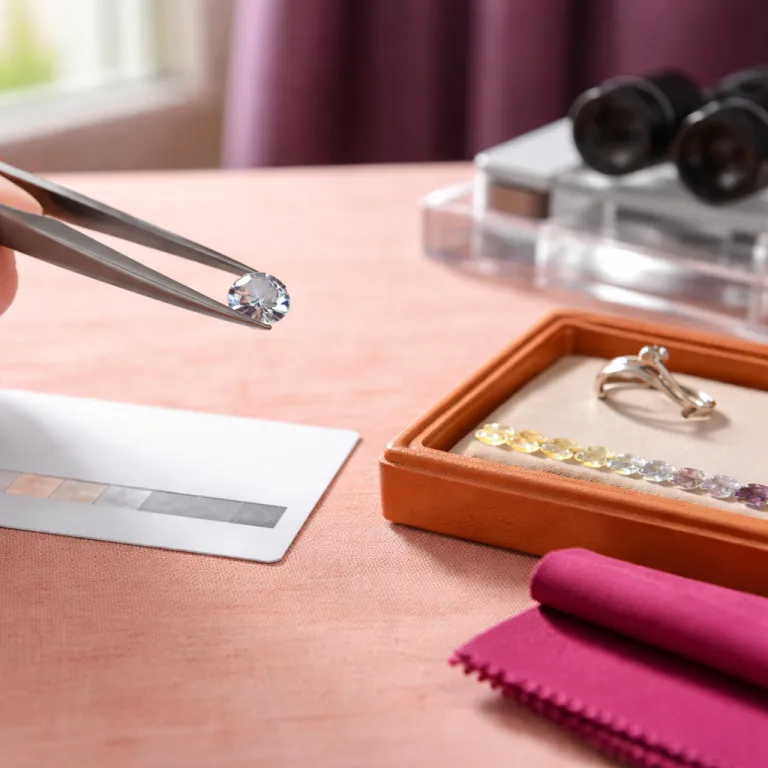
Diamond grading explained for modern engagement connoisseurs
April always pulls the diamond into sharp light, and this season many engagement ring seekers want diamond grading explained in language that feels human rather than technical. Retailers still chant the 4Cs — carat, color, clarity, and cut — yet the real diamond quality story hides in how each grade interacts with your skin tone, your setting, and your budget. When you understand how a grading system translates from laboratory scales to the stone on your hand, you will stop paying for invisible perfection and start paying for visible beauty.
Every natural diamond is graded on a structured grading scale, usually by GIA or another laboratory, but those grading scales are tools rather than verdicts. A grading report describes the diamond color, diamond clarity, diamond cut, and carat weight, while your eyes judge the fire, the light return, and how the stone performs in real life. Think of diamond grading as a language; once diamond grading is explained clearly, you can read between the lines of any grading report and decide which diamonds graded on paper actually sing on the finger.
For color, the classic GIA grading system runs from D, perfectly colorless, down through near colorless, then into a warmer range of faint to light yellow. Many diamonds graded J or K show a gentle warmth that flatters most skin, especially when the stone is set in yellow gold or a yellow diamond halo that makes the color look intentional rather than compromised. Colorless diamonds in the D to F range command a premium, but that price jump often reflects rarity on the grading scale more than a meaningful upgrade in perceived diamond quality under normal light.
Clarity grades, from Flawless down to Included, describe how many internal features are present, yet most included diamonds in the VS2 to SI1 band look perfectly clean to the naked eye. When diamond clarity is explained honestly, you see that a well placed feather or crystal, technically an included feature, will vanish once the stone is mounted and viewed at arm’s length. The smartest collectors often choose diamonds graded in the VS or SI range, redirecting budget from microscopic clarity to a stronger diamond cut or a more generous carat weight where the impact is obvious.
Color, clarity and the quiet bias against warmth
Color is where grading and aesthetics most often part ways, especially for engagement rings chosen in spring light when daylight is unforgiving. The GIA diamond color scale treats D to F colorless diamonds as the pinnacle, yet many connoisseurs deliberately choose a diamond in the G to J range for a softer, candlelit glow. When you see diamond grading explained with side by side comparisons, you realise that a single color grade shift rarely changes how the stone looks once it is set, especially in a well cut round brilliant.
In the near colorless band, a G color diamond and an H color diamond can appear almost identical, particularly in a round brilliant cut that throws back so much light. Move into the J to K range and you meet the so called warmth zone, where a hint of light yellow appears in the body color, yet that same light yellow tone can feel romantic in antique style cuts or in a yellow diamond eternity band that celebrates hue rather than hiding it. If you are considering a color diamond for a statement piece, such as a fancy yellow stone in a pavé band, the traditional grading scales for colorless diamonds no longer apply; you are now in a different grading system that evaluates saturation and tone instead of penalising yellow.
Clarity interacts with color in subtle ways, and this color clarity relationship is often overlooked in basic diamond grading. A slightly included diamond in the SI1 range with excellent diamond cut and strong light performance can outshine a higher clarity stone that leaks light because its proportions are off. When clarity, cut, and color are balanced thoughtfully, you will see a crisp, bright face up appearance even if the grading report lists a lower clarity grade or a warmer diamond color letter.
For collectors exploring more adventurous designs, understanding how color and clarity play together lets you commission bolder pieces with confidence. A suite of small colorless diamonds graded in the G to H range can frame a central color diamond, while included diamonds with interesting internal patterns can be used deliberately in artistic settings. Imagine choosing between a one carat G VS2 with a very good cut and a slightly smaller 0.90 carat H SI1 with an exceptional cut; on the hand, the second stone can look brighter and just as white, illustrating how a modest tradeoff in color and clarity can fund a superior cut that transforms real world beauty.
Cut, carat weight and the new reality of lab grown grading
Cut is the C that changes everything, yet it is also the one most abused by marketing language that calls almost every stone “ideal”. A well executed diamond cut controls how light enters and exits the stone, and a top tier round brilliant with precise angles will look larger, whiter, and more alive than a heavier carat diamond with a mediocre cut. When you see diamond grading explained by a cutter rather than a salesperson, you understand why a smaller carat weight with a superior clarity, cut, and proportion can outperform a bigger but sleepy stone.
Carat weight is simply the weight of the diamond, not its size, and the relationship between weight and face up spread is where value games begin. A 0.90 carat diamond can measure almost the same diameter as a 1.00 carat diamond, yet the price jump at that one carat threshold is steep because the grading report tips into a new psychological category. The same pattern repeats at 1.90 versus 2.00 carats; if the diamond cut is efficient, a 1.90 carat diamond with excellent grading scales for cut and symmetry can look indistinguishable from a full two carat stone once mounted, while costing significantly less.
Lab grown diamonds add another layer, and GIA’s recent grading system shift matters for anyone comparing natural and lab options. Instead of issuing full traditional grades for every lab stone, GIA now often summarises many lab grown diamonds as Premium, Standard, or not graded at all, because a very high proportion of these stones cluster in a narrow high quality band where fine distinctions in color and clarity add little practical information. For you, that means the ceiling for many lab grown grading reports is now a Premium style label, while natural diamonds graded by GIA or IGI still receive the full 4Cs treatment with detailed grades for diamond color, diamond clarity, diamond cut, and carat weight.
Resale expectations should also shape how you read a grading report for both natural and lab stones. Industry estimates suggest that natural diamonds typically resell for around forty to sixty percent of their purchase price, while lab grown stones often achieve only twenty to thirty percent, reflecting their different rarity profiles and production costs. If you are weighing a significant size, such as a five carat diamond solitaire, it is worth studying a dedicated guide to understanding the value of a 5 carat diamond so you can align carat weight, grading scales, and long term value with clear eyes rather than seasonal hype.
Reading certificates, choosing laboratories and trusting your eye
A grading report is a map, not the territory, and learning to read it fluently is the final step in having diamond grading explained in a way that serves you rather than the seller. Start with the basics on the certificate: diamond color grade, clarity grade, carat weight, and cut grade if applicable, then move to proportions, table percentage, depth, and the plotted diagram of included features. Those tiny red and green marks show where included diamonds carry their internal fingerprints, and you will want to check that any inclusions sit away from the table where light performance matters most.
Laboratory choice influences how much weight you should give to each grade, especially when comparing diamonds graded by different institutions. GIA remains the reference standard for natural diamonds, with IGI, GCAL, and the legacy AGS reports also respected when their grading process is applied consistently. For high value stones or complex cuts, paying for a GIA grading report can be worthwhile, while for smaller accent diamonds or fashion pieces, a reliable IGI or GCAL certificate within a transparent grading system is often sufficient.
Seeing the stone in person, under varied light, is non negotiable if you want your engagement ring to feel like a lifelong companion rather than a spreadsheet victory. View the diamond under daylight, warm indoor light, and spotlighting, and notice how the round brilliant or fancy cut carat diamond handles each environment. If a jeweller resists letting you compare several diamonds graded similarly side by side, or avoids showing you how the stone behaves in softer light, that reluctance tells you more than any clarity, cut, or color clarity notation ever will.
Once you are comfortable with the language of grading scales, you can apply the same eye to other fine jewelry, from men’s emerald rings to mixed gemstone bands. A thoughtful guide on why a men’s emerald ring is the ultimate statement piece can train you to evaluate saturation, crystal quality, and cut in colored stones with the same rigour you bring to diamonds. In the end, the most satisfying collections are built not on chasing the highest grade, but on choosing each stone for how its light, weight, and character align with your life — not the carat count, but the fire in the stone.
Key statistics on diamond grading and value
- Natural diamonds typically resell for approximately 40–60% of their original purchase price, depending on quality, market conditions, and whether they carry a respected grading report from GIA or a comparable laboratory; these figures are broad trade estimates rather than guaranteed outcomes.
- Lab grown diamonds often achieve only around 20–30% of their initial purchase price on resale, reflecting their different rarity profile and the ability to increase production over time, so buyers should treat these numbers as indicative industry ranges.
- A large majority of lab grown diamonds submitted to major laboratories fall within a narrow high quality band for color and clarity, which helps explain why GIA now sometimes classifies them using simplified descriptors such as Premium, Standard, or ungraded instead of always relying on the full traditional 4Cs grading scales.
- Price jumps at psychological carat weight thresholds, such as 1.00 and 2.00 carats, can be significantly higher than the incremental increase in actual millimetre spread, making 0.90 and 1.90 carat stones strong value options when cut quality is excellent.
| Typical 4C range | Likely face up look | Settings that work well |
|---|---|---|
| D–F color, VVS–VS clarity, Excellent cut | Very bright, icy white, crisp under most lighting | Platinum or white gold solitaires, sleek modern halos |
| G–H color, VS2–SI1 clarity, Very good–Excellent cut | Appears white face up, usually eye clean | Most engagement ring styles, pavé bands, three stone rings |
| J–K color, SI1–SI2 clarity, Very good cut | Noticeable warmth, especially in larger sizes | Yellow or rose gold, vintage inspired designs, yellow diamond halos |
Frequently asked questions about diamond grading explained
Is a GIA certificate always necessary for an engagement diamond?
A GIA grading report is the most widely trusted standard for natural diamonds, and it is highly advisable for any significant centre stone where you care about precise grading. For smaller accent stones or lower value pieces, a report from IGI, GCAL, or a legacy AGS document can be sufficient if you are working with a jeweller you trust and you have seen the stones in person. The higher the carat weight and price, the more sense it makes to insist on GIA documentation.
Which of the 4Cs should I prioritise on a limited budget?
Cut should come first, because an excellent or very good cut maximises light return and can make a slightly smaller or lower color diamond look brighter and larger. After cut, aim for a balanced combination of color and clarity, often around G to J color and VS2 to SI1 clarity, where most inclusions are not visible without magnification. Carat weight can then be adjusted to fit your budget, focusing on just under key thresholds like 1.00 or 2.00 carats for better value.
Are J and K color diamonds too yellow for engagement rings?
J and K color diamonds do show a gentle warmth, especially in larger sizes, but that does not automatically make them unsuitable for engagement rings. In yellow or rose gold settings, this warmth often blends beautifully with the metal, creating a cohesive, romantic look rather than a noticeable yellow tint. If you prefer a crisp white appearance in platinum, you may want to stay in the G to I range, but always compare stones side by side before deciding.
How visible are SI1 and SI2 clarity inclusions to the naked eye?
In many well cut diamonds around one carat, SI1 clarity is frequently eye clean, meaning inclusions are not visible without magnification when viewed face up at normal distance. SI2 clarity can be more variable; some stones remain eye clean while others show inclusions that you can see without a loupe, especially in larger sizes. Evaluating each stone individually, rather than relying solely on the clarity grade, is essential for making a confident choice.
What does the new GIA Premium and Standard grading for lab grown diamonds mean?
The new GIA approach recognises that many lab grown diamonds cluster in a narrow band of high color and clarity, where fine distinctions add little practical value for consumers. Instead of listing full traditional grades for every lab stone, GIA now often categorises them as Premium, Standard, or ungraded in certain reports, signalling overall quality without overemphasising tiny differences. Natural diamonds, by contrast, continue to receive full 4Cs grading with detailed grades for color, clarity, cut, and carat weight.
