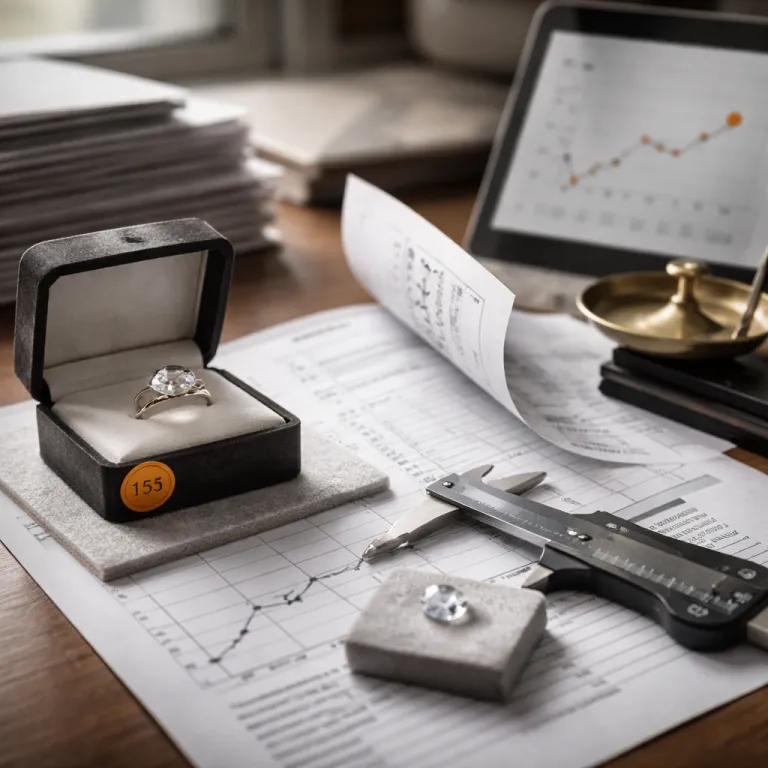
From headline prices to real costs: what auction results actually tell you
For a collector seeking the best gemstones for investment, auction headlines are only the opening act. The figure you see as “sold for” usually includes the buyer’s premium, sometimes VAT, and always a currency conversion that can distort how gemstones and stones compare across markets. If you want to judge a gemstone as a serious investment, you must strip the theatre away and focus on net price per carat, quality tier, and long term liquidity.
Start by separating hammer price from the all in figure, because the hammer is what the consignor of gems and colored stones actually receives. Buyer’s premium can add more than 20 percent to the visible prices, which means a ruby or blue sapphires ring that appears to set a record may in fact sit comfortably within recent gemstone price ranges. When you log results for your own investment grade tracking, always record hammer, premium, currency, carat weight, and whether the stone is confirmed as natural or potentially treated.
VAT and local taxes complicate the picture for precious gemstones, especially when you compare sales in Geneva, Hong Kong, and New York. A paraiba tourmaline pendant sold in one jurisdiction may look more expensive than similar colored gemstones elsewhere, when the underlying gemstone price per carat is actually lower after tax adjustments. Treat every headline about rare stones with caution, and instead calculate your own price carat metrics for each gemstone and for each sale.
Pre sale estimates deserve the same forensic attention, because they are not neutral forecasts of the gemstone market. Estimates for rubies sapphires and other colored stones can be conservative when the house wants to encourage bidding, or aggressive when a consignor insists on a high reserve for their stones cut in fashionable shapes. When you see a ruby sapphire suite hammered below the low estimate, ask whether the estimate was inflated or whether the category’s global demand is genuinely softening.
Liquidity shows up most clearly in the bought in lot, the dreaded BI that signals a gemstone failed to meet its reserve. When several rubies or blue sapphires in one sale are bought in, you are looking at a pocket of resistance in the gemstone market, not necessarily a collapse in value. A single BI paraiba tourmaline or spinel, by contrast, may simply reflect an overambitious reserve or mediocre colour clarity rather than a structural shift in demand.
Category level data helps you see where investment grade opportunities cluster, beyond any one stone. Sotheby’s reported luxury sales of approximately 2.7 billion US dollars in 2022, with growth of around 22 percent year on year, while Christie’s disclosed luxury revenues of roughly 795 million US dollars with about 17 percent growth over the same period, which tells you that capital is flowing into tangible assets such as natural gemstones and signed jewels (see Sotheby’s and Christie’s 2022 results summaries and coverage in The Art Newspaper, December 2022). Yet within those totals, white diamonds, colored gemstones, and signed pieces behave like different asset classes, each with its own volatility, rarity profile, and long term return pattern.
Signed pieces from maisons such as Cartier, Van Cleef & Arpels, and Bulgari often command higher prices for stones of similar quality, because maker attribution raises the ceiling on what collectors will pay. A high quality ruby sapphire bracelet by a top house may outperform an unsigned jewel with slightly better colour clarity, simply because the brand compresses risk and broadens future resale options. When you evaluate the best gemstones for investment, you must weigh the intrinsic merits of the gemstone against the extrinsic power of the signature on the clasp.
One recent Sotheby’s Milan result illustrates how nuance matters more than hype for serious investment. In the “Magnificent Jewels” sale held in Milan on 15 June 2023, lot 124, an 8.92 carat diamond and coloured stone ring, sold for approximately 254,000 euros including premium, or roughly twice its high estimate of 120,000 euros, according to Rapaport’s coverage of the auction and Sotheby’s post sale report for that lot. Yet the real lesson lies in the price carat achieved relative to comparable stones in the same sale. That kind of outlier tells you where collectors are willing to stretch for rarity in colour and cut, and where the gemstone market is quietly repricing specific categories of stones.
For investor minded owners, auction data should sit alongside other tangible assets such as a carefully chosen gold bracelet from Italy, which can be a timeless investment for fine jewelry owners who value both design and intrinsic metal value. When you compare the performance of such metal heavy pieces with that of colored stones, you begin to see how different risk profiles can complement each other in a diversified jewelry portfolio. The goal is not to chase every headline, but to understand how each gemstone and each jewel behaves under real market pressure.
Reading coloured stone categories: rubies, sapphires, spinel and paraiba tourmaline
Once you understand the mechanics of auction pricing, the next step is to read categories of gemstones the way an equity analyst reads sectors. Rubies, sapphires, spinel, and paraiba tourmaline each respond differently to shifts in global demand, supply constraints, and fashion cycles, which is why the best gemstones for investment rarely sit in a single basket. You are not just buying stones, you are buying exposure to specific geological stories and cultural preferences.
Fine ruby remains the benchmark for colored gemstones, especially when the stone shows vivid red colour with strong saturation and minimal inclusions. Pigeon blood rubies from Myanmar or exceptional stones from Mozambique with documented natural origin and no heat treatment still command some of the highest gemstone price levels per carat weight at auction. When you see such rubies achieve strong prices, check whether the lot notes confirm natural gemstones with respected laboratory reports, because treatment status is central to long term investment grade value.
Sapphires form a more nuanced market, because blue sapphires, fancy colour stones, and ruby sapphire combinations behave differently. Top blue sapphires from Kashmir or Sri Lanka with velvety blue colour and excellent colour clarity can rival rubies in rarity, while commercial sapphires with weaker saturation trade more like decorative gems. When you track auction data, separate blue sapphires from other sapphires, and log whether the stones are unheated, because that single detail often doubles or halves the price carat achieved.
Spinel has moved from understudy to serious contender among investment grade colored stones, especially in vivid red and hot pink hues. Fine red spinel from Burma or Sri Lanka can echo the look of rubies at lower prices, yet the best stones are now rare enough that gemstone market specialists treat them as a distinct asset class. When you see spinel lots outperform estimates, you are watching connoisseurs arbitrage between rubies and spinel, paying for rarity and beauty rather than for a single name.
Paraiba tourmaline occupies a different niche, driven by electric neon blue and green colour rather than traditional prestige. Original Brazilian paraiba tourmaline with strong saturation and high clarity is genuinely rare, while later African material broadens supply but creates a wider range of quality and prices. For an investor, the key is to distinguish high quality stones cut to maximise brilliance from windowed or overly shallow stones cut that sacrifice fire for spread.
Coloured stone performance also depends on how the gems are set and presented, not just on the loose gemstone itself. A pair of rubies sapphires earrings by a major maison may outperform a larger but generic ring, because signed design adds another layer of scarcity and desirability. When you evaluate the best gemstones for investment, always ask whether the jewel would still command attention if the stones were unset and offered loose in a dealer’s tray.
Category level reading also helps you avoid overpaying for fashion driven coloured gemstones that may not hold value over the long term. Some fancy colour trends burn hot and fade quickly, leaving owners with stones that are beautiful but not especially rare or liquid. By contrast, the enduring appeal of red rubies, blue sapphires, and neon paraiba tourmaline has been tested across multiple auction cycles and geographies.
Signed pieces and metal heavy jewels provide a useful counterpoint when you think about investment and stewardship. A carefully chosen Italian gold bracelet, for example, can offer more stable value anchored in metal prices, while your colored stones provide upside linked to rarity and connoisseur demand. Balancing these elements lets you treat your jewelry collection as a portfolio rather than a series of isolated purchases.
For collectors who want to refine their eye for red stones in particular, comparing garnet and ruby in detail can sharpen your sense of colour, cut, and inclusions. A focused guide on how to tell garnet and ruby apart and use them wisely in fine jewelry can help you avoid misattributing value to stones that only mimic the look of investment grade rubies. Training your eye this way makes every auction catalogue a more legible map of opportunity rather than a blur of red and pink.
Beyond the big two: coloured gemstone auctions, private sales and opaque data
Most investor collectors fixate on Sotheby’s and Christie’s, but the gemstone market is broader and more fragmented than those two logos suggest. Heritage, Bonhams, Doyle, and regional houses in Geneva, Hong Kong, and Milan all contribute data points that shape prices for gemstones and precious gemstones over time. If you want to identify the best gemstones for investment, you must build a mosaic from many stones, not a single monolith.
Private sales sit at the most opaque end of this spectrum, because they rarely publish detailed gemstone price information or even carat weight. Auction houses cultivate private sale channels precisely because some sellers of high quality rubies sapphires or rare paraiba tourmaline prefer discretion to the theatre of the saleroom. For you as an investor, the absence of public data means you must infer private sale levels from the behaviour of similar lots that do reach the rostrum.
One way to read these shadows is to watch which categories quietly disappear from public catalogues for a season. When you see fewer top blue sapphires or pigeon blood rubies at public auction, yet hear dealers speak of strong demand, you are likely witnessing a shift toward private placement of the most coveted stones. That pattern suggests that the visible gemstone market may understate the true prices being paid for the rarest natural gemstones.
Regional nuances matter as well, especially in hubs such as Sri Lanka, which remains a key source for sapphires and spinel. Local auctions and dealer networks there can move significant volumes of colored gemstones before they ever reach Western salerooms, shaping supply and prices upstream. When you study the best gemstones for investment, track not only the final hammer prices but also the geographic origin and trading routes of the stones.
Liquidity signals also come from the rate at which similar stones reappear at auction after strong results. If a record setting ruby sapphire ring triggers a wave of comparable consignments within a year, you may be looking at a short term spike rather than a durable repricing. By contrast, when a paraiba tourmaline or spinel achieves a strong price and few peers follow, that scarcity can support long term value for truly rare stones.
Private dealers and family offices increasingly use colored stones as part of broader alternative investment strategies. Reports on why ultra wealthy investors are quietly moving into colored gemstones highlight how these assets can complement art, wine, and vintage cars in a diversified portfolio. For a fine jewelry owner, the lesson is to treat each gemstone as both an aesthetic pleasure and a line item in a larger allocation to tangible stores of value.
Opaque data does not mean you must fly blind, but it does require disciplined inference. Track the ratio of sold lots to offered lots in each category, note which stones attract multiple bidders, and watch how often estimates are revised upward in later catalogues. Over time, these patterns reveal where global demand is deep and where it is shallow, which is crucial when you plan to hold a gemstone for the long term.
Secondary platforms such as online only auctions and regional houses can also provide early signals of shifting taste. A surge in bidding for mid range colored stones at a smaller house may precede headline results at the majors by a season or two, especially in emerging markets. Treat these venues as laboratories where new price structures for gemstones are tested before they graduate to the main stage.
Ultimately, your edge comes from reading across venues, not from any single sale. When you see consistent strength for natural, high quality stones cut with care across Sotheby’s, Christie’s, and secondary houses, you can be more confident that you are looking at a structural trend rather than a one off frenzy. In this sense, the best gemstones for investment are those that perform well in both glamorous evening sales and quieter daytime sessions.
Building your own gemstone investment dashboard: what to log, what to ignore
Owning fine jewelry already puts you closer to the gemstone market than most investors, but turning that proximity into insight requires structure. Think of your collection as a live research lab, where every ruby, sapphire, spinel, and paraiba tourmaline you own teaches you something about prices, rarity, and liquidity. The best gemstones for investment are rarely accidents; they are usually the result of disciplined observation and selective buying.
Start by creating a simple but rigorous log for every acquisition and every auction result that interests you. For each gemstone, record carat weight, colour, clarity, cut style, origin, treatment status, laboratory reports, and whether the stone is set or loose, along with purchase price and date. When you track comparable stones sold at auction, add hammer price, all in price, estimate range, and whether the lot sold above, within, or below expectations.
Over time, this personal database will show you which qualities the market consistently rewards. You may notice that natural, unheated rubies and blue sapphires with strong colour clarity command a persistent premium over treated stones of similar size, even when fashion temporarily favours other gems. You may also see that certain stones cut in classic proportions hold value better than aggressively shallow cuts that chase spread at the expense of brilliance.
Category filters are essential if you want to compare like with like. Separate rubies sapphires from other colored gemstones, and within each group distinguish between commercial and investment grade stones based on laboratory reports and visual performance. When you review results, pay more attention to price carat for high quality natural gemstones than to total lot values, because large but mediocre stones can distort averages.
Not every data point deserves equal weight, and learning what to ignore is part of becoming a connoisseur investor. One off record prices for a single pigeon blood ruby or neon paraiba tourmaline can be exciting, but they do not automatically revalue every similar looking stone in the market. Focus instead on repeated strong results for comparable gems across several seasons and several houses, which signal genuine shifts in global demand.
Signed jewels and metal heavy pieces require a slightly different lens, because their value blends gemstone quality with design and craftsmanship. A bracelet in Italian gold, for example, may track bullion prices more closely than the gemstone market, while a ruby sapphire necklace by a storied maison trades partly on brand equity. When you log these pieces, note the proportion of value you attribute to stones versus metal and signature, so you can compare them fairly with pure gemstone plays.
Risk management also belongs in your dashboard, especially if you treat gemstones as a meaningful slice of your net worth. Limit exposure to any single colour, origin, or mine, and avoid overconcentration in stones that rely on a narrow collector base for liquidity. A mix of rubies, blue sapphires, spinel, paraiba tourmaline, and other colored stones from different regions such as Sri Lanka, Mozambique, and Brazil can smooth volatility over the long term.
Finally, remember that your lived experience as a wearer is data too. Pieces that never leave the safe may be technically rare, but if they do not resonate with you, they carry an invisible cost in enjoyment. The most resilient strategy for fine jewelry owners is to pursue gemstones that satisfy both the analyst and the aesthete, because in the end, value in this field is not only about the carat count, but the fire in the stone.
Key figures shaping the high end gemstone investment landscape
- Sotheby’s reported luxury sales of approximately 2.7 billion US dollars in 2022, with growth of around 22 percent year on year, while Christie’s luxury revenues rose about 17 percent to roughly 795 million US dollars, signalling robust global demand for tangible assets including gemstones and fine jewelry (figures drawn from Sotheby’s and Christie’s 2022 results summaries and related press coverage).
- Sotheby’s jewelry sales alone totalled around 270 million US dollars in 2022, underscoring how significant the high end gemstone and jewelry segment has become within the broader luxury auction market (as reported in Sotheby’s year end jewelry highlights and internal reporting cited in press releases).
- In the “Magnificent Jewels” auction held by Sotheby’s Milan on 15 June 2023, lot 124, an 8.92 carat ring, achieved approximately 254,000 euros including premium, or about twice its high estimate of 120,000 euros, illustrating how exceptional stones can dramatically outperform guide prices when multiple bidders compete (see Rapaport’s report on the Milan sale and Sotheby’s published lot results).
- Upcoming marquee events such as the Sotheby’s Hong Kong sale featuring a major Jwaneng diamond, alongside spring previews at Sotheby’s and Christie’s in Geneva and New York, continue to concentrate global attention and capital on top tier gemstones and investment grade jewels (according to current season announcements and preview catalogues from the auction houses).
| Jewel type | Primary value driver | Secondary factors | Typical risk profile |
|---|---|---|---|
| Signed high jewelry (Cartier, Van Cleef & Arpels, Bulgari) | Maison signature and design pedigree | Gemstone quality, rarity, condition, provenance | Broader buyer base, relatively resilient in downturns |
| Unsigned but stone led pieces | Individual gemstone quality and price per carat | Cut style, laboratory reports, fashion relevance | Higher volatility, more sensitive to shifts in connoisseur taste |
| Metal heavy jewels (e.g. Italian gold bracelets) | Intrinsic metal value and weight | Craftsmanship, wearability, brand if present | Closer to commodity behaviour, often lower but steadier upside |