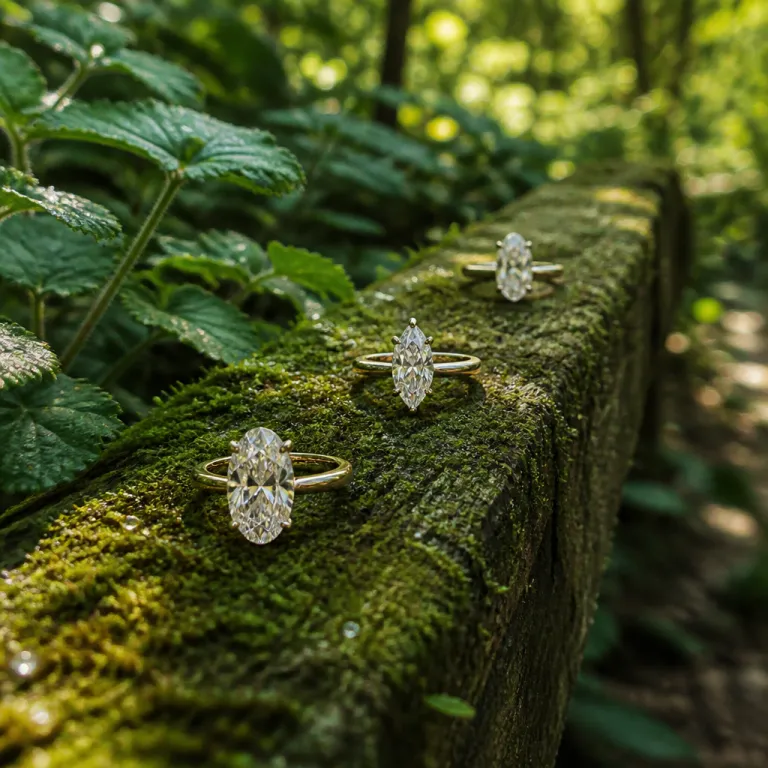
Why elongated diamond cuts now lead serious engagement ring design
Elongated diamond cuts have moved from niche to norm in the engagement ring world. For a collector weighing an elongated oval or marquise engagement ring against a classic round, the value equation is quietly compelling and deeply aesthetic. These silhouettes stretch the visual footprint of the diamond, so an oval diamond or marquise diamond often appears larger on the finger than a comparable round of the same carat weight.
Because elongated shapes distribute weight along the length of the stone, they tend to face up with more surface area, which makes an oval engagement ring or marquise engagement ring feel generous without escalating the budget. In many price lists, elongated stones can be listed at lower prices per carat than top round brilliants, yet a well cut diamond in an oval cut or marquise cut can still deliver strong brilliance and fire. For a first engagement, this means you can prioritize beauty, proportion, and setting over chasing a higher carat number on paper.
Collectors who already own round diamond rings or a classic white gold wedding ring often turn to an elongated engagement ring for contrast and character. An oval marquise hybrid, sometimes called a moval, offers a softer shape that still elongates the finger and pairs elegantly with existing wedding rings in yellow gold or rose gold. When you view your collection as a long term curation, adding one elongated diamond ring in gold yellow or gold rose tones can rebalance your mix of shapes, metals, and diamonds.
The oval diamond: flattering, forgiving, and quietly strategic
An oval diamond is the most approachable entry into elongated shapes for an engagement ring. The rounded ends of an oval cut soften the look on the hand, and this shape flatters almost every finger length while still reading refined and modern. Because the outline is continuous with no sharp points, an oval engagement ring is also more forgiving in daily wear than a marquise engagement ring with exposed tips.
From a gemological perspective, the oval shape hides inclusions and body color more kindly than many buyers expect, especially in the 1.35 to 1.50 length to width range that feels classic. This means you can often choose a slightly lower clarity or color grade in an oval diamond ring than you would in a round, while still achieving a bright face up appearance. For couples working within a defined budget, that trade off can free funds for a more intricate band in yellow gold, rose gold, or white gold, or for a higher carat weight within elegant engagement rings for 5000 and under described in this curated guide to refined engagement rings under 5000.
On the hand, an oval marquise style ring design with a slim pavé band creates a continuous line of light that lengthens the finger. Many collectors choose lab grown oval diamonds for this look, pairing a 1.5 carat lab grown stone with a very fine gold band to keep the overall ring delicate. When you already own several round diamond rings, adding one elongated oval engagement ring in yellow gold or rose gold instantly updates your personal wedding stack without feeling trend driven.
The marquise diamond: dramatic silhouette and art deco revival
The marquise diamond has swung from royal favorite to dated relic and back to connoisseur’s choice. Today, a well proportioned marquise cut with a length to width ratio around 1.9 feels like a deliberate, architectural statement rather than a throwback. When you compare marquise engagement rings to ovals at the same carat weight, the marquise shape almost always looks longer and more dramatic on the finger.
This elongated outline concentrates weight toward the center while stretching the outline, which maximizes perceived size per carat and per dollar. For a buyer who values presence, a 1.2 carat marquise diamond in yellow gold can rival the finger coverage of a significantly larger round diamond ring. Because the points of the marquise cut are vulnerable, prong design becomes critical, and this is where a connoisseur’s framework beyond the 4Cs, such as the one detailed in this expert guide to choosing an engagement ring, proves invaluable.
For long term wear, I favor marquise engagement rings with V shaped prongs or full bezel caps at each tip, especially when the band is in softer metals like gold rose or high karat yellow gold. A white gold or platinum head on a yellow gold band can also protect the marquise diamond while keeping the overall ring warm. If you already own several wedding rings in classic round shapes, adding one rings marquise design in rose gold or yellow gold brings a graphic, art deco edge to your collection.
The moval hybrid: where oval and marquise quietly meet
The moval, a hybrid between an oval and a marquise, has emerged as the insider’s elongated diamond choice. Visually, a moval keeps the softly rounded ends of an oval diamond while borrowing the slightly pinched sides and elongated feel of a marquise diamond. The result is a shape that feels romantic rather than sharp, yet still lengthens the finger more than a classic oval cut.
Because grading laboratories have not fully standardized terminology for this shape, you will often see moval stones described simply as modified oval cut diamonds. Some labs will note an oval marquise style or “oval modified brilliant” on the report, so you must rely on your eye and on magnified images rather than the line of text alone. When evaluating these diamonds, pay close attention to the outline symmetry, the evenness of the faceting, and how the bow tie effect appears across the center of the stone.
In a collection, a moval engagement ring works beautifully as a bridge between round diamonds and more angular shapes like emerald cuts. A 1.3 carat lab grown moval in rose gold with a knife edge band can sit between a classic round diamond wedding ring and a vintage sapphire ring without visual conflict. For collectors who already own several engagement rings and wedding rings, one carefully chosen moval ring design in white gold or yellow gold can become the quiet centerpiece of the stack.
Optical trade offs: bow tie, length to width, and color
Every elongated diamond shape carries a version of the bow tie effect, the darkened band that can appear across the center of the stone. In an oval diamond or marquise diamond, a subtle bow tie can add depth and character, while a severe one creates a dead zone that kills brilliance. When you evaluate an elongated oval or marquise engagement ring, tilt the stone under different lighting and check that the bow tie never stays completely dark.
Length to width ratio is the second major optical lever, and it dictates whether a ring reads classic or avant garde. For ovals, ratios between 1.35 and 1.50 feel balanced, while 1.60 and above becomes dramatically elongated and best suits long, slender fingers. Marquise cut stones often look refined around 1.8 to 2.0, and anything beyond that can start to feel too narrow unless the band and setting are carefully scaled.
Color and clarity behave differently in elongated shapes than in round diamonds, especially in larger carat sizes. Because the facets stretch along the length, body color can pool at the tips of a marquise engagement ring or at the ends of an oval engagement ring, particularly in yellow gold or rose gold settings. If you prefer a warmer palette with gold yellow or gold rose metals, lean into that by pairing near colorless diamonds with yellow gold bands, or contrast a cooler white gold band with a slightly tinted sapphire or lab grown diamond for deliberate nuance.
Example: how ratios and grades translate on the hand
| Shape & ratio | Typical color / clarity | Visual impression | Relative price impact* |
|---|---|---|---|
| Oval, 1.35–1.45 | G–H, VS2–SI1 | Balanced, soft outline, bow tie usually mild | Often modestly below a comparable round |
| Oval, 1.55–1.65 | H–I, VS2–SI1 | More slender, stronger finger lengthening | Similar or slightly lower than a classic oval |
| Marquise, 1.8–2.0 | G–H, SI1–SI2 | Dramatic, pointed tips, pronounced spread | Frequently priced below a round of the same grade |
*Illustrative ranges based on typical retail pricing; actual premiums or discounts vary by market, cut quality, and certification. For a visual comparison, imagine a top view photograph showing three 1.0 carat diamonds—oval, marquise, and moval—aligned side by side on a finger, each labeled with its length to width ratio and approximate millimeter measurements.
Setting, metal, and value: building a collection you will wear
Setting architecture determines whether an elongated engagement ring remains a pleasure to wear or becomes a maintenance project. Ovals with rounded ends are naturally more forgiving, so a four or six prong setting in white gold, yellow gold, or rose gold usually offers enough protection for daily wear. Marquise cut stones, by contrast, demand either V prongs or bezel details at the tips, especially when the band is slim and the carat weight climbs.
Metal choice also shapes the personality of elongated diamond rings and wedding rings in a collection. Yellow gold amplifies warmth in both natural and lab grown diamonds, while white gold sharpens the outline of an oval marquise or moval shape and can make a slightly tinted diamond appear whiter. Rose gold, or gold rose alloys, wrap the stone in a softer halo of color that pairs beautifully with sapphire side stones or with a lab grown center diamond for a modern romantic look.
From a value perspective, elongated shapes can be priced below top round brilliants on a per carat basis, yet they often cover more of the finger and photograph larger. That pricing gap leaves room to invest in better cut quality, a more intricate band, or even a complementary piece such as a refined wedding ring or anniversary band that echoes the elongated silhouette. For the seasoned collector, the real luxury is not the carat count, but the fire in the stone.
Key figures shaping the market for elongated engagement rings
- According to De Beers Group data in its annual Diamond Insight reports (for example, the 2020–2022 editions, which summarize center stone preferences by shape), round diamonds still represent a majority of engagement ring center stones, but elongated shapes such as oval and marquise have grown to account for a substantial share of new engagement rings sold in the United States, reflecting a clear shift toward elongated silhouettes.
- Reports from major online retailers, including multi year trend updates published between 2019 and 2023 that track search behavior and sales by cut, indicate that searches for oval engagement ring designs have risen significantly over several recent years, while marquise engagement ring searches have also increased as younger buyers revisit this vintage inspired cut.
- Market analyses from Bain & Company in its Global Diamond Industry reports (notably the 2019–2022 editions, which include separate sections on lab grown diamonds) show that lab grown diamonds now represent a meaningful share of the entry to mid tier engagement ring segment, with many buyers choosing lab grown oval and marquise stones to achieve higher carat weights at lower prices than comparable natural diamonds.
- Pricing comparisons from leading diamond trading platforms, summarized in periodic pricing notes released over the last five years that break out round versus fancy shapes, consistently show that elongated fancy shapes such as oval, marquise, and pear can be priced below top quality round brilliants of similar color and clarity, while often appearing larger on the hand.
- Surveys of bridal jewelry buyers in the United States, including consumer research cited in recent De Beers and industry association reports that analyze stacking behavior, suggest that many couples now consider layering a wedding ring with an engagement ring and additional bands, which favors elongated center stones that visually anchor multiple rings on one finger.
FAQ: elongated oval, marquise, and moval engagement rings
Is an oval or marquise diamond better for maximizing finger coverage
For pure finger coverage at a given carat weight, a marquise diamond usually appears slightly larger than an oval diamond because the points extend further along the finger. However, an oval engagement ring often feels more versatile and forgiving, especially for shorter fingers or for collectors who prefer a softer outline. The best choice depends on your hand shape, your existing wedding rings, and how dramatic you want the elongated shape to appear in daily wear.
How serious is the bow tie effect in elongated diamonds
The bow tie effect is a natural optical feature in many elongated diamonds, including oval, marquise, and moval shapes. A faint bow tie can add depth and character, but a strong, opaque band across the center of the stone will reduce overall brilliance and make the diamond look dull. When evaluating an elongated oval or marquise engagement ring, always view the stone in motion under different lighting to ensure the bow tie area still shows flashes of light rather than a fixed dark stripe.
Are lab grown elongated diamonds a good option for a first engagement ring
Lab grown diamonds in elongated shapes such as oval and marquise can be an excellent option for a first engagement ring, especially when you want a higher carat weight without stretching the budget. Because lab grown stones typically cost less per carat than natural diamonds, you can prioritize cut quality and setting design, which have the greatest impact on beauty. Many collectors choose a lab grown oval diamond for the engagement ring and reserve natural diamonds or colored stones like sapphire for future anniversary or wedding ring upgrades.
Which metal works best with elongated diamond shapes
Metal choice should reflect both your skin tone and the optical behavior of the stone. Yellow gold and rose gold emphasize warmth and can harmonize with slightly tinted diamonds, while white gold or platinum sharpen the outline of an oval marquise or moval and can make near colorless stones appear brighter. If you stack multiple rings, consider mixing metals subtly, such as a white gold engagement ring with a yellow gold wedding ring, to frame the elongated center stone without overwhelming it.
How do I choose the right length to width ratio for my hand
For most hands, an oval diamond with a length to width ratio between 1.35 and 1.50 feels balanced and timeless, while ratios above 1.60 create a more dramatic, slender look that suits longer fingers. Marquise diamonds often look refined around 1.8 to 2.0, but very elongated stones can appear too narrow on shorter fingers or next to wide bands. When in doubt, try on several engagement rings with different ratios and photograph them with your existing wedding rings to see how each shape interacts with your natural proportions and your collection.