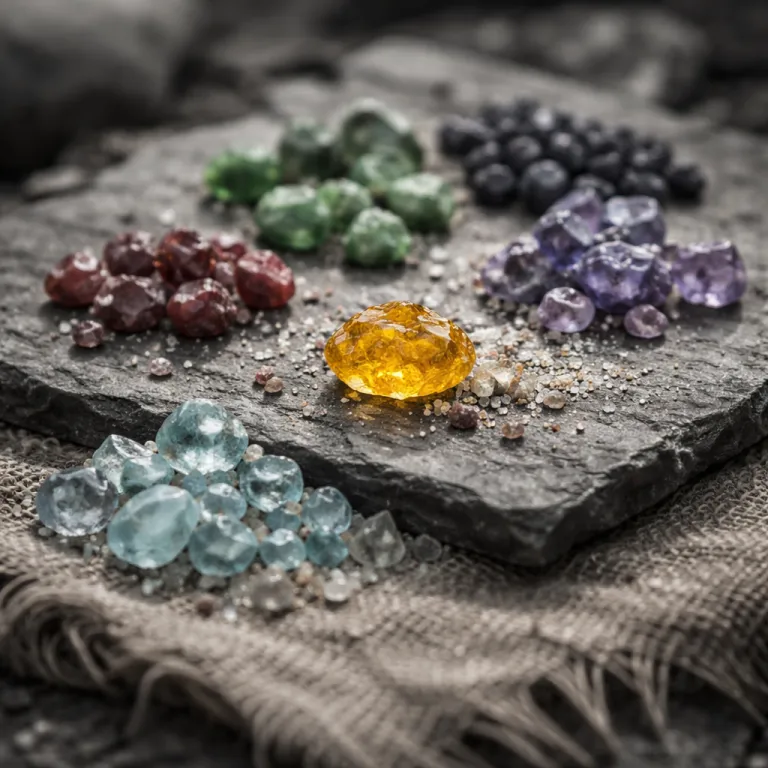
From CNBC headline to hard numbers: where value is really compounding
Colored gemstones investment UHNW is no longer a niche curiosity for a few contrarian collectors. CNBC reports that wealthy consumers are reallocating capital from public markets into luxury jewelry as a hedge against volatility, and the shift is most visible in the colored gemstones market rather than in traditional diamonds. For a fine jewelry owner, the question is no longer whether to participate, but how to distinguish investment grade pieces from beautifully set ornaments with little resale traction.
The global gemstones market is being reshaped by constrained supply and a new generation of buyers who treat each colored gemstone as a portable hard asset, not just a decorative accent. Rapaport data shows Zambian emeralds gaining roughly 25 to 30 percent in price since the pandemic, while tsavorite, calibrated pink sapphires and fine blue sapphires above 3 carats have risen closer to 50 percent, which materially changes the gemstone market conversation for UHNW portfolios. These figures sit within a broader market analysis that projects the colored gemstones segment to reach a market size above 70 billion dollars with a projected CAGR above 6 percent, giving context to why auction houses are expanding their colored gemstones catalogues and why market share is gradually tilting away from the classic diamond market.
Not all gemstones or diamonds participate equally in this luxury investment cycle, and the gap between retail storytelling and auction reality is widening. Unheated rubies above 2 carats with strong color saturation now achieve record prices at major sales, while commercial grade heated material in gemstone jewelry often trades at a steep discount when resold. For UHNW collectors, the core of colored gemstones investment UHNW is learning to read the fine print of each lab report, understand how supply from regions such as Asia Pacific and Africa is tightening, and accept that liquidity concentrates in a narrow band of truly investment grade stones rather than across the entire jewelry box.
Origin reports, treatment risk and the new verification layer
For serious colored gemstones investment UHNW, the most important document after the invoice is the laboratory report. GIA’s expanded origin and treatment reporting, which now covers a broader range of sapphire, ruby, emerald and spinel sources, has effectively created a second tier of verification that separates investment grade stones from visually similar but commercially treated gemstones. When a fine jewelry piece carries a report confirming both geographic origin and the absence of heat or other enhancements, its position within the gemstones market and its potential market share at auction change overnight.
Untreated status commands a clear price premium across ruby, sapphire and emerald, because supply of such material is structurally thin and cannot be replicated by lab grown production or new cutting trends. In practice, this means that a 3 carat unheated Burmese sapphire with a GIA origin report and top color grade will often outperform a larger heated stone in both price appreciation and liquidity, especially when mounted in signed fine jewelry by a recognized maison. For UHNW collectors, the colored gemstones investment UHNW thesis hinges on aligning the visual appeal of a colored gemstone with verifiable documentation, because the global gemstone market increasingly rewards transparency around treatment and origin.
Risk sits in the gray zones of disclosure, where terms such as “minor heat” or “fancy color enhancement” can mask interventions that erode long term value. Some fancy colored diamonds and fancy vivid blue diamonds remain blue chip assets, yet the rise of high quality lab grown diamonds and sophisticated color treatments has complicated the diamond market and blurred signals for non specialists. A disciplined investor now demands a market report or equivalent analysis from top laboratories for any significant colored diamonds or pink diamonds acquisition, treating each gemstone as a financial instrument whose grade, origin and treatment history must withstand institutional level market analysis.
Building a resilient gemstone allocation: categories, liquidity and exit routes
Ultra wealthy collectors who treat colored gemstones investment UHNW as a portfolio allocation rarely bet on a single hero stone. Instead, they build exposure across three to five categories, mixing unheated rubies, fine sapphires, rare emeralds and a tightly edited selection of fancy color diamonds or pink diamond pieces, each supported by robust lab documentation. This approach acknowledges that the gemstone market is fragmented, with different liquidity profiles for sapphire solitaires, signed gemstone jewelry and loose colored gemstone parcels.
Liquidity concentrates in stones that meet institutional criteria for investment grade quality, which usually means strong color, high clarity, attractive cut and a respected origin confirmed by a major laboratory report. Auction eligible pieces tend to be either important loose gemstones or signed fine jewelry from maisons such as Cartier, Van Cleef & Arpels or Bulgari, where the combination of design and gemstone quality commands global bidding. By contrast, many retail only pieces with commercial grade amethyst, mid range sapphires or modest colored diamonds may deliver immense personal pleasure but limited resale options, so they should be treated as consumption rather than as core holdings within a colored gemstones investment UHNW strategy.
Geography also matters, because demand from Asia Pacific buyers has become a decisive force in setting the clearing price for top colored gemstones at major sales. As wealth deepens across Asia Pacific and the Middle East, competition for rare colored gemstones and fancy vivid blue diamonds intensifies, which supports the long term CAGR projections for the global gemstones market. For the UHNW jewelry owner, the most resilient allocation pairs a small number of museum quality colored gemstones with a broader supporting cast of wearable luxury jewelry, accepting that in this arena, value is driven not by carat count alone, but by the fire in the stone.
Key quantitative signals in the colored gemstones market
- The global colored gemstones market is projected to grow at a CAGR above 6 percent over the next decade, reaching an estimated market size above 70 billion dollars if current demand trends persist.
- Rapaport data indicates Zambian emeralds have appreciated roughly 25 to 30 percent in price since the pandemic period, reflecting tightening supply and stronger institutional demand.
- Tsavorite, calibrated pink sapphires and fine blue sapphires above 3 carats have seen price gains closer to 50 percent over the same timeframe, outpacing many segments of the traditional diamond market.
- Only about 15 percent of engagement rings currently feature colored gemstones, up from roughly 5 percent a decade ago, suggesting significant headroom for colored gemstone jewelry to gain further market share.
- Unheated rubies above 2 carats with strong color saturation are achieving record levels at recent auctions, underscoring the premium that the global gemstone market assigns to untreated, investment grade material.
Questions UHNW jewelry investors are asking now
How do colored gemstones differ from diamonds as an investment asset ?
Colored gemstones differ from diamonds because their supply is genuinely constrained by geology, with many historic mines either depleted or producing lower grade material. While the diamond market is influenced by large scale producers and the rise of lab grown alternatives, the gemstone market for top rubies, sapphires and emeralds is fragmented and driven by small deposits that cannot be industrially scaled. This structural scarcity, combined with growing global demand, is why many UHNW collectors now view investment grade colored gemstones as a distinct asset class rather than a subset of the broader diamond market.
Which colored gemstone categories show the strongest appreciation potential ?
The strongest appreciation has been observed in unheated rubies above 2 carats, fine blue sapphires above 3 carats, high quality Zambian emeralds and select fancy color diamonds such as pink diamonds and fancy vivid blue diamonds. These categories benefit from limited supply, strong cultural demand in regions such as Asia Pacific and robust support from auction houses that regularly feature them in marquee sales. For UHNW investors, concentrating on these segments within a colored gemstones investment UHNW strategy offers a clearer path to both capital preservation and potential upside.
How important are laboratory reports for resale value ?
Laboratory reports from institutions such as GIA, SSEF or Gübelin are essential for establishing both authenticity and investment grade status in the gemstones market. A report that confirms origin, treatment status and quality grade can significantly increase the achievable price and broaden the pool of potential buyers at auction or in private sales. Without such documentation, even visually impressive gemstone jewelry may be treated as decorative rather than as a serious component of a colored gemstones investment UHNW allocation.
What role do treatments and enhancements play in pricing ?
Treatments such as heat, fracture filling or diffusion can improve the appearance of a gemstone but usually reduce its long term investment appeal. Untreated stones with strong natural color and clarity command a substantial premium, because they represent a smaller share of overall supply and are easier to position as investment grade assets. For UHNW collectors, careful reading of each lab report and a clear understanding of terms such as “no indications of heating” or “minor oil” is critical to aligning price paid with the true quality of the colored gemstone.
How should a UHNW collector think about portfolio construction with gemstones ?
A disciplined UHNW collector treats colored gemstones as a complement to other tangible assets such as gold, art and watches, not as a wholesale replacement. A typical framework might allocate capital across three to five categories, mixing loose investment grade stones with a smaller number of signed fine jewelry pieces that combine strong design with top tier gemstones. This diversified approach acknowledges liquidity differences across the gemstone market and allows the collector to enjoy wearing part of the portfolio while reserving the rarest colored gemstones for long term capital preservation.
Trusted sources for further reading : Rapaport Group market report ; GIA market analysis on colored gemstones ; Sotheby’s and Christie’s auction data on the global gemstone jewelry market.
