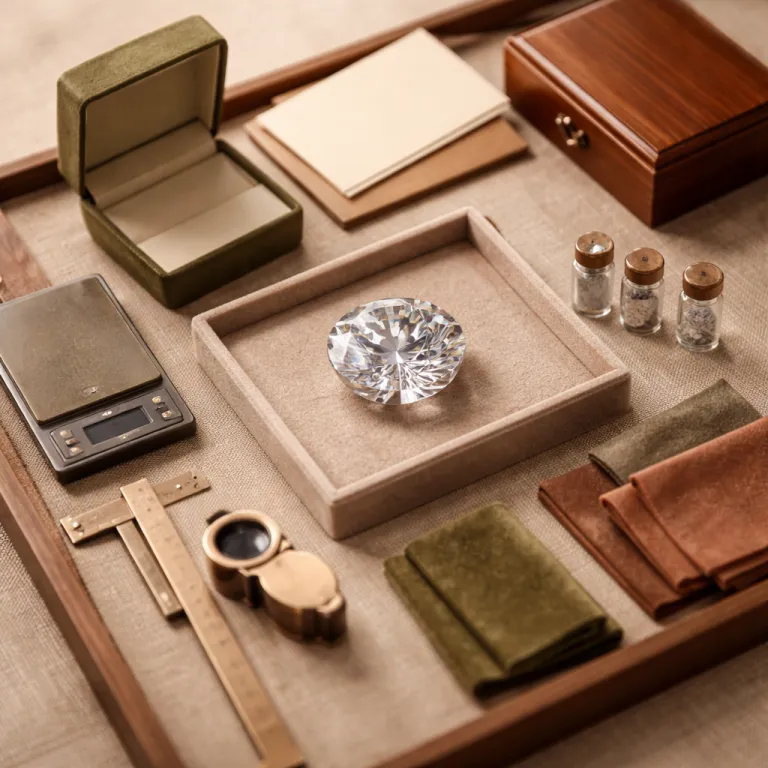
Sotheby's Jwaneng diamond auction as a market stress test
The Sotheby's Jwaneng diamond auction in Hong Kong functions as a live stress test for the very top of the natural diamond market. When the 28.88 carat diamond from the Jwaneng mine in Botswana crosses the block at the Sotheby's Hong Kong Magnificent Jewels and high jewelry sale in late April, the key question will be whether collectors still assign a clear premium to exceptional natural stones over lab grown alternatives. This single stone, a flawless Type IIa natural diamond sourced from the De Beers–operated Jwaneng mine in Botswana, sits at the intersection of geology, branding, and shifting demand for natural diamonds versus synthetics.
On paper, the lot is straightforward: a 28.88 carat diamond, D color, flawless clarity, Type IIa, cut as a classic brilliant that foregrounds both fire and transparency. In practice, this Jwaneng diamond is a carefully curated signal from De Beers and Sotheby's about where they believe the top category of natural stones still commands authority in a jewelry sale landscape reshaped by lab grown goods. The estimate, up to roughly 2.8 million USD according to Sotheby's published guidance, positions the stone as a trophy but not a record chaser, leaving room for bidders to express their conviction about rarity without feeling they are underwriting marketing hype.
Context matters for any investor who treats high jewelry as an alternative asset, because the Sotheby's Jwaneng diamond auction does not exist in isolation from the wider industry. Sotheby's reported global jewelry sale totals of approximately 270 million USD in 2023 (as cited in The Art Newspaper, February 2024), while its broader luxury category, including watches and other collectibles, helped push luxury revenues up more than twenty percent, which shows that appetite for portable beauty and value remains strong even as mid market diamonds soften. When an 8.92 carat diamond ring in a Sotheby's Milan sale in October 2023 sold for more than twice its high estimate, achieving around 254,000 euros according to the published sale results, it confirmed that the right stone in the right sale, curated by Sotheby's specialists, can still produce a rare feat of competitive bidding that feels vanishingly rare in more commoditized segments.
Why Type IIa Jwaneng provenance sits in a different category
Type IIa diamonds are nitrogen free crystals that represent less than two percent of all natural diamonds, and this chemical purity translates into a particular kind of optical beauty that connoisseurs recognize instantly. The Jwaneng mine, often described as the flagship diamond mine in the De Beers portfolio, has built a reputation for producing such high quality stones that the phrase Jwaneng diamond now carries its own quiet premium in catalogues and private negotiations. When that provenance is paired with a flawless Type IIa grading and a 28.88 carat diamond weight, the result is a stone that sits in a vanishingly rare category where price is set more by competition among a handful of buyers than by any price list.
For a collector, the key is to understand how these attributes stack, rather than treating them as isolated talking points in a Sotheby's Jwaneng diamond auction catalogue. Type IIa purity, Jwaneng mine origin, and flawless clarity each narrow the pool of comparable diamonds, while the size pushes the stone into a realm where only a few natural diamonds from any Botswana mine can compete in a given decade. A useful reference point is the 118.28 carat D color Type IIa diamond sold at Sotheby's Hong Kong in 2013 for about 30.8 million USD, or roughly 260,000 USD per carat, a figure reported in contemporary auction coverage that illustrates how collectors have historically paid a substantial premium for large, chemically pure stones with impeccable documentation.
Recent auction data reinforces this pattern of pricing for large Type IIa stones:
| Sale | Carat weight | Type / color | Total price (approx.) | Price per carat (approx.) |
|---|---|---|---|---|
| Sotheby's Hong Kong 2013 | 118.28 ct | Type IIa, D color | 30.8 million USD | 260,000 USD/ct |
| Sotheby's Hong Kong 2024 (estimate) | 28.88 ct | Type IIa, D color | up to 2.8 million USD | under 100,000 USD/ct |
There is also a strategic dimension to how De Beers and Sotheby's structure these high jewelry offerings in Hong Kong, especially in a Sotheby's Hong Kong sale timed for April when regional liquidity is strong. By placing the Jwaneng diamond as a featured lot within a curated group of high jewelry pieces and important watches, they create a halo effect that reinforces the narrative of natural diamonds as enduring stores of value in a fashion driven luxury industry. For investors who already own multiple diamonds and pieces of jewelry, the lesson is that provenance, geological type, and mine history can matter as much as carat weight when you eventually share or sell pieces back into the market.
Reading the estimate and what it means for your collection
The pre sale estimate of up to 2.8 million USD for the Jwaneng Type IIa stone at the Sotheby's Jwaneng diamond auction is cautious rather than aggressive, especially when you break it down to a per carat diamond figure of under 100,000 USD. If bidding stalls near the top estimate, it will confirm that even flawless natural diamonds from a celebrated mine now face disciplined pricing as buyers weigh them against other assets and against the growing presence of lab grown stones in the one to two carat range. If, however, the hammer price races beyond expectations, it will signal that ultra high net worth collectors still view this type of natural diamond as a separate category, insulated from the pressures reshaping commercial jewelry.
For a jewelry investor, the contrast between this Jwaneng mine trophy and the broader market is instructive, because the middle has hollowed out while the top remains resilient. In the one to two carat range, where many engagement rings and fashion pieces sit, lab grown diamonds have structurally won on price, leaving natural diamonds to justify their premium through provenance, rarity, and emotional resonance rather than simple size. At the very top, where a flawless Type IIa from a Botswana operation like Jwaneng is truly vanishingly rare, the buyers are less sensitive to short term price moves and more focused on owning a stone that future catalogues will still describe as a rare feat of geology and curation.
Building a collection that can sit comfortably alongside a Sotheby's trophy lot does not mean chasing every headline sale or every piece of high jewelry that appears in an April Hong Kong catalogue. It means selecting natural diamonds and finished jewelry where the stone quality, the maker, and the narrative align, whether that is a signed ring from a maison like Graff or a more understated piece that lets a single Type IIa stone speak quietly on the hand. In the end, the Sotheby's Jwaneng diamond auction is a reminder that in this industry, as in all serious collecting, it is not the highest carat count that endures, but the fire in the stone and the clarity of the story you will one day share with the next owner.
Key figures on high jewelry and natural diamond auctions
- Sotheby's global jewelry sales recently totaled approximately 270 million USD in 2023, as reported in early 2024 by The Art Newspaper, underscoring sustained demand for important stones even as mid market diamonds face pricing pressure.
- The 28.88 carat Type IIa Jwaneng diamond offered in Hong Kong carries a pre sale estimate of up to about 2.8 million USD, based on Sotheby's own auction materials, placing it firmly in the trophy lot tier for contemporary auctions.
- A recent Sotheby's Milan sale in October 2023 saw an 8.92 carat diamond ring achieve around 254,000 euros, more than twice its high estimate according to the auction house’s published results, illustrating how best in class stones can still outperform cautious pricing.
- Type IIa diamonds, which are largely nitrogen free, represent under two percent of all natural diamonds, making large flawless examples from a single mine such as Jwaneng statistically exceptional.
Questions collectors are asking about the Sotheby's Jwaneng diamond auction
How rare is a 28.88 carat Type IIa diamond from the Jwaneng mine ?
A 28.88 carat Type IIa diamond from the Jwaneng mine is exceptionally rare because it combines significant size, chemical purity, and a respected origin. Type IIa stones account for less than two percent of natural diamonds, and only a fraction of those reach such a carat weight with flawless clarity. When you add the Jwaneng mine provenance, you are looking at a stone that may have only a handful of true peers in a generation of production.
Why does Jwaneng mine provenance matter for investment grade jewelry ?
Jwaneng mine provenance matters because the Botswana operation is known for consistent production of high quality rough that has underpinned De Beers branding for decades. Collectors and dealers track which diamond mine produced important stones, and Jwaneng has earned a reputation similar to a grand cru vineyard in wine. That recognition can translate into stronger bidding at auction and greater confidence when you eventually resell or share pieces from your collection.
What will the hammer price in Hong Kong signal about the natural diamond market ?
The hammer price in Hong Kong will signal whether ultra high net worth buyers still treat top tier natural diamonds as insulated from the pressures of lab grown competition. A result near the high estimate would suggest disciplined but steady demand, while a runaway price would indicate intense appetite for vanishingly rare stones with impeccable credentials. Either way, the outcome will help collectors gauge how the market values geological rarity versus marketing narratives in the current cycle.
How should a private collector respond to the bifurcation between trophy stones and mid market diamonds ?
A private collector should respond by being more selective in the mid range and more focused in the top tier. In the one to two carat segment, it may make sense to prioritize design, maker, and personal wearability over marginal grading differences, because lab grown options have reset price expectations. At the high end, where stones like the Jwaneng Type IIa diamond sit, the strategy is to buy fewer pieces but with stronger provenance, better documentation, and clearer long term narratives.
Does it still make sense to buy natural diamonds under five carats as investments ?
Natural diamonds under five carats can still make sense as part of a broader jewelry collection, but they should be approached as wearable assets rather than pure financial instruments. The most resilient pieces in this range tend to combine strong cuts, desirable colors, and settings from recognized maisons, which together create value beyond the stone alone. For pure investment exposure, many collectors now concentrate capital in fewer, higher quality stones that share characteristics with auction trophies, such as Type IIa purity or notable mine provenance.
