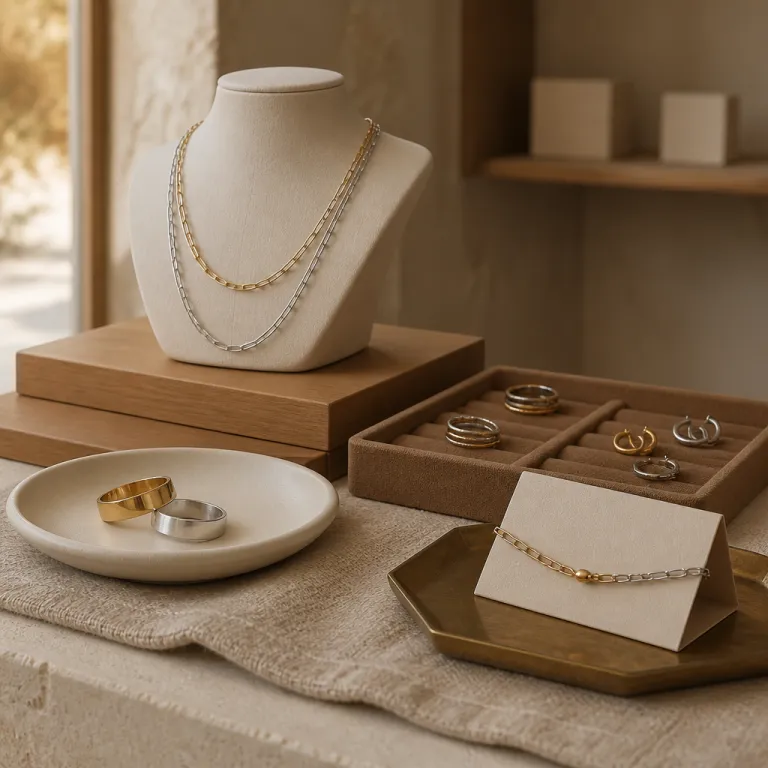
Why mixed metals feel modern on an engagement hand
Mixed metals on an engagement hand signal intent rather than indecision. When you treat silver, gold and other alloys as a considered palette, you create a jewellery language that feels current yet quietly timeless. The right balance of each tone will frame your centre stone and make every piece you wear feel deliberate.
The old rule that you must never mix silver with yellow or rose gold belongs to a different era of jewelry etiquette. Today, a thoughtful combination of metals around an engagement ring lets you wear inherited pieces, new designs and future bands without being locked into one rigid choice. This approach also respects the reality that many fine jewelry owners already own both silver jewelry and gold jewelry, often in different eras, alloys and styles.
Think of your engagement ring as the focal point, then decide which metal will dominate and which will play a supporting role. If your ring is solid gold in a warm 18 carat yellow (18k is typically around 75% pure gold with copper and silver in the mix), you might layer gold bands closest to it and then add a cool sterling silver guard ring further out to create subtle contrast. When the centre ring is platinum or white gold, a slim rose gold piece or a delicate silver–gold mixed metal band can soften the graphic line and flatter more skin tones.
For couples choosing their first major piece together, this mixed metal styling guide starts with lifestyle. If you already wear a favourite silver necklace daily, choosing a white metal engagement ring in platinum or 14k white gold will help your existing pieces feel cohesive while still leaving room to introduce yellow gold later through stackable bands. If you mostly wear warm toned fashion jewellery, a yellow or rose gold engagement ring with one cool mixed metal accent band can bridge your current style with future acquisitions.
Quiet luxury in fine jewelry is not about owning fewer pieces, but about curating every piece you wear so it feels intentional. Mixed metal engagement stacks suit this mood because they let you combine silver and gold bands over time without your hand ever looking chaotic. The result is a unique visual rhythm where each metal, each piece and each stone earns its place.

Anchor metal first, then build the mixed stack with purpose
Every successful mixed metals stack starts with an anchor metal. Decide whether the combinations on your hand should lean warmer through yellow and rose gold, or cooler through sterling silver, platinum and white gold. This single decision will help you edit which jewelry pieces deserve daily wear and which should stay in the vault.
Once you have chosen the anchor, you can create a hierarchy of metals that feels calm rather than busy. For example, if yellow gold jewelry is your base, keep the bands that sit flush against the engagement ring in the same karat and colour, then introduce silver jewelry or platinum further away to frame the central piece. When silver is the anchor, a single slim gold band or a mixed metal eternity ring can act as a bridge between your cool engagement ring and any warmer jewellery you add later.
Stackable bands are where this mixing gold and silver styling guide becomes truly practical. A channel set diamond band in white metal, a knife edge solid gold ring and a pavé half band in sterling silver can sit together if their profiles share similar thickness and height. As many bench jewellers will tell you, what matters more than colour is that each piece respects the architecture of the others, so the stack feels like one considered object rather than a random experiment.
Heirloom bands often bring another layer of complexity and sentiment. A vintage silver–gold braid from a grandparent or a slim rose gold guard ring inherited from a parent can be integrated by placing them as the outermost bands, where their different metal and style read as intentional accents. For sentimental jewelry that you want to wear, not store, a mixed metals stack is often the only way to honour the piece without redesigning it, as explored in this guide to sentimental heirloom jewelry that actually gets worn.
Remember that you can also play with contrasting textures to keep the stack refined. Pair a high polish gold band with a brushed silver piece and a matte mixed metal ring to create depth without shouting for attention. When each metal, each finish and each piece has a clear role, your hand becomes a composed outfit rather than a crowded display.

Finish, proportion and the quiet power of stackable bands
Finish often matters more than colour when you mix metals around an engagement ring. A mirror polished silver band next to a mirror polished gold band can feel harsh, while a brushed silver piece beside a softly gleaming solid gold ring reads as harmonious. The interplay of shine, not just the contrast of metals, will determine whether your stack whispers or shouts.
Proportion is the second pillar of this styling guide, especially for couples building a stack over time. If your engagement ring is a bold solitaire on a thick gold shank, the bands you layer around it should be slimmer and lower in profile, whether they are silver, rose gold or mixed metal designs. When the centre ring is delicate, you can afford one chunkier mixed metals band as a focal point, but keep the rest of the jewelry pieces fine and linear.
Stackable bands in contrasting metals excel at marking milestones without overwhelming the original ring. A bubble wedding band in white metal, for example, can sit beside a yellow gold engagement ring and read as sculptural rather than mismatched, especially when the domes echo the curve of a round brilliant centre stone. For more on how a sculpted band can stand alone yet still play well in a stack, see this analysis of why a bubble wedding band makes a strong statement.
When you start combining silver and gold in earrings or necklaces, apply the same logic. A mixed metal huggie in silver–gold tones can sit in the first piercing, with a tiny solid gold stud and a cool sterling silver hoop above, as long as the diameters graduate gracefully. For a necklace stack, choose one dominant metal for the chain that sits at the collarbone, then add a shorter two-tone pendant and a longer silver or gold necklace to frame the face.
Quiet luxury thrives on restraint, so edit ruthlessly. If you wear a complex ring stack, keep the rest of your metal story simple, perhaps with a single mixed metal necklace or a pair of understated earrings. Let one area of your body carry the intricate mix, and allow the other jewelry to support rather than compete.

Skin tone, daily outfits and day to night transitions
Skin tone plays a subtler role in mixed metals than many assume. Warm undertones often glow in yellow and rose gold, while cool undertones can look luminous in silver and white metal, yet most people sit somewhere between these textbook categories. Mixed metals, handled well, will help bridge that in-between reality and flatter the full spectrum of your complexion.
If your veins look both blue and green and you already enjoy wearing silver and gold, lean into that neutrality. Choose an engagement ring in the metal that best suits your diamond or coloured stone, then use stackable bands in the opposite metal to echo the natural mix in your skin. When you wear mixed metals on the hand that moves most in conversation, the eye reads the overall harmony rather than isolating each piece of jewelry.
Outfit planning is where this styling guide becomes a daily tool rather than a one-time decision. For office wear, let one area carry the mixed metals story, such as a composed ring stack or a layered necklace trio, and keep the rest of your jewellery minimal and in a single metal. A silk blouse in a cool tone can handle more silver jewelry and sterling silver accents, while a camel knit or ivory dress welcomes more gold jewelry and rose gold warmth, with a single mixed metal piece tying everything together.
Transitioning from day to night rarely requires a full change of metals. Swap a slim silver band for a diamond set mixed metal ring, or add a bolder silver–gold cuff to a wrist that already carries a watch in steel and gold. For evening, you can also layer gold chains of different gauges with one refined two-tone pendant, especially if your neckline is simple and your outfit colour is deep and saturated.
Do not forget the ears and neck when you wear mixed metals on the hands. A pair of pink pearl earrings set in contrasting metals can echo both silver and gold tones and frame the face with softness, as explored in this piece on elevating elegance with pink pearl earrings. When your outfit, skin tone and jewellery metals all speak the same quiet language, the mix feels intentional rather than experimental.
Shopping strategy for mixed metal engagement stacks that age well
Building a mixed metals collection that will age gracefully requires discipline at the buying stage. Before adding another piece of jewelry, ask whether it supports your chosen anchor metal, fills a genuine gap in your stack or simply repeats something you already own in a slightly different finish. This mindset turns every purchase into part of a long-term styling strategy rather than a series of isolated impulses.
Start with structural essentials in your preferred metal, then add bridges in mixed metal designs. A classic solid gold band, a pavé band in the same metal and a single sterling silver or silver–gold band with a clean profile will help you combine metals without visual noise. Once these foundations are in place, you can introduce more expressive jewellery pieces, such as a rose gold contour band or a mixed metals ring with coloured stones that acts as a focal point.
When evaluating new pieces, pay attention to the underside as much as the top. A well-made mixed metal ring will have clean transitions between metals, with no visible solder lines or rough edges that could irritate the skin when wearing silver and gold together. For necklaces and bracelets, check that clasps and jump rings match the primary metal or are intentionally mixed, so the back of the piece does not undermine the front.
Think in families rather than one-offs. A mixed metal necklace that echoes the profile of your engagement ring setting, or earrings that repeat the same combination of metals as your favourite stackable bands, will help your whole collection feel coherent. Over time, you will find that you naturally reach for combinations that share proportion, finish and metal relationships, even when the individual pieces span different designers and decades.
Ultimately, the most successful mixed metals collections belong to owners who edit as ruthlessly as they acquire. Sell or reset pieces that never seem to work with your core metals, and prioritise jewelry that you actually wear folded into your daily outfits. In fine jewelry, as in life, it is not the carat count, but the fire in the stone.
FAQ
Can I mix sterling silver and solid gold in the same engagement stack ?
Yes, you can mix sterling silver and solid gold in one stack if you respect proportion and finish. Keep the bands that sit closest to the engagement ring in the same metal as the ring, then add the contrasting metal further out. Matching thickness and profile across pieces matters more than matching colour exactly.
Does mixing metals damage my jewelry over time ?
Mixing metals does not inherently damage jewelry, but hardness differences matter. On the Mohs scale of mineral hardness, pure gold sits around 2.5–3, typical 18k gold alloys around 3–4 and sterling silver around 2.5–3, while platinum alloys are usually closer to 4–4.5, so avoid letting sharp-edged silver pieces rub constantly against delicate gold settings. Regular cleaning and occasional professional inspections will keep mixed stacks in good condition.
How do I choose a dominant metal if I like both silver and gold ?
Look at the pieces you already wear most and your skin undertone. If your daily watch, necklace and earrings are mostly cool toned, choose a white metal anchor and add gold as an accent. If your favourite jewellery leans warm, let yellow or rose gold lead and introduce silver or platinum in slimmer, framing bands.
Can mixed metal jewelry still look formal enough for a wedding ?
Mixed metal jewelry can look very formal when the designs are refined and cohesive. Choose classic silhouettes, such as clean bands and simple drop earrings, and keep the colour palette to two metals rather than three. The result feels modern yet appropriate for even the most traditional ceremonies.
Should my necklace and earrings match the metals of my engagement ring ?
They do not need to match exactly, but they should relate. If your engagement ring mixes metals, echo that relationship in at least one other area, such as a pair of earrings with both silver and gold or a necklace with a two-tone pendant. This repetition makes the overall look feel intentional rather than accidental.