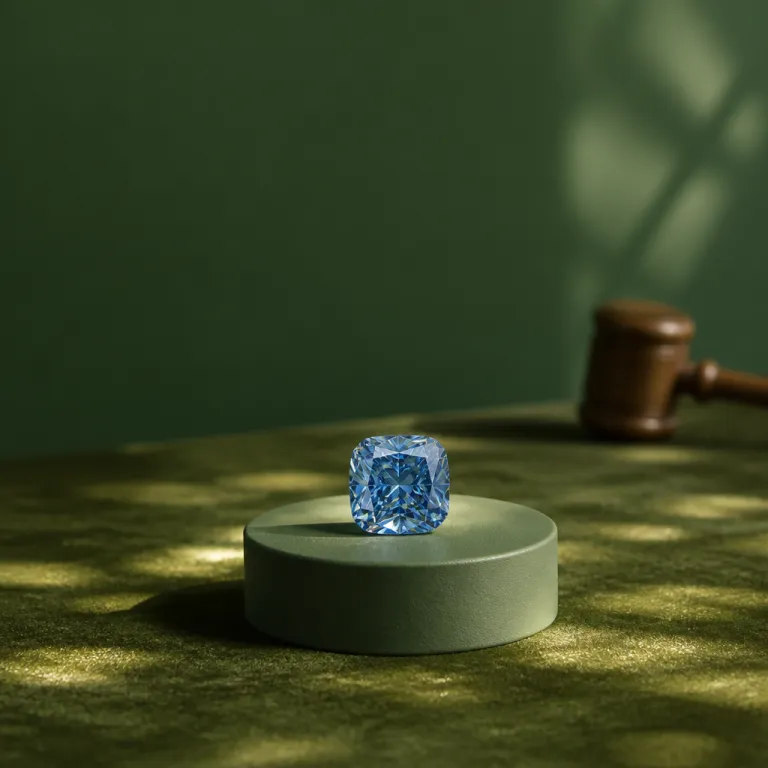
Reading the Sotheby’s blue diamond result as a market signal
The headline at Sotheby’s New York was clear and sharp. A 10.02 carat fancy intense blue diamond, a cut-cornered rectangular modified brilliant, achieved 8.7 million dollars in a Sotheby’s blue diamond sale that now defines the colored diamonds auction narrative for the 2026 season. For a collector who already owns fine jewelry, this single blue diamond result matters less as spectacle and more as data.
This stone sat at the intersection of several powerful forces in the colored diamonds market. It combined a relatively high carat weight with intense blue saturation, a sophisticated brilliant cut that maximized light return, and the cachet of a New York spring jewelry sale at Sotheby’s that already had strong demand baked into its estimate range. When a blue diamond of this type and category becomes the highest priced jewelry lot of the New York high auction season, it tells you that capital is still willing to pay a premium for rarity and color nuance rather than size alone.
Look at the structure of the sale, not just the blue diamond headline. Sotheby’s reported that the total jewelry auction reached 43.4 million dollars, exceeding the high estimate of 38.7 million by roughly 12 percent, with 63 percent of lots beating their top estimate and 98 percent finding buyers in the auction room or online. For an investor collector tracking high-end colored diamond auctions, that combination of a near perfect sell-through rate and repeated estimate-beating results in the blue and pink diamond category signals a market where supply is tight, demand is deep, and pricing power sits with sellers who bring genuinely rare stones to market.
Colored diamonds at the top: blue, pink and the new hierarchy of rarity
The Sotheby’s blue diamond story did not rest on one stone. In the same New York auction, a 5.02 carat fancy intense pink oval diamond fetched 2.9 million dollars, reinforcing that the pink diamond segment remains resilient even as broader jewelry sale volumes fluctuate. When fancy intense pink stones and intense blue stones both clear their estimate ranges in the same sale, you are watching a hierarchy of rarity being repriced in real time.
Fancy colored diamonds claimed six of the top ten lots at Sotheby’s New York, a concentration that would have been unthinkable when colorless D to F stones dominated every high jewelry catalog. Today, collectors are paying for hue, saturation and cut–carat harmony, whether that means a pear-shaped fancy intense blue diamond ring, a brilliant-cut fancy light pink diamond, or a shaped fancy mixed-cut stone that balances carat weight with wearable proportions. For owners already holding colored diamonds, this pattern in the latest New York auction results validates a thesis that rarity in color, not just clarity, is where long term value is consolidating, even as some recent white diamond pieces have struggled to meet expectations.
That shift has styling implications as well as financial ones for your own jewelry. A vivid blue or intense blue center stone in a diamond ring now reads as both connoisseurship and capital allocation, while a smaller fancy light pink diamond in high jewelry earrings can quietly echo the same market logic at a more approachable scale. If you are curating pieces you actually wear, pairing a strong colored diamond jewel with refined pieces such as elegant pink pearl earrings lets you enjoy the asset without turning every outing into an auction preview, and mirrors the way some private clients now favor discreet, wearable blue diamond jewels over showpiece necklaces.
From New York to your safe: decoding estimates, online bidding and portfolio risk
For an investor collector, the recent Sotheby’s blue diamond auction only makes sense when set against the wider June jewelry sale landscape. A week earlier at another major New York Magnificent Jewels event, a large fancy blue diamond in the low 30 carat range reportedly realized more than 8 million dollars with a 100 percent sell-through rate across the catalog, confirming that deep demand for blue diamonds is not confined to a single house or sale. When two marquee New York auctions in the same month place blue and pink diamond lots at the top of their results, you are seeing a cross-market confirmation of the colored diamonds thesis rather than a one-off anomaly, even if a handful of mid-range white diamond bracelets and signed pieces sold only at the low estimate or were withdrawn.
The internal metrics of the Sotheby’s New York event matter as much as the headline carat numbers. A 98 percent sell-through rate, with more than a third of purchases made online, shows that the buyer base for high jewelry and colored diamonds has broadened beyond the traditional in-room clientele, which in turn supports liquidity if you ever choose to consign a blue diamond or pear-shaped fancy light stone from your own collection. When 63 percent of lots in a New York high auction beat their high estimate, it suggests that the estimate bands were conservative relative to live demand, and that underestimating the appetite for rare type IIa stones, Paraiba tourmalines and shaped fancy diamonds is now a recurring risk for cautious sellers.
Context from other specialist events reinforces this reading of the market. Analysis of recent offerings of very large type IIa rough diamonds at auction, explored in depth in a broader natural diamond market review, shows how supply at the very top of the diamond category is structurally limited, which supports sustained pricing for both blue diamonds and pink diamonds in polished form. For your own risk management, that means balancing a few high conviction colored diamonds with portable, insurable pieces you can travel with, supported by practical guidance such as a travel-focused summer jewelry kit and insurance checklist, because in the end the most resilient asset is not the carat count, but the fire in the stone.