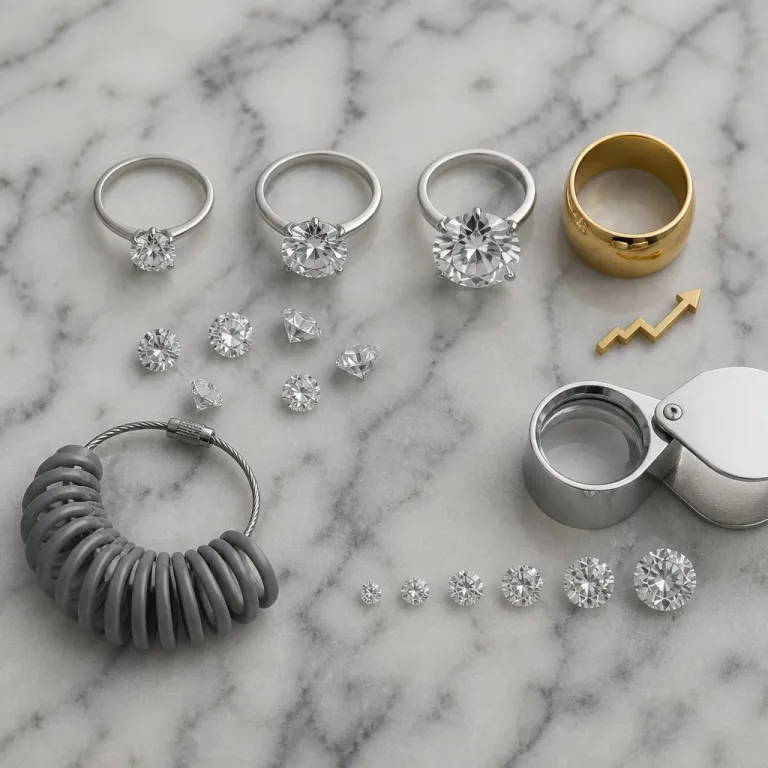
The new scale of desire: how size is rewriting diamond economics
Large stones have moved from outlier to default aspiration in high end diamond jewelry. This shift in taste is quietly rewriting how the big-stone resale narrative is framed, especially for collectors who care about value retention as much as sparkle. When you buy a significant carat diamond today, you are no longer just paying for beauty, you are stepping into a very specific segment of the diamond market with its own rules for price behavior, liquidity, and long term performance.
The relationship between carat and price is famously nonlinear, and nowhere is that clearer than when you compare a one carat diamond with a three carat diamond of similar quality. The three carat diamond price is not triple, because diamond prices jump at psychological thresholds where rarity and demand collide, so a three carat diamond can easily cost five to seven times the purchase price of a single carat stone. Industry price lists such as the Rapaport Diamond Report and IDEX Diamond Index, as of 2023–2024, consistently show these step changes in per carat pricing around one, two, three, and five carats. This nonlinear curve is even steeper for natural diamonds above five carats, where the pool of stones shrinks dramatically and the luxury buyer base becomes more global, more auction driven, and more sensitive to pedigree and cutting style.
For a fine jewelry owner, this means that every extra fraction of a carat is not just an aesthetic choice but an investment decision. Moving from a 1.50 carat diamond ring to a 2.00 carat diamond ring pushes you into a different retail bracket, and the resale implications of that jump can be profound. In the context of forward looking discussions about large diamond resale values, the question is not only what you pay today, but how the secondary market will treat that specific size, shape, and quality profile when you eventually test its resale value.
Shape is now as financially consequential as size. Elongated cuts such as oval, marquise, emerald, and the hybrid “moval” create more finger coverage per carat, which means a 2.20 carat diamond in an oval engagement ring can look visually comparable to a three carat round diamond ring from the top. Because the diamond market still benchmarks diamond prices per carat heavily on rounds, these elongated stones can offer a form of aesthetic arbitrage, giving you the look of a larger diamond at a lower per carat price and often with better value retention relative to what you paid at retail.
That arbitrage is especially interesting when you consider the growing gap between retail and secondary prices. In many global markets, the purchase price for a branded three carat engagement ring in platinum can sit at a 50 to 100 percent premium over an equivalent unbranded stone, yet the diamond resale market will often compress those premiums sharply. For collectors tracking how larger stones are likely to behave over the next few years, the lesson is clear, pay for cut quality, transparency of grading, and strong proportions, not for marketing language that will evaporate the moment the ring leaves the boutique.
Color is another lever that interacts with size and value in subtle ways. Champagne and light yellow natural diamonds, for example, can offer statement scale at significantly lower diamond prices per carat than top colorless stones, which means a five carat champagne diamond ring might cost what a three carat D color natural diamond would command. On the resale side, these colored stones have a smaller but often more passionate buyer pool, so while liquidity can be slower, the right stones with strong quality and character can hold value surprisingly well over the long term.
From an investment perspective, the key is to think in bands rather than single numbers. A 2.90 carat diamond and a 3.10 carat diamond may feel similar on the hand, but they sit in different psychological brackets for both retail and resale buyers, which affects diamond price behavior. If you are buying with an eye on future exit options, it can be smarter to target the top of a band, such as 2.90 to 2.99 carats, where you avoid the steep premium of the next threshold while still capturing much of the perceived luxury and presence.
Natural diamonds and lab grown diamonds now coexist in the same showcases, but they occupy very different economic universes. A natural diamond with strong grading, excellent cut, and classic proportions is still treated as a finite resource in the diamond market, while a lab grown diamond is effectively an industrial product whose prices respond quickly to technological capacity and competition. That divergence is central to understanding why conversations about large stone resale prospects always circle back to the question of whether a stone is a natural diamond or a lab grown diamond, especially once you cross the two carat mark.
For owners, the practical takeaway is simple but not easy, size is seductive, but structure matters more. You want diamonds that sit at the intersection of desirable carat weights, timeless shapes, and verifiable quality, because that is where diamond resale dynamics are most forgiving. In the end, the market rewards not the loudest stone, but the best balanced one, not the carat count, but the fire in the stone.
Lab grown scale versus natural scarcity: when size stops signaling status
The return of bigger stones has exposed the fault line between natural diamonds and lab grown diamonds more starkly than any marketing campaign ever could. In the natural diamond segment, a three carat diamond with strong color and clarity still reads as a serious asset, while in the lab grown segment, a similar three carat lab grown diamond can now be acquired at a fraction of the purchase price. This divergence is reshaping how collectors think about big-stone buying decisions, especially for engagement rings and high visibility pieces.
Lab grown technology has made it possible to produce large, clean grown diamonds with impressive carat weights, and retailers have leaned into this by promoting two to four carat lab grown engagement rings at prices once associated with modest natural stones. On the surface, this looks like a democratization of luxury, but from an investment standpoint, it changes the signaling power of size, because a four carat lab grown diamond ring no longer implies the same financial commitment as a four carat natural diamond ring. As more grown diamonds enter the jewelry market, the association between carat weight and economic status weakens, which has direct implications for diamond resale and perceived value retention.
For natural diamonds, this can be a quiet advantage. As casual observers become accustomed to seeing very large lab grown stones in retail windows, the truly rare natural diamond above three carats, especially in classic shapes like round brilliant or emerald cut, becomes a connoisseur’s object rather than a blunt status symbol. In the context of long term resale thinking, this means that the best natural diamonds may see their cultural cachet deepen even as the visual shock of size becomes more common.
The economics, however, are unforgiving for lab grown stones. Wholesale prices for grown diamond material have fallen sharply over recent years, and there is little evidence of a floor, because production capacity can expand rapidly as new reactors come online in every major lab hub. Bain & Company’s 2018, 2020, and 2022 global diamond industry reports, along with trading data from major lab grown exchanges, document price declines of more than 50 percent for certain sizes and qualities, particularly in the two to four carat range. When you buy a lab grown engagement ring today, you are effectively paying for design, immediate enjoyment, and short term aesthetics, not for long term value retention or favorable diamond resale prospects.
That does not make lab grown jewelry a poor choice, it simply places it in a different asset category. A lab grown diamond ring can be a brilliant way to enjoy a bold three or four carat look without tying up capital in a single stone, especially if you are already heavily allocated to natural diamonds and colored stones. For many collectors, the rational approach is to treat lab grown pieces as wearable fashion, while reserving serious investment capital for natural diamond and colored gemstone acquisitions that have a track record of holding value.
Shape and setting also play different roles across these categories. Because the diamond price per carat is lower for lab grown stones, designers can experiment with extravagant halos, multi stone rings, and high carat lab cluster settings that would be prohibitively expensive in natural diamond. In contrast, natural diamond jewelry at the three carat and above level tends to favor cleaner solitaires or minimal side stones, because every additional natural diamond adds significantly to the overall price and complicates future resale value calculations.
For investors tracking the broader diamond market, the key is to separate emotional narratives from hard numbers. Natural diamonds above two carats with strong grading from reputable laboratories still command meaningful prices at auction and in private sales, while comparable lab grown stones often trade at steep discounts to their original retail tags, if they trade at all. If you are building a portfolio with multi year resale horizons in mind, it is prudent to treat lab grown acquisitions as consumables and natural diamond acquisitions as potential long term stores of value.
This bifurcation is mirrored in the growing interest in alternative stones. As ultra wealthy investors quietly move into colored gemstones such as Paraíba tourmaline and fine Kashmir sapphire, as documented in recent auction catalogues and market commentary on why ultra wealthy investors are quietly moving into colored gemstones, the role of large natural diamonds is being reframed as part of a broader hard asset strategy. In that context, size still matters, but only when paired with scarcity, provenance, and a realistic understanding of how the diamond resale market values different categories of stones.
Shape, color, and cut: the quiet levers behind big stone resale performance
Once you move beyond the headline number of carat weight, the real determinants of how a major stone performs on resale are shape, color, and cut quality. Elongated shapes such as oval, marquise, and emerald cuts have surged in popularity, because they offer more visible spread on the finger for a given carat diamond weight. This means a 2.50 carat oval engagement ring can command strong attention in both retail and resale contexts, even if its actual diamond price per carat sits below that of a comparable round.
The illusion of size created by these shapes is not just a styling trick, it is a financial tool. When you can achieve the visual presence of a three carat stone with a 2.40 carat diamond in an elongated cut, you effectively compress the purchase price while preserving much of the perceived luxury, which can improve value retention if the diamond market softens. For collectors focused on balancing aesthetics with discipline, this is one of the most efficient ways to reconcile ambition on the hand with prudence on the balance sheet.
Color offers another underappreciated lever. Champagne and light yellow natural diamonds, often overlooked in favor of icy whites, can deliver impressive sizes at more approachable prices, because the diamond prices per carat are lower for these hues. A four carat champagne diamond ring in a refined bezel setting can feel quietly luxurious, and while the buyer pool for such stones is narrower, those who seek them often understand their niche value, which can support resilient resale value over the long term.
Cut quality, however, is non negotiable if you care about diamond resale outcomes. A poorly cut three carat diamond may technically tick the size box, but it will leak light, show windowing or darkness, and face up smaller than its weight suggests, which the secondary market will punish with lower offers. In contrast, a finely cut 2.70 carat diamond with excellent symmetry and proportions can outperform a heavier but mediocre stone when it comes time to test liquidity for a large diamond.
Certification and grading consistency also matter more as stones get larger. A natural diamond graded by a top tier laboratory with clear documentation of color, clarity, and cut will be easier to price in the diamond market, which supports stronger bids from dealers and auction specialists. If you are buying a significant diamond ring or loose stone, insist on seeing the full grading report and, ideally, high resolution imaging, because any ambiguity around quality will be magnified in future diamond resale negotiations.
Design plays a subtler but still important role. Highly idiosyncratic settings can limit the buyer pool for large stones, because not every collector wants a very specific aesthetic, especially in engagement rings that must feel timeless. Choosing a classic, well executed mount for a major carat diamond can therefore be a strategic decision for value retention, allowing future buyers to focus on the stone itself rather than the cost of redesigning the jewelry.
Market context is the final piece of this puzzle. Analyses of jewelry trends shaping what collectors are actually buying show a clear tilt toward pieces that balance presence with wearability, which favors elegant elongated stones in low profile settings. For owners thinking about eventual exit strategies, this means that a beautifully cut 2.50 carat oval in a refined solitaire may be easier to place than a heavier but impractical stone that sits too high or feels uncomfortable for daily wear.
Ultimately, the best performing large diamonds tend to share a few traits, they sit just below major price cliffs in carat weight, they are cut to maximize light return rather than paper weight, and they are mounted in designs that feel current but not faddish. Whether you are considering natural diamonds or selectively using lab grown stones for scale, the same principle applies, the market rewards coherence between size, quality, and design. When those elements align, the story around big-stone ownership shifts from anxiety about depreciation to quiet confidence in long term desirability.
From safe to sentimental: building a big stone strategy you will actually wear
For many collectors, the most valuable pieces are not the largest stones in the safe but the diamond jewelry that lives on the hand, wrist, or neck every day. The current appetite for larger carat diamonds has tempted some buyers into acquiring showpiece rings that rarely leave the vault, which can undermine both emotional return and financial performance. A more nuanced approach to major-stone strategy starts with a simple question, will you actually wear this stone often enough for it to become part of your story.
Resale value is not created only at the moment of sale, it is built over years of visibility, care, and context. An engagement ring that has been worn daily, maintained carefully, and photographed across a lifetime of milestones often feels more compelling to future buyers than a pristine but anonymous stone, because provenance and narrative matter in the luxury market. This is why thoughtful guides to sentimental jewelry that will actually get worn resonate so strongly with serious collectors who also care about long term value.
From a portfolio perspective, it can be helpful to think in tiers. Your core holdings might include one or two significant natural diamonds in the two to three carat range, chosen for impeccable cut, balanced color and clarity, and classic settings that support strong diamond resale prospects. Around these anchors, you can build a supporting cast of lab grown pieces, colored stones, and more experimental designs that satisfy the desire for scale and novelty without tying up disproportionate capital in any single diamond ring or suite of stones.
Liquidity is another practical consideration. Very large stones above five carats can command impressive prices, but the buyer pool is narrow, which can lengthen the time required to achieve a satisfactory sale, especially in private channels. In contrast, diamonds between two and three carats in desirable shapes and qualities often strike a sweet spot where the economics of larger stones favor both strong offers and relatively quick placement.
Care and documentation quietly support this entire strategy. Regular professional cleaning, prong checks, and timely repairs preserve both the physical integrity and the perceived quality of your jewelry, while organized records of purchase price, grading reports, and any subsequent appraisals make it easier for future buyers to assess value. When the time comes to test the diamond market, a well documented two carat natural diamond with a clear paper trail will almost always outperform a similar stone with missing or inconsistent information.
Finally, it is worth remembering that the diamond market does not exist in isolation. Broader shifts in wealth, taste, and alternative assets, from fine art to rare colored gemstones, all influence how collectors allocate capital and attention, which in turn affects diamond prices and resale value. By staying informed, buying selectively, and prioritizing pieces you genuinely enjoy wearing, you position yourself to benefit from the current appetite for larger diamonds without becoming captive to it.
Key figures shaping the economics of bigger stones
- Data from major auction houses such as Christie’s and Sotheby’s show that diamonds between two and three carats in top color and clarity have achieved resale prices that are often 60 to 80 percent of their original purchase price in recent sales, while many mass market engagement rings below one carat trade closer to 30 to 50 percent of retail, highlighting the stronger value retention of well chosen mid large stones. For example, Christie’s “Magnificent Jewels” sale in Geneva on 8 November 2022 included several 2.00–3.00 carat D–F, VVS stones that realized hammer prices within this band relative to published pre-sale retail estimates.
- Industry pricing reports, including the Rapaport Diamond Report (monthly price list) and IDEX Diamond Index (updated daily), indicate that the per carat price of a three carat natural diamond can be five to seven times higher than that of a one carat stone of similar quality, illustrating the nonlinear relationship between carat weight and diamond price that underpins the economics of large stone acquisitions.
- Market analyses of lab grown diamonds from sources such as Bain & Company’s “The Global Diamond Industry 2018,” “The Global Diamond Industry 2020–21,” and “The Global Diamond Industry 2022–23,” along with data from leading industry trading platforms, show wholesale price declines of more than 50 percent for certain sizes and qualities over the past few years, underscoring why lab grown engagement rings should be approached as aesthetic purchases rather than long term investments in the context of diamond resale.
- Surveys of retail trends reported by Jewelers of America’s annual “Cost of Doing Business” and “Consumer Survey” reports, together with disclosures from leading luxury retailers, note that elongated shapes such as oval and marquise now account for a growing share of engagement rings in the two to three carat range, reflecting buyer preference for stones that maximize visible size and supporting the strong performance of these shapes in the secondary market.
- Reports on colored diamond demand from the Fancy Color Research Foundation, including its 2022 and 2023 Fancy Color Diamond Index updates, indicate that champagne and light yellow stones can trade at discounts of 30 to 60 percent per carat compared with comparable white diamonds, allowing collectors to acquire larger stones for the same budget while accepting a more specialized but often resilient resale market.