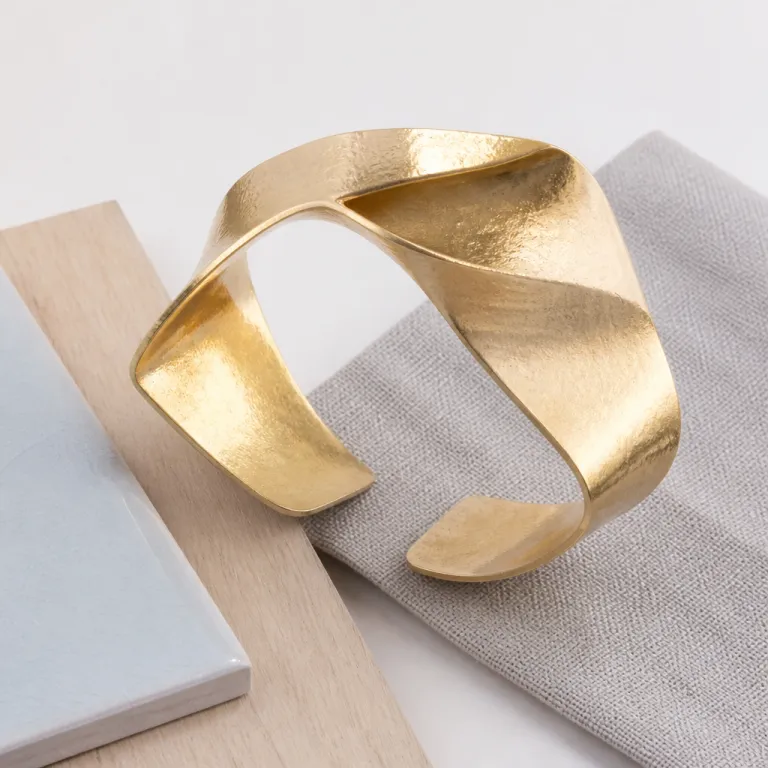
How sculptural gold is redefining fine jewelry value
Sculptural gold has shifted fine jewelry from stone-centric thinking to metal-led artistry. In this new wave of sculptural fine jewelry, organic gold metalwork and bold silhouettes matter more than the carat weight of the diamonds. For seasoned collectors of jewelry, this means reassessing which pieces truly earn space in a vault or on a neck.
Where traditional jewelry trends often treated gold and silver as neutral backdrops, sculptural designs offer fluid, folded, almost topographical surfaces that command attention before any stones appear. You see it in wide torque necklace forms, in asymmetrical rings that rise like small landscapes on the hand, and in earrings that twist away from the lobe in unexpected arcs. These are statement jewelry objects first, gemstone jewelry carriers second, and the price is increasingly tied to the complexity of the metalwork rather than the size of a diamond ring or pendant.
For the discerning jewelry brand and atelier, this movement toward sculptural, organic gold metalwork encourages bolder experiments with precious metals and recycled precious alloys. Heavy-gauge recycled gold or sterling silver becomes the medium for almost architectural pieces, while diamonds and colored stones act as punctuation rather than the main narrative. In this context, consumers who once chased only large engagement rings or a showpiece diamond ring now weigh how a ring or necklace feels in the hand, how the jewelry feels against the skin, and how the designs age as everyday pieces rather than just for special occasions.
When metalwork, not stones, sets the price
Once metalwork becomes the centerpiece, the usual mental math around price and value changes. Instead of calculating cost per carat for diamonds or colored stones, serious buyers start asking about metal thickness, alloy composition, and hours of hand finishing. A sculptural gold jewel with organic, high-relief modeling may carry a higher price than a stone-heavy piece because the labor and gold weight are concentrated in the form itself.
Consider a broad, folded gold ring with no visible stones, compared with a slim band set with a line of small diamonds. The sculptural ring may use twice the gold, require complex casting and hand carving, and demand more time at the bench, even though the diamond ring appears more obviously luxurious to casual consumers. This is where connoisseurs of fine jewelry quietly step away from mainstream jewelry market logic and focus on the integrity of the metal, the crispness of the edges, and the way light travels across satin and high-polish planes.
For collectors who already own classic engagement rings and a traditional signet ring, sculptural pieces become the next frontier in building a coherent collection. A heavy, organically carved band in recycled gold can sit beside a men’s signet ring and still feel part of the same visual language of authority and restraint; this is why a men’s gold signet ring as a timeless statement remains a useful reference point. In both singular and plural forms, these rings and other pieces show how price can be justified by the depth of the metalwork, not just the sparkle of stones or the presence of gold-plated accents.
Material choices that shape sculptural presence and longevity
Material decisions quietly determine whether a sculptural necklace or ring feels like a future heirloom or a seasonal experiment. In this era of sculptural fine jewelry and organic gold metalwork, the difference between 18 karat gold and 14 karat gold is not only color but also how edges hold, how surfaces patinate, and how weight registers on the body. Higher karat gold offers a richer hue and softer working properties, while lower karat alloys and sterling silver can support sharper, more architectural lines.
Rhodium plating over white gold or over silver can sharpen the visual impact of deep grooves and high ridges, but it also introduces a maintenance cycle that owners must respect. Thick, unplated yellow gold or recycled gold in sculptural designs will show micro scratches that actually enhance the organic effect, whereas thin gold-plated surfaces on large statement jewelry pieces risk wearing unevenly on high points. Collectors who favor everyday wear for their jewelry should ask directly about metal thickness in millimeters, the presence of recycled precious content, and whether the atelier can refinish complex folds without softening the original designs.
Material nuance also affects how earrings, studs, and pendants sit and move. A pair of sculptural earrings in solid precious metals will hang differently from hollow forms, and small studs with carved relief require enough gold or silver to keep the details crisp over decades. For those tracking broader jewelry trends, the shift toward responsibly sourced alloys and recycled precious metals is documented in analyses such as the ten shifts shaping what collectors are actually buying, where recycled materials and thoughtful metalwork are increasingly central to both aesthetic and ethical value.
Styling sculptural statement necklaces and earrings for professional authority
In a boardroom or gallery setting, sculptural jewelry offers presence without overt flash. A wide, organically contoured necklace in brushed gold or oxidized silver reads as design literacy rather than status signaling, especially when it sits close to the collarbone and follows the body’s natural lines. This is where the rise of sculptural metalwork intersects with the needs of professionals who want statement jewelry that still respects a conservative dress code.
Statement necklaces with folded or rippled surfaces can replace a cluster of smaller everyday pieces, simplifying the silhouette while amplifying personality. Instead of layering multiple chains, one sculptural pendant on a substantial chain in recycled gold or sterling silver can anchor a look, with small studs or minimal hoops echoing the same language of curves and negative space. For many consumers, this approach makes everyday wear of fine jewelry more intentional, as each necklace or pair of earrings is chosen for its form and how the jewelry feels against tailored fabrics.
On the ear, sculptural studs and ear cuffs in precious metals can frame the face with subtle shadow and light, even without diamonds or colored stones. When diamonds or other stones do appear, they are often bezel set into the metal like tiny apertures, supporting the overall architecture rather than dominating it. Owners who already have classic gemstone jewelry and diamond ring staples in their collection can rotate in these sculptural pieces for client meetings and special occasions, allowing traditional rings and engagement rings to remain on the hand while the metalwork around the neck and ears carries the stylistic conversation.
Collectibility, resale, and the art jewelry crossover
Collectibility in this sculptural gold and organic metalwork movement hinges on authorship, edition size, and the integrity of the metalwork. When the metal itself is the artwork, signatures, hallmarks, and documentation of recycled precious content become as important as gem certificates. The jewelry market is already seeing more crossover between gallery-represented artists and established jewelry brand maisons, blurring the line between wearable sculpture and traditional fine jewelry.
Limited edition rings, earrings, and necklace forms that explore organic folds or geological textures often appreciate differently from stone-led designs. A diamond ring can be valued through relatively standardized metrics, while a one-of-a-kind sculptural ring in recycled gold or sterling silver depends on the reputation of the maker, the rarity of the design, and how the piece fits into broader jewelry trends. For collectors used to tracking auction results for vintage-inspired pieces and signed engagement rings, this requires a shift toward studying exhibition catalogues, museum acquisitions, and critical writing on art jewelry.
Resale potential also depends on wearability and condition, especially for large statement jewelry pieces with complex surfaces. Deep scratches on high-polish planes may be refinishable, but over-polishing can soften crisp ridges and diminish the original intent of the designs. Savvy owners keep original boxes, artist statements, and any documentation about recycled gold or recycled precious alloys, treating these pieces less like anonymous everyday pieces and more like portable sculptures that happen to be rings, pendants, or earrings.
Caring for organic metalwork and balancing stones with sculptural form
Maintenance for sculptural jewelry differs markedly from care for flat bangles or simple solitaires. Organic folds, crevices, and undercuts in high-relief metalwork tend to trap skin oils and environmental dust, which can dull both metal and stones over time. Gentle cleaning with a soft brush and mild soapy water, followed by careful drying with a lint-free cloth, preserves the interplay of matte and polish without eroding intentional textures.
Owners should be cautious about aggressive polishing cloths or automated polishing wheels, especially on pieces that combine high-polish ridges with sandblasted or satin valleys. Over time, indiscriminate polishing can blur the edges that give sculptural rings, earrings, and pendants their character, and it may thin gold-plated surfaces on more accessible statement jewelry. When in doubt, a specialist bench jeweler who understands both gemstone jewelry and complex metalwork should handle refinishing, particularly on pieces that integrate diamonds, colored stones, and mixed precious metals.
Balancing stones within sculptural designs is an art in itself, especially for engagement rings and diamond ring commissions. Many ateliers now set small diamonds or colored stones deep into carved channels or at the apex of folds, allowing the stones to flash without interrupting the flow of the metal. Collectors exploring elongated cuts for more architectural engagement rings can study resources such as this guide to oval, marquise, and other elongated engagement ring cuts, then work with designers to integrate those stones into sculptural bands that feel like continuous forms rather than stone on top of shank.
From heart pendants to everyday pieces: how sculptural design reshapes familiar forms
Even the most familiar motifs are being reimagined through this focus on sculptural fine jewelry and organic gold metalwork. A classic heart pendant, for example, might be rendered as a thick, folded volume with a hollowed back, its surface rippling like fabric rather than lying flat against the chest. In plural, these heart pendants become a study in how small variations in curve, thickness, and finish can transform a sentimental symbol into a serious design object.
Designers are applying the same thinking to everyday pieces such as hoops, studs, and simple rings. Instead of flat bands and predictable profiles, you see rings that swell and taper asymmetrically, studs that bulge like river stones, and earrings that twist away from the face in quiet arcs of gold or silver. These designs offer a way for consumers to participate in the sculptural movement at more approachable price points, especially when made in sterling silver or in mixed precious metals that combine recycled gold with darker alloys.
For those who already own substantial gemstone jewelry and classic diamond ring staples, sculptural everyday wear can act as the connective tissue of a collection. A small, organically carved ring in recycled gold can sit beside a vintage-inspired solitaire, while a pair of folded metal studs can echo the curves of a more dramatic statement necklace reserved for special occasions. Over time, the collection reads less like a series of isolated jewelry purchases and more like a coherent exploration of how jewelry feels on the body, how pieces relate to one another, and how metal itself can carry as much emotional weight as any stone.
Key figures in the rise of sculptural metalwork
- The share of consumers citing design and craftsmanship as their primary reason for purchasing fine jewelry rose to roughly 40% in recent surveys by Bain & Company, up from around 30% a decade earlier, reflecting growing interest in sculptural metalwork over pure stone value.[1]
- According to data from the Responsible Jewellery Council, recycled gold now represents an estimated 20–25% of global gold used in jewelry production, supporting the growth of recycled precious sculptural pieces that emphasize metal volume and form.[2]
- Reports from major auction houses such as Sotheby’s and Christie’s show that signed art jewelry and sculptural pieces by recognized makers have achieved price premiums of 20–50% over comparable unsigned works, underscoring the importance of authorship in this trend.[3]
- Museum acquisitions of contemporary jewelry, including sculptural metalwork, have increased steadily, with institutions like the Museum of Arts and Design in New York and the Victoria and Albert Museum in London expanding their holdings by dozens of pieces in the last decade, validating jewelry as wearable sculpture.[4]
- Industry analyses of jewelry trends indicate that online searches related to “statement jewelry” and “sculptural rings” have grown at double-digit annual rates, signaling strong interest in pieces where metalwork, not stones, is the primary design driver.[5]
FAQ: sculptural gold and organic metalwork in fine jewelry
How should I evaluate the price of a sculptural gold piece without many stones?
Start by asking about metal weight in grams, alloy type, and the number of hours of handwork involved, then compare that with more conventional jewelry using similar amounts of gold or silver. Examine how crisp the edges are, how consistent the finishes appear across curves and folds, and whether the piece uses recycled gold or other recycled precious metals that may carry a premium. Finally, consider authorship and edition size, because signed or limited sculptural pieces often justify higher prices than anonymous, mass-produced designs.
Is sculptural metalwork practical for everyday wear, or only for special occasions?
Many sculptural designs are intentionally engineered for everyday wear, especially rings, studs, and compact pendants that sit close to the body. Look for smooth interior surfaces, balanced weight distribution, and profiles that will not catch on clothing or bags, even if the exterior is dramatic. Reserve the most extreme statement jewelry pieces with sharp protrusions or very high relief for special occasions, and rely on smaller, more ergonomic versions as everyday pieces.
How do sculptural pieces fit into a collection focused on engagement rings and classic diamonds?
Sculptural metalwork can frame and modernize a collection built around traditional engagement rings and diamond ring designs. Many collectors keep their classic solitaires on the hand while introducing sculptural necklaces, cuffs, or earrings in precious metals to shift the overall aesthetic toward art jewelry. Over time, you can commission custom pieces that integrate elongated diamonds or other stones into sculptural bands, creating a bridge between stone-centric and metal-led styles.
What materials work best for organic, sculptural jewelry forms?
Solid 18 karat or 14 karat gold and sterling silver are ideal for most sculptural applications because they balance workability, durability, and weight. Recycled gold and other recycled precious alloys perform similarly to newly mined metals when properly refined, so they are well suited to thick, folded forms and high-relief textures. Avoid very thin gold-plated constructions for heavily sculpted pieces, because plating can wear quickly on high points and compromise the design over time.
How should I care for complex organic surfaces without damaging the design?
Use a soft brush, mild soapy water, and gentle rinsing to remove oils and dust from crevices, then dry carefully with a lint-free cloth, avoiding aggressive rubbing on contrasting finishes. Schedule professional cleanings with a bench jeweler who understands sculptural work, and specify that you want minimal polishing to preserve edges and intentional textures. Store sculptural rings, earrings, and pendants separately in soft pouches or compartments so that hard stones and other metal pieces do not abrade high points or delicate folds.