From wax and workshop to jewelry technology in the studio
High jewelry once moved at the pace of wax, fire, and files. Today, digital jewelry technology, from 3D printing to blockchain provenance tools, quietly hums beside the bench, yet the best maisons still measure success in millimetres and decades. The question for a serious jewelry owner is simple yet demanding: which technology actually serves the piece, and which merely flatters the marketing.
Historically, jewelry making relied on traditional methods that left every curve to the artisan’s eye. Those same ateliers now integrate jewelry technology with restraint, using design tools and CAD software to map proportions before a single gram of platinum is cast. For instance, a studio might test ten CAD engagement ring prototypes in resin instead of carving one wax by hand, gaining options without surrendering authorship, much as houses like Cartier or Van Cleef & Arpels prototype complex high jewelry before committing to rare stones.
Think of computer aided jewelry design as a drafting table, not a factory. A strong jewelry design still begins with a concept, a wearer, and specific gemstones or diamonds chosen for character rather than certificate alone. CAD software simply lets designers create intricate structures that would be nearly impossible to calculate by hand, especially when a piece must balance on the finger yet carry a heavy centre stone or a halo of tapered baguettes.
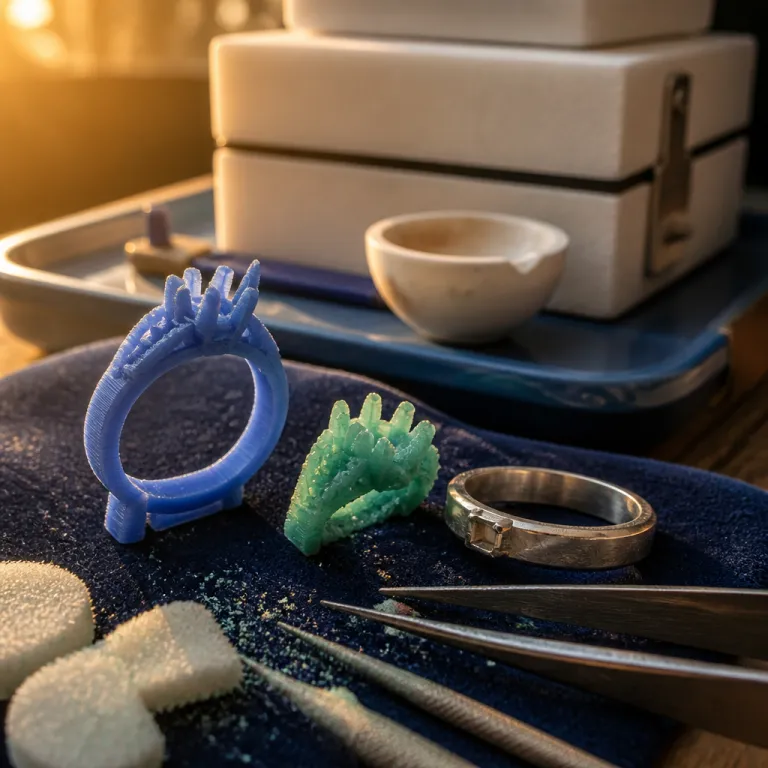
For engagement ring seekers, this shift matters. It means custom jewelry no longer requires a full bespoke workshop in Paris or New York, because designers create digital models that manufacturers across the jewelry industry can interpret with precision. A typical workflow runs CAD model → 3D print → kiln burnout → casting → hand setting and finishing. The result is a more accessible shopping experience for couples who want a personalized ring, but still care deeply about craftsmanship, long term value, and how the ring will age over decades of daily wear.
Some collectors worry that design printing will flatten character. In practice, the opposite often happens when designers use design CAD as a sketchbook, then refine prongs, galleries, and pavé by hand at the bench. The soul of the piece still comes from the human who decides where light should enter and where metal should quietly disappear, just as a master setter adjusts each claw by feel rather than by algorithm.
CAD, design tools, and the new language of custom jewelry
Computer based design tools have democratized custom jewelry without cheapening it. A decade ago, asking a small studio to alter a classic solitaire meant weeks of redrawing and a single wax piece that might or might not feel right on your hand. Now advanced jewelry technology lets the same designers present several designs as lifelike renders, so you can judge proportions before a single gemstone is ordered or a casting tree is built.
In practice, design CAD and CAD software function as a bridge between imagination and manufacturing. Designers create digital designs that specify exact angles for baguette diamonds, the thickness of a knife edge shank, or the under gallery that keeps a large piece from spinning on a 52 mm finger. This level of precision helps manufacturers and retailers align expectations, reducing the risk that a finished ring feels heavier or bulkier than the original jewelry design promised, and echoing the way high end workshops document every measurement.
For couples choosing an engagement ring, technology allows a more intimate experience. You can sit with a designer, adjust the height of a halo by fractions of a millimetre, and see how different gemstones or diamonds will look in the same setting. Augmented reality tools now let you preview those pieces on your own hand through a phone or tablet, turning an abstract future design into something you can react to emotionally and compare against existing pieces in your jewelry box.
The key is remembering that CAD is a tool, not a verdict. A skilled atelier still refines claws, polishes inner curves, and checks that the ring’s balance respects the anatomy of the hand, because no software fully predicts how a living person will wear a piece every day. When you evaluate custom jewelry, ask to see both the digital design and a physical model, then trust your tactile instincts as much as the screen and the technical language on the design sheet.
Technology also supports more meaningful heirlooms. For example, a ruby wedding band can be modelled so that each stone sits flush and protected, while engraving channels are planned in advance for future anniversaries. When you study an elegant ruby wedding band ring designed this way, you are seeing jewelry technology used in service of sentiment, not spectacle, and creating a piece that can be documented and repaired for the next generation.
3D printing, kilns, and what machines can never set
Three dimensional printing has become standard in serious jewelry studios, but its role is narrower than most marketing suggests. In high jewelry, 3D printing belongs to the prototyping and casting stages, not to the final setting of gemstones or the last polish that meets the skin. Understanding this boundary helps you judge whether jewelry technology, including 3D printing and blockchain backed documentation, is being used intelligently or merely as a sales phrase.
Here is how the process usually unfolds when designers create a new piece. The jewelry design is built in CAD software, then sent to a 3D printer that produces a wax or resin model, which will later be invested in plaster and burned out in a kiln to create the casting mould. This design printing step allows designers and manufacturers to test scale, comfort, and structural integrity before committing precious metal and rare gemstones, often using castable resins similar to those in professional systems like DLP or stereolithography printers used by maisons such as Bulgari or Tiffany & Co. for complex high jewelry prototypes.
For complex high domed rings or articulated bracelets, 3D printing can create intricate internal frameworks that traditional methods would struggle to achieve consistently. Technology allows designers to hollow out metal where weight is unnecessary, improving wearability without sacrificing strength or perceived volume. In this sense, jewelry technology becomes a quiet ally of daily comfort, especially for substantial pieces that must still feel balanced on the body and sit correctly on the wrist or finger.
What 3D printing cannot do is replace the setter’s hand. No printer can feel the resistance of a diamond as a bead of platinum is pushed over its girdle, or judge when a micro pavé line needs one fewer stone to avoid crowding. The final character of a piece still depends on human judgment at the bench, which is why the best jewelry industry manufacturers pair advanced printing with master setters rather than cheaper automated solutions or generic mass production.
As you evaluate a technologically aided piece, ask where the machine stopped and the human began. A ring that uses 3D printing for its under gallery but relies on hand finishing for its claws often ages better than one that is entirely machine finished. This is where initiatives supporting the next generation of jewelry designers matter, because the future design language of high jewelry will be written by people fluent in both kilns and code, able to move from CAD screen to polishing motor with equal confidence.
Laser engraving, repairs, and the quiet precision of light
Laser technology entered the jewelry workshop through the side door of repair. Traditional methods of soldering near heat sensitive gemstones often forced jewelers to remove stones, risking damage or misalignment. Laser welding changed that equation by focusing heat so precisely that a skilled jeweler can reinforce a fragile claw beside a diamond without disturbing its neighbour or softening nearby millegrain.
For owners of vintage or high jewelry pieces, this matters more than any flashy innovation. Laser engraving and laser welding allow designers and restorers to work on platinum filigree, delicate French cut diamond channels, or millegrain edges with minimal collateral damage. The jewelry industry has quietly embraced this technology because it extends the life of important pieces while respecting their original design and preserving hallmarks, signatures, and subtle surface textures.
On the creative side, laser engraving has expanded what personalization can mean. Instead of a simple date inside a band, technology allows jewelers to engrave micro scripts, family crests, or even tiny coordinates beneath a centre stone, all without weakening the metal. When combined with CAD software and design tools, laser engraving becomes part of the initial jewelry design rather than an afterthought added at the end, and can be mapped precisely alongside pavé or channel settings.
For engagement rings, this opens subtle ways to make a personalized piece feel truly yours. A couple might choose to hide a shared motto beneath the gallery, or to mark the inside of the shank with a pattern that echoes a childhood place, knowing that laser engraving can execute those designs with crisp edges. The result is custom jewelry that carries private meaning, not just public sparkle, and that can be documented in design files for future matching bands.
Laser technology also refines the shopping experience when you work with attentive retailers. They can adjust bracelet lengths, re size rings, and reinforce settings with far less risk than older methods, which encourages regular maintenance instead of crisis repairs. In the long run, that quiet precision of light does more for your collection’s longevity than any headline grabbing gadget, especially when combined with routine inspections and professional cleaning.
Blockchain, AI, and the new transparency in gemstone provenance
While CAD and printing reshape how pieces are built, blockchain technology and data tools are changing how their stories are recorded. In theory, modern jewelry technology, including 3D printing and blockchain based ledgers, promises a world where every diamond and coloured gemstone carries a secure digital passport from mine to finger. The reality is more nuanced, but the direction of travel is clear enough for serious collectors to pay attention.
Blockchain in the jewelry industry functions as a tamper resistant ledger. When manufacturers, cutters, and retailers all log each transfer of a gemstone on a shared blockchain, the resulting record can help verify origin claims and ethical sourcing. This printing blockchain approach does not guarantee virtue, but it makes false narratives harder to sustain over time, especially when combined with independent grading and origin analysis from established gemological laboratories such as GIA or SSEF, which already issue detailed provenance reports for select diamonds and coloured stones.
For engagement ring buyers, the practical question is whether a specific piece comes with such a record. Some high end retailers now offer blockchain backed certificates that complement traditional grading reports, especially for larger diamonds or rare gemstones. When combined with origin determination services from laboratories and detailed invoices from trusted dealers, blockchain technology can give you a more complete view of a stone’s journey than a paper report alone.
Artificial intelligence is also entering gem grading, though always under human supervision. Algorithms can assist with tasks such as measuring facet proportions, analysing inclusions, or comparing a stone’s spectral data against large datasets, but experienced gemologists still make the final call on borderline cases. The most trustworthy use of technology in this area supplements human expertise rather than trying to replace it, much as CAD supports but does not dictate a finished jewelry design.
As a collector, you should treat these tools as additional lenses, not as oracles. A beautifully cut diamond with a clear provenance record and a strong in person presence will always outrank a technically perfect but lifeless stone with an impressive digital file. In the end, it is not the carat count, but the fire in the stone that will make you reach for a piece again and again.
FAQ
Does CAD design make high jewelry less valuable than fully handmade pieces ?
CAD design does not inherently reduce value; it changes where value sits. When used well, CAD and design tools improve structural integrity and precision, while hand setting and finishing preserve individuality. Collectors should judge each piece by its execution, materials, and wearability rather than by a romantic notion of process alone, asking how technology supported the design rather than replaced craftsmanship.
What can 3D printing actually do in fine jewelry manufacturing ?
In fine jewelry, 3D printing is primarily used to create wax or resin models that are later cast in metal. It excels at producing complex under galleries, precise settings, and consistent components, especially for intricate designs. It cannot set stones, polish surfaces, or replace the nuanced decisions of an experienced bench jeweler, so its value lies in preparation rather than in the final visible details.
How reliable is blockchain for tracking diamond and gemstone origins ?
Blockchain can provide a secure, time stamped record of each transfer in a stone’s supply chain when all parties participate. Its reliability depends on accurate data entry at every stage, so it is strongest when combined with independent laboratory origin reports. For now, it is a useful transparency tool, not an absolute guarantee, and should be weighed alongside the reputation of the jeweler and the quality of the stone itself.
Should I prioritise technology features when choosing an engagement ring ?
Technology features such as CAD design, 3D printed prototypes, or blockchain certificates are helpful, but they should support rather than drive your decision. Prioritise cut quality, comfort on the hand, and how the ring fits your daily life, then use technology to refine details and verify claims. A ring that feels effortless to wear will outlast any specific innovation trend and will remain relevant even as tools evolve.
Can laser engraving and welding damage my existing high jewelry pieces ?
When performed by an experienced workshop, laser engraving and welding are generally safer than traditional soldering near sensitive stones. The focused heat allows precise work with minimal impact on surrounding metal and gemstones. Always choose a jeweler who regularly handles high value pieces and can explain exactly where and how the laser will be used, and what protective measures will be taken during the repair.