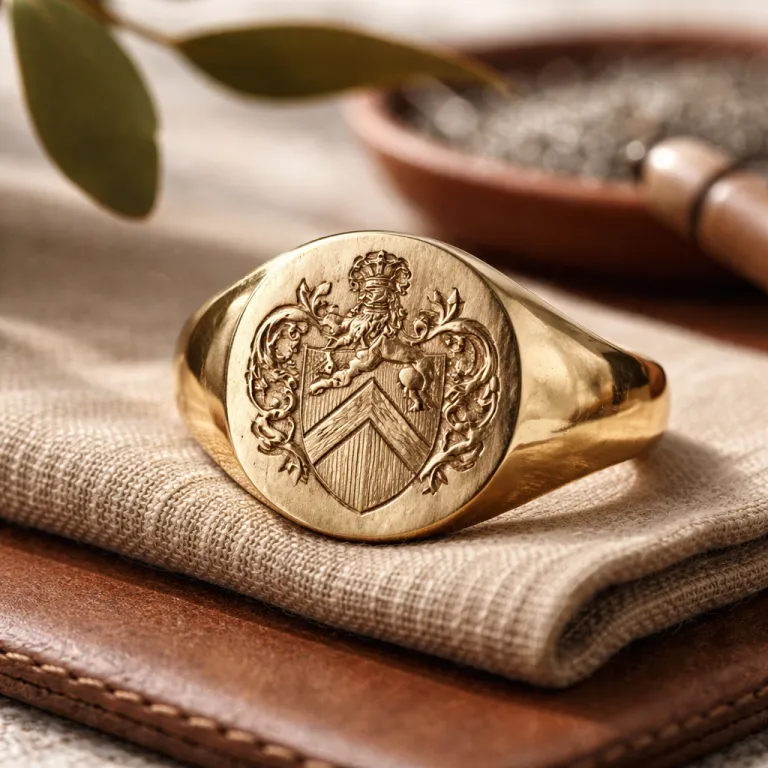
Reading the engraver’s mark: how connoisseurs assess handwork
Under a 10x jeweler’s loupe, traditional hand engraving on fine jewelry reveals itself immediately. A skilled hand engraver leaves minute variations in depth and rhythm, where each cut in the metal records the pressure of the hand and the resistance of the piece. Machine or laser engraving, by contrast, produces eerily uniform lines that look efficient but lifeless.
When you examine an engraved ring or bracelet, look first at the fine lines that define scrolls, leaves, or geometric designs. In authentic hand engraving, those lines taper like calligraphy strokes, with engraved details that start deep then lift into a whisper as the engraver turns the wooden handled tools. Laser engraving on jewelry often shows flat bottomed cuts with identical width, because the laser beam does not “breathe” with the movement of a human hand.
On a platinum engagement ring or gold wedding bands, trace the borders of any intricate designs along the shoulders or gallery. Hand engraved borders will show microscopic asymmetry from one side to the other, yet the overall design feels balanced and intentional, which is the paradoxical hallmark of master hand work. Perfect mirror symmetry usually signals casting or laser engraving, which can be beautiful but does not carry the same narrative of years master at the bench.
Collectors who value hand engraving and refined jewelry making learn to read these marks the way watch enthusiasts read movement finishing. Each engraved piece becomes a record of jewelry making decisions in the studio, from the choice of engraving tools to the sequence of cuts that built the pattern. Once you see the difference between hand engraved and machine engraved jewelry, it becomes difficult to unsee, and it will inevitably influence how you commission custom jewelry in the future.
Photo tip: Ask your studio or appraiser for close up images shot through a 10x loupe or macro lens. A simple overhead photo of an engagement ring rarely shows the engraved lines clearly, but a side angle with raking light will reveal depth, tapering cuts, and any telltale uniformity from laser engraving. For accessibility and SEO, use descriptive alt text such as “macro photo of hand engraved platinum engagement ring showing tapered lines and varied depth.”
Cutting, shaping, and the anatomy of a hand engraved surface
Before a single line is cut, the metal must be prepared with almost obsessive care. A skilled engraver will true the surface of a ring or pendant so that the hand engraving can catch light evenly, because any waviness in the metal will distort the engraved details. This cutting and shaping stage is where serious jewelry hand work quietly begins, long before you notice any visible designs.
In a high level studio, the engraver often refines the jewelry by hand in subtle ways, softening an edge here or sharpening a shoulder there to suit the planned design. On an engagement ring, for example, the transition between shank and setting may be carved to create a natural flow for scrollwork or floral engraving jewelry motifs, especially when the client wants a personal pattern that echoes antique engagement rings. These adjustments turn a generic casting into a responsive canvas, ready to receive intricate designs that feel grown rather than applied.
Pay attention to how the engraved piece interacts with light along its curves and planes. On a well executed engagement ring or stack of wedding bands, the fine lines of the engraving will appear crisp at the crest of a curve, then soften gracefully as they roll into shadow, which shows that the engraver understood both form and function. This is where cutting and shaping merge with the art form of engraving, and why two rings with similar motifs can feel radically different on the hand.
If you are considering floral inspired engraving on an engagement ring, it is worth studying how carved petals and leaves frame the center stone. A thoughtfully shaped shank allows the engraver to place each line so that the art supports the gem, not the other way around, which is a subtle but crucial distinction for serious collectors. For deeper context on how floral motifs translate into settings, you can look at a detailed guide to floral inspired engagement rings and then evaluate how hand engraved surfaces might elevate similar designs.
Suggested caption: “Side view of a hand engraved shank showing how the scrollwork follows the curve of the ring, with engraved details fading gently into shadow.” Include alt text such as “side profile of custom jewelry ring with hand engraving following the band’s curve.”
Granulation, filigree, and why some handwork cannot be faked
Granulation and filigree often sit alongside hand engraving on the same jewelry, forming a quiet conversation between ancient and modern techniques. True granulation involves fusing tiny spheres of metal onto a surface without visible solder, which no standard laser engraving or casting shortcut can convincingly replicate. When you see a ring or pendant with perfectly regular beads that seem poured from a mold, you are likely looking at an industrial imitation rather than authentic hand work.
Filigree, especially from Sardinia or traditional Italian ateliers, offers another test of connoisseurship. In authentic filigree work, the wires are drawn, twisted, and shaped by hand, then often accented with engraved details that follow the curves of the scrolls, which requires both engraving tools and goldsmithing finesse. Under magnification, you should see slight variations in wire thickness and the occasional tool mark where the hand engraver chased a line to sharpen a curl.
These techniques matter for value because they cannot be scaled easily by machines without losing their character. A hand engraved engagement ring with filigree shoulders and subtle granulation beads will command a premium not only for the hours of work but for the years master of training behind that work, especially when executed in high karat gold or platinum. Collectors who understand this are often willing to pay more for fewer pieces, choosing one engraved ring with genuine handwork over several laser cut alternatives.
When evaluating such pieces, compare how the fine lines of the engraving interact with the negative space of the filigree. In the best examples, the art form feels cohesive, with each engraved line reinforcing the structural design rather than fighting it, which is a sign that the engraver and goldsmith either share a studio or collaborate closely. For a sense of how nuanced handwork can frame colored stones, examine case studies of green sapphire engagement rings and then imagine similar settings elevated by hand engraved shoulders and galleries.
Suggested comparison shot: One macro image of hand wrought filigree with irregular, tapered wires beside a cast, laser finished version with perfectly uniform patterns. Use alt text such as “comparison of hand wrought filigree and laser finished filigree on two engagement rings.”
Pricing, appraisal, and the quiet premium of hand engraving
On paper, two rings may share the same carat weight, metal, and basic design, yet their values diverge sharply once hand engraving enters the equation. Appraisers who understand traditional engraving on fine jewelry will assign higher replacement values to pieces with verifiable handwork, because they factor in the labor, skill, and scarcity of a master hand engraver. This is especially true for custom jewelry where the engraved details cannot simply be reordered from a catalog.
When you commission an engraved engagement ring or wedding bands, ask the studio to document the process with sketches and work in progress photographs. Such documentation not only enriches the personal story of the piece but also helps future appraisers distinguish between hand engraved and laser engraving, which can look deceptively similar in low resolution images. A clear record of the engraver’s involvement, including their training at a respected school engraving program, supports both insurance valuations and potential resale discussions.
From a market perspective, hand engraved jewelry tends to hold value better in segments where craftsmanship is scarce. Collectors increasingly seek engraved rings and bracelets from ateliers known for their engraving tools and wooden handled gravers, because these details signal a commitment to the art form rather than to volume production. Over time, such pieces often migrate from everyday wear into the “heirloom” category, not because they are too precious to wear, but because their work simply cannot be replicated cheaply.
For those building a collection, it can be strategic to allocate budget toward fewer but more intensively worked pieces. A single engraved ring with intricate designs along the shank and gallery may bring more long term satisfaction than several unadorned bands, especially when the hand engraver has spent years master refining their style. Quiet luxury in jewelry is rarely about size; it is about the density of thought and work embedded in every millimeter of metal.
Appraisal photo note: Include at least one close up image of the engraved areas in your valuation file so that future experts can verify the depth, style, and condition of the work. Descriptive alt text such as “macro photo of hand engraved wedding band for appraisal documentation” supports both clarity and search visibility.
Choosing your engraver: studios, tools, and the language of lines
Selecting the right engraver is less about brand prestige and more about fluency in the language of lines. A serious studio will show you a range of hand engraving samples on different metals, from high polish platinum to brushed yellow gold, so you can see how the same designs behave on varied surfaces. Look for consistency in the fine lines, confident curves, and engraved details that feel intentional rather than tentative.
Do not hesitate to ask about engraving tools and training, because these shape the final art. Many of the best engravers still rely on wooden handled gravers sharpened to their personal preferences, even if they occasionally use laser engraving for layout or underdrawing on complex jewelry making projects. A practitioner who can explain why they choose a particular tool geometry for a specific ring profile usually has the depth you want for important engagement rings or wedding bands.
When commissioning custom jewelry, bring reference images of styles you admire but remain open to the engraver’s design instincts. A master hand engraver will adapt motifs to suit the anatomy of your piece, ensuring that the hand engraved scrolls or geometric patterns flow with the ring’s architecture rather than fighting it, which is crucial for comfort and longevity. This collaborative process often yields jewelry hand work that feels more personal than any off the shelf engraving jewelry option.
As your collection grows, you may find yourself gravitating toward certain studios whose work you recognize instantly. Their signature might be the way fine lines taper at the end of a leaf, or how they balance negative space against dense art form passages along a band, which becomes a kind of visual provenance. For everyday pieces such as stackable bands or signet rings, consider exploring curated selections of turquoise stackable rings and then imagining how subtle hand engraving could transform similar silhouettes into something uniquely yours.
Portfolio tip: When reviewing a studio’s images, look for close ups that show both the engraved design and the untouched metal nearby, so you can judge control, depth, and overall style. Consistent, confident lines across several engagement rings and wedding bands usually indicate a mature, reliable engraver.
From school bench to master hand: understanding the engraver’s journey
Behind every effortless looking engraved surface lies an unglamorous apprenticeship that often begins at a school engraving program or under a traditional master. Students spend years mastering straight lines, curves, and shading cuts on practice plates before they are allowed near a client’s engagement ring or heirloom bracelet, because one slip of the hand can ruin an entire piece. This long training arc is central to high level hand engraving and explains why true experts are relatively rare.
Over time, the engraver develops a personal style that you can learn to recognize, much like a painter’s brushwork. Some favor bold, deep cuts with dramatic contrast, ideal for masculine signets or statement wedding bands, while others specialize in whisper fine lines and intricate designs that suit delicate engagement rings or feminine bracelets. The best engravers can modulate their work across this spectrum, adjusting depth, spacing, and rhythm to suit both the metal and the client’s taste.
For collectors, understanding this journey helps you evaluate both pricing and promises. When a studio offers extensive hand engraved coverage at suspiciously low cost, it often signals either heavy reliance on laser engraving or work assigned to less experienced hands, which may not age as gracefully under daily wear. By contrast, a master hand engraver who has spent many years master refining their technique will price accordingly, but the resulting jewelry making stands up to scrutiny from any loupe wielding connoisseur.
As you handle more engraved jewelry, train your eye to connect what you see with the likely level of experience behind it. Crisp, consistent shading, clean terminations of lines, and harmonious overall design usually indicate a mature art form, while uneven depths and awkward transitions suggest earlier stages of the learning curve. In the end, what separates exceptional jewelry from everything else is not the presence of engraving alone, but the lifetime of work that taught one human hand how to move through metal with absolute intent.
Caption idea: “Practice plate from an engraver’s early years beside a finished engagement ring, illustrating the progression from student cuts to master hand control.” For search visibility, alt text might read “engraving practice plate next to finished hand engraved engagement ring.”
FAQ
How can I tell if my jewelry is truly hand engraved rather than laser engraved?
Under magnification, genuine hand engraving shows subtle variations in depth, width, and spacing of the lines, because the cuts follow the natural motion of the hand. Laser engraved patterns usually look perfectly uniform, with flat bottomed grooves and identical repetition, especially in borders or repeating motifs. You may also see tiny tool marks or graceful tapering in hand engraved work that are absent in laser produced surfaces.
Does hand engraving significantly increase the value of an engagement ring or wedding band?
Hand engraving can increase both the replacement value and perceived desirability of an engagement ring or wedding band, particularly when executed by a recognized master. Appraisers often factor in the time, skill, and scarcity of high level handwork when assigning values, especially for custom pieces. While the metal and stones still drive the baseline, refined engraving often differentiates collectible jewelry from more generic designs.
Will hand engraved details wear away quickly with daily use?
Well executed hand engraving on appropriate metals, such as platinum or 18 karat gold, is surprisingly durable under normal wear. The depth of the cuts and the placement of the designs matter more than the mere presence of engraving, so patterns on protected surfaces tend to last longer than those on exposed edges. Regular, gentle cleaning and avoiding aggressive polishing help preserve the crispness of the engraved details over time.
Is it safe to add hand engraving to an existing heirloom ring?
Adding engraving to an heirloom ring can be safe if the piece is structurally sound and evaluated by an experienced bench jeweler and engraver. The metal thickness, existing wear, and any previous repairs must be assessed before cutting, because engraving removes material and can expose weaknesses. When done thoughtfully, new engraving can refresh a family piece while respecting its original character.
What should I ask a studio before commissioning custom hand engraved jewelry?
Ask to see close up photographs of previous hand engraved work, preferably on pieces similar to what you want, and inquire whether the same engraver will handle your commission. Request details about their training, preferred engraving tools, and whether any parts of the pattern will be executed with laser assistance. Clarifying these points helps ensure that the finished jewelry aligns with your expectations for craftsmanship, longevity, and personal style.