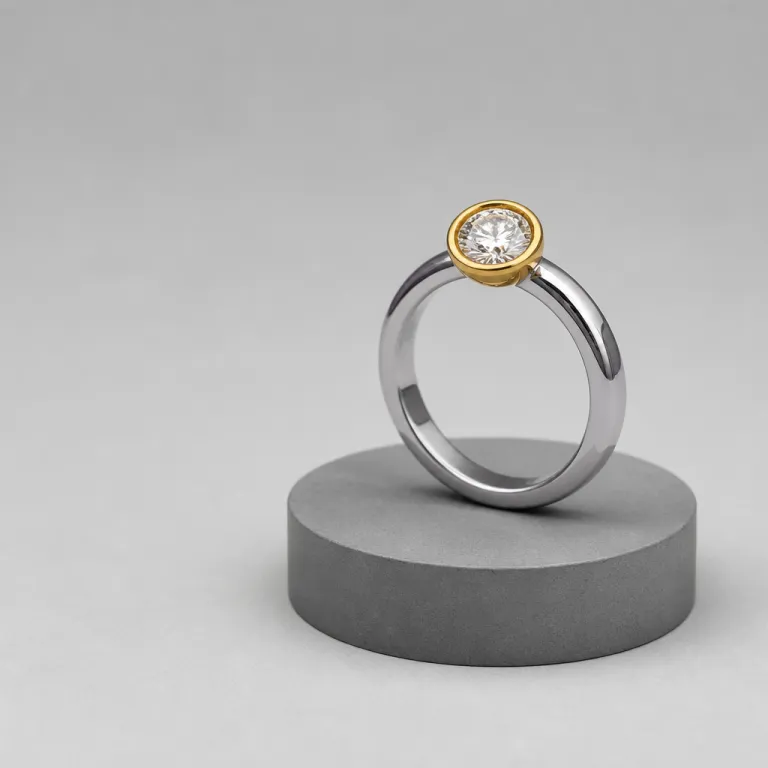
How a bezel setting actually holds your diamond in place
A bezel setting engagement ring guide must begin with mechanics. In a true bezel setting, a continuous metal rim is pushed and burnished over the edge of the stone, so the diamond or colored gemstone is literally locked into the ring rather than perched on exposed prongs. That simple structural shift creates a low profile, modern silhouette that hugs the finger and changes how the center stone meets both light and daily life.
When a bezel is executed correctly, the metal forms a smooth protective ring around the girdle of the cut diamond or other gemstone. The jeweler first creates a precise ring setting seat that matches the outline of the stone, then the upper edge of the metal rim is carefully set and compressed over the stone’s perimeter, which is why full bezel designs are so secure for active wearers and for heirloom engagement rings. Poorly made bezels, by contrast, show gaps between metal and stone, uneven heights, or a wavy rim that can trap dirt and dull the engagement ring over time.
For fine jewelry owners used to classic prong settings, the shift to bezels feels radical. A prong setting exposes more of the diamond and lets light enter from the sides, while a bezel ring trades that openness for continuous protection and a sleek architectural style that frames the center stone like a miniature gallery. In practice, a well cut diamond in a thoughtfully engineered bezel set design can still perform beautifully, but you must judge brilliance face up rather than relying on side sparkle alone.
Mechanically, bezels also distribute impact differently from prong settings. Instead of four or six prongs taking the force of a knock, the entire ring bezel absorbs and spreads it along the metal rim, which is why bezel engagement designs are favored for clients who work with their hands or wear their engagement rings constantly. This engineering logic applies equally to lab grown diamonds and natural stones, because the setting, not the origin of the stone, determines how shocks are handled and how the jewelry ages.
Half bezel constructions offer a middle path for those hesitant to fully enclose a stone. In a half bezel, two opposing arcs of metal set the diamond at the east and west or north and south, leaving windows of open light at the remaining sides, which softens the visual weight of the metal while preserving much of the protective benefit of a full bezel. For elongated cuts such as oval, marquise, or emerald cut stones, these half bezel settings can emphasize length and create a refined, almost aerodynamic engagement ring profile.
Because the bezel is built around the exact dimensions of the stone, there is little tolerance for error. A master setter will adjust the inner wall, polish the seat, and refine the ring setting repeatedly before finally pushing the metal rim over the girdle, ensuring the center stone sits perfectly level and the table aligns crisply with the band. That obsessive calibration is what separates a high jewelry bezel engagement ring from a mass produced set engagement piece that feels heavy, clumsy, or slightly off center on the hand.
The overlooked practical advantages of bezel engagement rings
For many engagement ring seekers, the bezel’s elegance is secondary to its practicality. With no exposed prong to snag on knitwear, hair, or gloves, a bezel set engagement ring becomes genuinely easy to live in, which matters when you expect to wear the same ring every day for decades. The low profile architecture also keeps the center stone closer to the finger, reducing leverage during accidental knocks and making the jewelry feel reassuringly solid rather than precariously perched.
From a preservation standpoint, the bezel setting engagement ring guide is unequivocal. A continuous metal rim shields the vulnerable girdle of the diamond or colored gemstone from chipping, which is especially important for fancy shapes with pointed tips such as pear, marquise, and princess cut stones that can be fragile in traditional prong settings. Owners who have already invested in a significant cut diamond, whether natural or lab grown, often choose bezel settings for reset projects precisely because they want to protect an existing stone without sacrificing style.
Daily maintenance is also simpler with bezels than with many prong settings. There are no tiny claws to bend or catch, so routine checks focus on ensuring the ring bezel has not thinned excessively at the lip and that the inner wall remains smooth and free of deep scratches that could harbor dirt. For clients who already curate pieces like a gold cross pendant or other symbolic jewelry, the bezel engagement ring often becomes the one piece they never remove, because it tolerates gym sessions, travel, and office life with equal composure.
Comfort on the hand is another underappreciated advantage of bezel rings. The low profile design sits closer to the skin, which means less rocking from side to side and fewer imprints on adjacent fingers, especially when stacking multiple rings or pairing the engagement ring with a substantial wedding band. This is particularly noticeable with heavier metals such as platinum or dense yellow gold, where a well balanced bezel ring can feel like a tailored object rather than a top heavy ornament.
For those who favor clean lines and a modern style, the bezel’s visual calm is a feature, not a compromise. The metal rim creates a deliberate frame around the center stone, turning the diamond into a graphic focal point that reads clearly from across a room, even when the stone is modest in size. That clarity of outline is why bezel engagement rings often photograph beautifully and why they appeal to couples who value design integrity over sheer carat weight.
Finally, bezels are forgiving for a wider range of gemstone choices. Softer stones such as morganite, emerald, or certain sapphires benefit from the protective embrace of a full bezel or half bezel, allowing collectors to enjoy color without constant anxiety about chips or abrasions. When you view your engagement ring as part of a long term jewelry wardrobe rather than a single event purchase, those practical advantages become difficult to ignore.
Light, fire, and the bezel trade off: reading performance face up
The most nuanced part of any bezel setting engagement ring guide is the conversation about light. By definition, a bezel setting covers the sides of the diamond or gemstone with metal, which reduces the amount of light entering from the pavilion and can slightly soften the stone’s fire compared with an open prong setting. That does not mean bezel rings are dull, but it does change how you evaluate brilliance and how you choose the right cut for a bezel engagement design.
With bezel settings, the face up performance of the stone becomes paramount. Round brilliant and oval cut diamonds, with their inherently strong light return, tend to thrive in bezel rings because they can lose some side light and still deliver impressive sparkle from the top, especially when the metal rim is kept fine and the inner wall is highly polished. Step cuts such as emerald and Asscher cuts can look exquisitely architectural in a full bezel or half bezel, but they demand excellent clarity and precise cutting, because the setting will not hide windowing or lifeless areas.
Color interaction is another subtle but powerful factor. A yellow gold bezel ring will cast a warm reflection into the stone, which can flatter near colorless diamonds and many colored gemstones, while a white metal rim in platinum or white gold keeps the body color of the stone more neutral and icy. Clients who choose lab grown diamonds often have the freedom to prioritize cut quality over size, which is wise in bezel engagement rings where a superior cut diamond will outshine a larger but poorly proportioned stone once set in metal.
Comparing bezel and prong settings side by side clarifies the trade off. A classic prong setting exposes more of the stone’s profile, creating dramatic flashes of light from the sides and emphasizing the height of the engagement ring, whereas a bezel set design offers a subtler, more even glow that reads as sophisticated rather than showy. For many fine jewelry owners, that shift from overt sparkle to controlled radiance aligns better with a modern style and with the way they actually wear their rings, often stacked with a gold cross bracelet or other daily pieces.
Craftsmanship can mitigate some of the bezel’s inherent light loss. A skilled setter will undercut the seat slightly, polish the inner wall to a mirror finish, and keep the metal rim as slim as structural integrity allows, all of which help light bounce within the stone instead of being absorbed by the metal. When evaluating bezel engagement rings in person, tilt the ring slowly under a neutral light source and watch whether the center stone maintains lively scintillation across the entire table or shows dead zones near the edges.
For those who remain torn between bezel and prong aesthetics, hybrid ring settings offer a thoughtful compromise. Designs that use a very fine ring bezel around the girdle, paired with discreet supporting prong settings beneath, can create the visual effect of a continuous rim while allowing more light to reach the pavilion from below. In the end, it is not the carat count, but the fire in the stone that will keep you looking at your hand years from now.
Metal choices, historical context, and the new bezel aesthetic
The bezel may feel like a modern style, but its roots run deep. In medieval and Renaissance jewelry, full bezel settings were the dominant way to secure gems, with thick metal rims in high karat gold cradling cabochon stones in rings, reliquaries, and royal ornaments. Prong settings only rose to prominence later, when advances in metalwork allowed finer claws and when jewelers wanted to dramatize the height and lightness of the engagement ring.
Today’s bezel engagement rings reinterpret that history with sharper lines and more varied metals. Platinum bezels offer crisp edges and exceptional durability, making them ideal for very active wearers or for slim low profile designs where the strength of the metal allows a thinner rim around the center stone. Yellow gold bezels, by contrast, bring warmth and a subtle vintage echo, especially when paired with old European cut diamonds or colored gemstones that reference antique jewelry without feeling costume like.
Rose gold bezels occupy an interesting middle ground. The soft blush tone flatters many skin tones and can gently mask faint color in a near colorless diamond, while the contrast between a rose gold ring bezel and a bright white stone creates a romantic, almost luminous halo effect. Collectors who already appreciate artisanal metalwork, from Persian naqsh to Japanese mokume gane and other ancient metalwork traditions, often gravitate toward bezel settings because they showcase the metal as much as the stone, turning the ring into a small sculpture rather than a mere gemstone holder.
Historically informed does not mean old fashioned. Contemporary designers use half bezel arcs, asymmetric bezels, and knife edge bands to create engagement rings that feel architectural and graphic, especially when combined with elongated cuts such as baguette, emerald, or marquise stones. Lab grown diamonds have also expanded creative freedom, because clients can allocate more budget to intricate ring settings and unusual metals while still securing a well cut diamond of substantial size.
For fine jewelry owners building a coherent collection, metal choice in a bezel ring should harmonize with existing pieces. If your daily jewelry leans toward yellow gold, a yellow gold bezel engagement ring will integrate seamlessly with bracelets, pendants, and earrings, while a platinum or white gold bezel may suit a cooler toned wardrobe anchored by white metal watches and minimalist designs. The goal is not to match every piece, but to ensure your engagement ring feels like the natural center of gravity for the rings and bracelets you already love.
Understanding how different metals age also matters. High karat gold bezels will develop a soft patina and rounded edges over years of wear, emphasizing the ring’s lived in character, while platinum bezels tend to show a satiny bloom of micro scratches that many collectors find appealing. When you view the bezel setting as both a protective frame and a canvas for metal artistry, its current resurgence feels less like a trend and more like a return to jewelry’s oldest and most enduring instincts.
Evaluating craftsmanship and pairing a bezel ring with your band
Once you are convinced by the concept, the real work begins. A bezel setting engagement ring guide is only useful if it teaches you how to judge execution, because the difference between a mediocre bezel and a superb one is immediately visible to trained eyes and eventually obvious to anyone who wears the ring daily. Start by examining the alignment of the center stone, checking that the table sits level, the bezel height is consistent all around, and the metal rim meets the stone with no visible gaps or overhangs.
The inner wall of the bezel is a critical but often ignored detail. On a high quality bezel ring, the inner surface will be smoothly polished, with no burrs, pits, or rough tool marks that could trap dirt or abrade the stone over time, and the transition from the ring setting to the band will feel seamless under your fingertip. Ask your jeweler how the bezel was constructed and finished, because a hand finished bezel generally allows finer control over thickness and contour than a mass cast setting with minimal bench work.
Pairing a bezel engagement ring with a wedding band introduces another layer of design thinking. Low profile bezels often sit flush or nearly flush to the finger, which can allow a straight band to nestle closely without a gap, while taller bezels or more sculptural bezels may require a contoured or notched band that curves around the metal rim. Try on multiple rings together, not just the engagement ring alone, because the combined silhouette of both rings will define how your jewelry reads in everyday life.
For those who prefer a clean, uninterrupted stack, consider a bezel engagement ring designed explicitly for a flush fit. These rings often feature a slightly elevated center stone with a carefully undercut gallery, allowing a straight band to slide beneath the bezel lip and sit level against the engagement ring, which creates a unified, almost cuff like effect on the finger. Clients who already wear structured pieces, such as a rigid bangle or a sculptural bracelet, often appreciate this architectural approach to ring stacking.
Maintenance and long term care should also inform your choice. While bezels are inherently secure, the metal at the very top of the rim can thin with decades of wear, especially in softer gold alloys, so periodic inspections by a trusted bench jeweler are wise to ensure the stone remains firmly set and the ring bezel has not deformed. When cleaning at home, use a soft brush and mild solution, paying attention to the junction between bezel and stone where lotions and fine debris can accumulate and subtly mute the light.
Finally, trust your own eye and your own life. Try the ring on, flex your hand, slide your fingers into pockets, and imagine typing, cooking, traveling, and holding a child’s hand with that bezel engagement ring in place, because jewelry that works with your movements will always feel more luxurious than jewelry that demands constant caution. In the quiet balance between protection, proportion, and personality, the bezel setting proves why it has become fine jewelry’s sleekest and most quietly confident choice.
FAQ
Does a bezel setting make a diamond look smaller?
A bezel setting can make a diamond appear slightly smaller from the side because the metal rim covers the girdle, but face up it often enhances visual presence by creating a strong outline. When the bezel is kept fine and proportional, the contrast between stone and metal can actually make the center stone read more clearly on the hand. Choosing a well cut diamond and an appropriately thin bezel lip is more important than chasing extra millimetres in diameter.
Is a bezel setting better than prongs for active lifestyles?
For most active wearers, a bezel setting offers superior protection compared with prong settings. The continuous metal rim shields the girdle and edges of the stone from direct impact and eliminates snagging on clothing or equipment, which is valuable for people who work with their hands. Prong settings can still be appropriate, but they require more frequent checks and careful wear to avoid bent or broken prongs.
Can a bezel setting work with lab grown diamonds?
Bezel settings work equally well with lab grown and natural diamonds because the mechanical principles are identical. Many clients choose lab grown stones for bezel engagement rings so they can prioritize excellent cut quality and invest more in sophisticated metalwork without exceeding their budget. The key is to apply the same standards for cut, clarity, and color, since the bezel will highlight both the strengths and weaknesses of the stone.
How do I clean and maintain a bezel engagement ring?
Routine cleaning for a bezel engagement ring involves soaking the ring in warm water with a mild detergent, then gently brushing around the metal rim and underside with a soft brush. This removes lotions and fine debris that can accumulate where the bezel meets the stone and subtly reduce brilliance. Periodic professional inspections are recommended to check that the bezel lip remains secure and that the ring has not developed deep scratches or distortions.
Will a bezel engagement ring fit with a straight wedding band?
Many bezel engagement rings are designed to sit low and may not allow a straight wedding band to sit completely flush. If a flush fit is important, look for low profile bezel designs with an undercut gallery or ask for a custom ring setting engineered to accommodate a straight band. Otherwise, a contoured or notched wedding band that curves around the bezel can create a deliberate, tailored pairing that looks intentional rather than improvised.