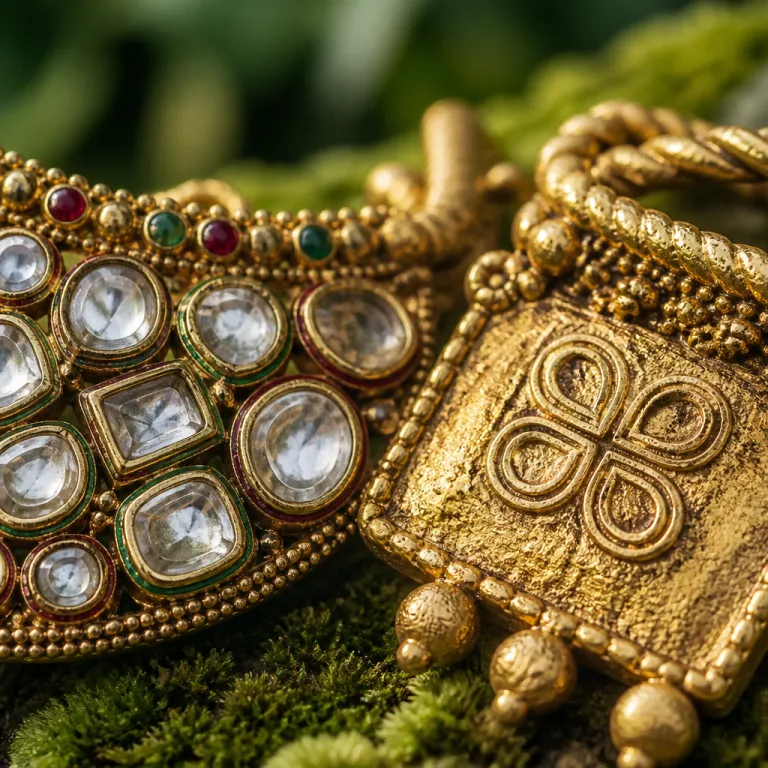
From regional jewelry traditions to a global kundan gold language
Regional jewelry traditions such as Indian kundan, polki settings and Ashanti gold now speak a shared, global design language. For a fine jewelry owner, understanding how these heritage techniques intersect with your wardrobe is the difference between collecting ornaments and curating heirlooms. The most compelling pieces today carry cultural significance first, and only then follow fashion.
At the heart of these traditions sits a tension between pure gold reverence and contemporary wearability. Collectors want the emotional weight of traditional jewelry and meticulous craftsmanship, yet they also expect pieces that move from boardroom to evening without feeling like museum artefacts. When you evaluate any gold jewelry or silver jewelry rooted in heritage, you are really judging how convincingly it translates ceremony into everyday life.
This is where craftsmanship becomes your most reliable compass, not marketing language or celebrity styling. Look closely at how individual pieces are engineered, how necklace clasps articulate, how jewelry sets balance weight across the collarbones, and how each plated necklace or necklace set feels against the skin. In a market saturated with jewelry gold imitations and aggressively gold plated fashion pieces, the owners who train their eye for structural integrity and cultural context build collections that age gracefully rather than date quickly.
Indian kundan and polki: uncut diamonds, gold foil and modern settings
Indian kundan work began as a courtly art, where uncut diamonds and colored stones were set into pure gold using malleable gold foil rather than prongs. In its most traditional form, authentic kundan relies on a closed setting, with each gem bedded into layers of refined gold foil that cradle the stone while creating a mirror like gleam behind it. This is the kundan aesthetic at its most distilled, where light, metal and gemstone setting merge into a single surface.
For a modern fine jewelry owner, the question is how to wear kundan jewelry and kundan jewellery without feeling locked into bridal pageantry. Contemporary designers answer by slimming the gold framework, spacing the stones, and pairing a single kundan necklace with sharply tailored suiting rather than only with Indian bridal attire. You will see necklace set designs that combine polki diamonds with enamel, or a jewelry set that alternates kundan pieces and plain gold links, creating a rhythm that feels less ceremonial and more architectural.
When you evaluate jewellery kundan work, examine the junctions where stones meet metal and how cleanly the gold foil is finished at the edges. True traditional craftsmanship in Indian jewelry shows in the back as much as the front, with smooth enamel or polished gold that sits comfortably on the skin all day. For deeper context on how artisans balance metal and stone in heritage pieces, the detailed perspective on the allure and craftsmanship of gold and jade pendants offers a useful parallel in understanding how cultural significance is translated into contemporary designs.
Beyond India: Ashanti gold, Mexican silver and Japanese metal alchemy
Conversations about regional jewelry traditions often start with India, yet the same dialogue between heritage and modernity plays out powerfully in West Africa, Mexico and Japan. Ashanti gold weights from Ghana, originally used to measure gold dust, encode proverbs and social values in miniature cast figures that now inspire pendant and necklace designs. When translated into fine gold jewelry, these motifs allow a collector to wear a fragment of Akan philosophy at the throat or wrist, turning each set of pieces into a quiet archive of stories.
Mexican silver from Taxco offers a different lesson in place based identity, where silver jewelry is defined by bold, sculptural lines and a confident use of negative space. A single Taxco inspired plated necklace in sterling silver or a mixed metal jewelry set can anchor a workday look as effectively as any gold plated statement, especially when paired with restrained tailoring. Japanese mokume gane and shakudo push this further, fusing metals into wood grain patterns or dark patinated surfaces that Western traditional jewelry techniques simply do not replicate.
For the serious collector, these traditions challenge the assumption that value equals only carat weight or diamond size. A mokume gane band or shakudo pendant may contain less pure gold than a conventional jewelry gold piece, yet the technical difficulty and cultural significance can be far greater. When you weigh such options against a classic cross or medallion, resources such as a guide to choosing the perfect 10k gold cross pendant for your fine jewelry collection can help you articulate why certain alloys, finishes and regional aesthetics resonate more deeply with your own day to day life.
Thai niello, global fashion and the ethics of cultural borrowing
Thai niello work, with its darkened silver inlay against bright metal, is another example of regional craft traditions reshaping contemporary collections. Historically, niello adorned royal regalia and ceremonial objects, yet today you will find niello inspired bracelets, necklace sets and earrings in boutiques from Bangkok to London. The best of these maintain traditional craftsmanship in the inlay while refining proportions so that the pieces sit lightly enough for everyday jewellery wear.
As these aesthetics travel, the line between respectful homage and appropriation becomes a real concern for thoughtful fine jewelry owners. When a maison borrows motifs from Indian jewelry, Ashanti gold weights or Thai niello, the key questions are whether origin communities are credited, compensated and meaningfully involved in design decisions. Cultural significance cannot be reduced to surface patterning, and traditional forms lose integrity when stripped of context and reproduced only as fashion statements.
One practical approach is to prioritize maisons and ateliers that maintain direct relationships with craftspeople in the regions whose visual language they use. This might mean choosing a jewelry set co created with a Thai niello workshop, or selecting bridal jewellery that pairs authentic kundan elements with contemporary metalwork while supporting Indian artisans through transparent sourcing. For collectors building a versatile wardrobe, thoughtfully integrating such pieces alongside modern staples like turquoise stackable rings for refined everyday elegance creates a dialogue between heritage and present day style rather than a costume box of disconnected trends.
How to buy, wear and care for heritage rich pieces
Owning jewelry rooted in regional jewelry traditions and global narratives carries both aesthetic pleasure and responsibility. When you shop for kundan necklace designs, Ashanti inspired pendants or Taxco style silver jewelry, ask for documentation on origin, workshop and metal purity, not just generic certificates. A serious retailer should be able to explain whether a piece is pure gold, high karat jewelry gold, or carefully gold plated over silver, and why that choice suits the design.
For kundan jewelry and kundan jewellery in particular, pay attention to how the stones are set and how the reverse is finished, because these details determine both longevity and comfort. Authentic kundan relies on gold foil and closed backs, which means you must avoid ultrasonic cleaners and instead use gentle wiping and careful storage away from moisture. When you commission or select bridal jewellery or a statement necklace set, consider how the weight will feel after several hours, how the pieces articulate with movement, and whether the set can be broken into individual pieces for more relaxed day wear.
Shipping and aftercare policies matter as much as initial sparkle, especially when you are investing in multi piece sets that may need future resizing or restoration. Choose houses that offer secure international shipping, in house repair for traditional jewelry techniques, and clear guidance on storing plated necklace designs separately from high karat gold to prevent abrasion. In the end, the most rewarding collections are built slowly, with each Indian jewelry or jewellery kundan acquisition chosen for its story, its structural integrity and its ability to sit comfortably beside both silver and gold on your dressing table, because what endures is not the carat count but the fire in the stone.
FAQ
How can I verify that my kundan jewelry is authentic rather than imitation?
Authentic kundan jewelry uses a core of highly refined gold with gemstones set into layers of gold foil, often backed by enamel, rather than glued into base metal. Examine the reverse of the kundan necklace or jewelry set; you should see smooth, finished metal or enamel, not rough casting or exposed adhesive. Reputable dealers will disclose karatage, workshop origin and whether the piece is traditional closed setting kundan or a modern, partially gold plated interpretation.
Is it acceptable to wear traditional jewelry outside its original cultural context?
Wearing traditional jewelry from another culture can be respectful when you understand its cultural significance and support artisans or communities connected to that tradition. Problems arise when motifs from Indian jewelry, Ashanti gold or Thai niello are used purely as fashion without acknowledgment or fair compensation. Choose makers who credit regional influences, collaborate with local craftspeople and provide context for the designs so your pieces honour their origins rather than reduce them to costume.
How should I care for gold foil kundan and other delicate heritage pieces?
Gold foil kundan and similar heritage techniques are vulnerable to harsh cleaning, so avoid ultrasonic machines, steam and abrasive cloths. Instead, wipe the jewellery gently with a soft, dry cloth after wear, store each set separately in fabric lined boxes, and keep them away from moisture and perfume. For any deep cleaning or repair, work only with specialists familiar with traditional craftsmanship so the original structure and materials are preserved.
What is the difference between pure gold, gold plated and mixed metal designs?
Pure gold in jewelry usually refers to high karat alloys that are mostly gold, prized in many regional traditions for their colour and malleability. Gold plated pieces use a thin layer of gold over silver or base metal, which allows for larger fashion forward designs at lower cost but requires more careful wear to prevent abrasion. Mixed metal designs, such as mokume gane or shakudo, intentionally combine different metals for visual effect and structural performance, and their value reflects both material content and the complexity of the technique.
How can I build a cohesive collection that includes both silver and gold heritage pieces?
A cohesive collection comes from a consistent point of view rather than strict metal matching, so focus on shared design language such as line, scale or regional inspiration. You might pair a Taxco inspired silver necklace with a subtle kundan pendant, or alternate silver jewelry and gold jewelry across different days while keeping silhouettes clean and architectural. Over time, choosing pieces that balance cultural depth, wearability and proportion will create a wardrobe where every item feels intentional, whether it is silver, pure gold or carefully gold plated.