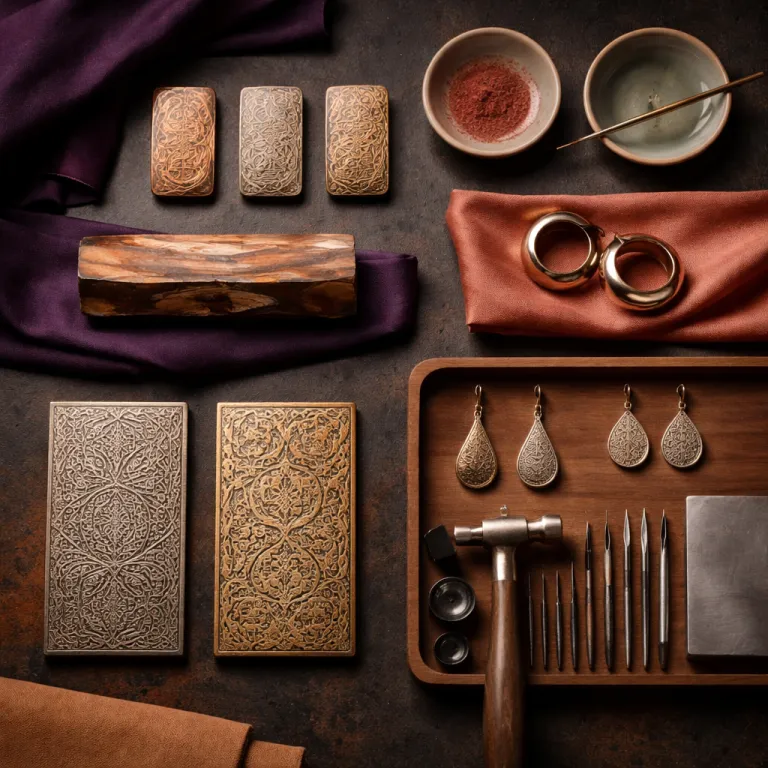
How cultural jewelry traditions and metalwork heritage shape serious collections
Cultural jewelry traditions and metalwork heritage are no longer niche curiosities for museum vitrines. They are becoming a shared language that separates connoisseur-level collections from generic accumulations of gold and diamonds, because cultural heritage leaves a visible fingerprint in metal, gemstones, and proportions. When you understand how traditional techniques, spiritual symbolism, and regional materials interact, you start to read jewels as historical documents rather than simple decorative pieces.
For a seasoned owner, the most rewarding acquisitions are pieces where cultural significance, impeccable craftsmanship, and wearable designs intersect. These jewels carry the weight of past generations, yet they sit comfortably beside a modern rivière or a pared-back platinum band, and that tension between ancient and contemporary is where real collecting pleasure lives. In practice, deep-rooted jewelry and metalworking lineages are not an abstract idea; they form the practical toolkit that lets you distinguish a workshop with centuries of expertise from a brand chasing a short-lived trend.
Across continents, artisan communities have refined jewelry making as an art form that encodes spiritual significance, social status, and trade routes. Japanese Mokume Gane, Persian Naqsh engraving, and Brazilian stone cutting are three powerful examples, and each offers a distinct vocabulary of textures, colors, and intricate designs. Once you can recognize these cultural patterns in both jewellery and silver jewelry, you will see auction catalogues and gallery windows with very different, far more informed eyes.
Japanese Mokume Gane: wood grain metal as living history
Mokume Gane, literally “wood grain metal,” is one of the clearest expressions of Japan’s historic jewelry and metalwork traditions. The technique fuses alternating sheets of gold, silver, and other precious materials into a billet, which is then carved, forged, and rolled until the layered metals reveal organic, swirling patterns reminiscent of polished timber. In serious jewelry, those patterns are not printed or etched; they run through the entire cross-section of the piece, so a ring’s interior tells the same story as its outer surface.
Traditional Mokume Gane techniques were developed for sword fittings, then adapted into jewelry making as the samurai class faded and metalworkers turned toward adornment. Today, the best pieces still come from small artisan communities in Japan and a handful of Western ateliers that have studied the traditional techniques in depth, often referencing the history of jewelry in museum collections for accuracy. For instance, the Victoria and Albert Museum’s tsuba attributed to the 19th-century Goto school (museum no. M.6-1910) provides a benchmark for classical patterns that contemporary makers such as Norio Tamagawa and James Binnion consciously echo in rings and cuffs.
For collectors, Mokume Gane offers a way to integrate cultural heritage into quietly luxurious gold jewelry and silver jewelry without overt motifs. A slim band in yellow gold and shakudō can sit beside an Art Nouveau-inspired ring and an antique turquoise cluster, yet its cultural significance remains legible to those who know the art form. Auction houses such as Bonhams and Sotheby’s have started to note Mokume Gane explicitly in catalogues, and pieces with strong, balanced patterns and documented provenance now command a premium over generic mixed-metal jewels; for example, Bonhams London, Jewels sale 16 September 2020, lot 145, a contemporary Mokume Gane band by a Japanese studio, achieved more than double its high estimate once its workshop and technique were highlighted in the catalogue note.
When assessing Mokume Gane pieces or plural collections of such jewels, pay attention to weight, comfort, and how the pattern flows around the circumference. A well-executed ring will show continuous, harmonious designs with no abrupt breaks where the billet was joined, which is a subtle marker of high-level craftsmanship. This is where knowledge of Japanese metalwork heritage becomes a practical buying criterion rather than a romantic backstory.
For those intrigued by how ancient metalwork informs modern casting, the broader revival of historical crafts is explored in depth in this analysis of the next wave of ancient jewelry in high end collections, which pairs well with a study of Mokume Gane’s rise in contemporary ateliers. Understanding this context helps you place each Mokume Gane jewel within the longer arc of history jewelry and cultural heritage. In collecting, context is often the most valuable material of all, more enduring than any single piece of gold or silver.
Persian Naqsh engraving and the spiritual language of metal
Naqsh, the Persian tradition of fine engraving on metal, is another pillar of Middle Eastern jewelry and metalwork heritage that serious collectors should recognize. Historically used on arms, vessels, and architectural elements, Naqsh migrated into jewelry traditional forms such as signet rings, pendants, and elaborate silver jewelry cuffs. The technique relies on hand-guided gravers that cut calligraphic lines, arabesques, and geometric patterns into gold or silver surfaces, often with astonishing precision.
In authentic Naqsh work, the depth and rhythm of the cuts matter as much as the visible pattern. Lines should taper elegantly, with clean terminations and no burrs, and the negative space between motifs is carefully balanced to create a sense of spiritual calm, which reflects the spiritual significance embedded in much Islamic-inspired art. When Naqsh is applied to traditional jewelry, you often see Qur’anic verses, poetic inscriptions, or symbolic motifs whose cultural significance extends far beyond decoration.
For a collector, the key is to distinguish genuine Naqsh from laser-engraved imitations that borrow the visual vocabulary without the underlying craftsmanship. Under magnification, hand-cut Naqsh reveals subtle irregularities and a softness at the base of each groove, while machine work looks mechanically perfect but lifeless, lacking the micro variations that signal human crafts. Pieces with documented origins in Iranian workshops such as Isfahan or Shiraz, or with parallels in the Victoria and Albert Museum’s Islamic metalwork collections (for example, the 17th-century Iranian steel dagger hilt, museum no. 719-1876), carry stronger cultural heritage value than anonymous commercial jewels; a useful reference point is Christie’s London, Art of the Islamic and Indian Worlds, 25 October 2018, lot 120, where a finely engraved Safavid-period dagger hilt with comparable Naqsh motifs significantly outperformed similar but less documented pieces in the same sale.
The Victoria and Albert Museum, often shortened in conversation to the Victoria and Albert, holds important examples of engraved jewels that illustrate how Naqsh motifs evolved as they were passed through generations of goldsmiths. Studying those museum pieces, even through published catalogues, trains your eye to see when contemporary designs are engaging respectfully with history jewelry rather than merely borrowing a pattern. This is where an understanding of regional engraving traditions becomes a lens for ethical collecting, not just aesthetic preference.
Naqsh also intersects with fair trade concerns, because many artisan communities in Iran face economic pressure that encourages mass production over meticulous crafts, while related engraving traditions in North Africa and the wider Middle East confront similar challenges. When you support workshops that maintain traditional techniques and pay engravers properly, you help ensure that this art form remains a living practice rather than a frozen museum style. For a deeper dive into how ancient casting and engraving are being revived in modern ateliers, the essay on the revival of ancient casting techniques in modern fine jewelry offers valuable context that pairs naturally with a study of Naqsh.
Brazilian stone cutting, colored jewels, and gem forward design
While Mokume Gane and Naqsh focus on metal, Brazil’s contribution to global jewelry traditions lies primarily in gemstone cutting and setting. Brazilian lapidaries transformed the way the trade handles colored stones, especially tourmaline, aquamarine, amethyst, and of course turquoise, by emphasizing bold shapes and saturated color over conservative, weight-preserving cuts. This gem-forward philosophy has reshaped how contemporary designers think about proportions, often allowing stones to dictate the architecture of the jewelry rather than treating them as interchangeable accents.
In practical terms, Brazilian cutters pioneered elongated emerald cuts, freeform slices, and fantasy cuts that play with light in unexpected ways. These techniques pair beautifully with both yellow gold and white silver jewelry, creating pieces where the metal becomes a minimal frame for the stone’s personality, which is a subtle but powerful shift in the history of jewelry design. When you see a ring with a bi-color tourmaline cut into a long, architectural baguette, there is a strong chance you are looking at the influence of Brazilian craftsmanship, even if the jewel was assembled elsewhere.
For collectors, understanding this heritage helps you evaluate whether a piece’s price reflects genuine innovation or just colorful marketing. A jewel that combines Brazilian-style cutting with thoughtful metalwork, perhaps a Mokume Gane shank or a Naqsh-inspired gallery, carries a richer cultural significance than a generic halo around a standard oval. Cross-pollination between regional techniques is often most compelling when multiple traditions converse within a single jewel, provided the dialogue feels coherent rather than forced; a telling example is the work of Brazilian jeweler Haroldo Burle Marx in the mid-20th century, whose carved aquamarines and tourmalines set in sculptural gold mounts now appear regularly in major auctions, where catalogue notes explicitly reference his pioneering role in modern Brazilian cutting.
Brazil’s gemstone industry also intersects with fair trade and environmental concerns, because many mines are small-scale operations embedded in local artisan communities. When you acquire Brazilian jewels, ask about mine-to-market traceability, cutting locations, and whether the workshop supports community development, since these factors influence both long-term value and ethical comfort. Pieces that align strong aesthetics with responsible sourcing tend to age better in discerning collections, because they satisfy both the eye and the conscience.
For a broader perspective on how ancient and regional crafts are being reinterpreted in contemporary ateliers, the essay on the revival of ancient casting techniques in modern fine jewelry offers useful parallels to Brazil’s influence on cutting. Reading these threads together reinforces how jewelry traditions and metalwork heritage continue to evolve rather than remaining frozen in time. In collecting, evolution is often where the most interesting pieces emerge.
Reading provenance: from museum vitrines to the auction room
Recognizing cultural jewelry traditions and metalwork heritage is only half the equation; the other half is using that knowledge to navigate auctions and private sales. Provenance in jewelry is not just a list of previous owners, it is a chain of evidence that links a piece to specific artisan communities, historical periods, and sometimes even individual workshops. The more clearly a jewel’s cultural significance can be articulated and documented, the more confidently the market tends to value it.
Institutions such as the Victoria and Albert Museum and the Musée des Arts Décoratifs provide benchmarks for what authentic Mokume Gane, Naqsh, and early Brazilian-influenced designs look like. When an auction catalogue references a piece “in the manner of” a museum example, you should compare the depth of engraving, the sharpness of Mokume Gane patterns, and the quality of gemstone cutting to see whether the comparison holds. A working knowledge of regional techniques becomes a practical checklist here, allowing you to separate marketing language from verifiable attributes.
Pieces with clear ties to specific regions, such as Naqsh-engraved silver jewelry from Shiraz or Mokume Gane rings from established Japanese ateliers, often command premiums over anonymous traditional jewelry with similar materials. The same applies to African jewels from East Africa that show documented lineage in local crafts, especially when they incorporate traditional techniques and motifs with spiritual significance. Auction houses are increasingly foregrounding these narratives because collectors have shown they will pay more for jewels that embody cultural heritage rather than generic luxury; for instance, Sotheby’s New York, Magnificent Jewels sale 9 December 2021, included a group of East African gold and bead ornaments catalogued with detailed ethnographic notes, and those lots attracted competitive bidding well above comparable but undocumented pieces.
However, you should remain alert to superficial references that mimic cultural vocabulary without substance. A ring with a vaguely wood-grain etched pattern is not Mokume Gane, just as a laser-engraved scroll on gold does not automatically qualify as Naqsh, and a bright stone does not guarantee Brazilian craftsmanship. Ask for workshop names, dates, and any links to museum-documented designs, because serious pieces leave a paper trail, while imitations rely on vague descriptors.
For those building collections that bridge cultures, it can be helpful to study how Western motifs such as Art Nouveau curves have historically absorbed influences from Japan, Iran, and Brazil. This cross-pollination is evident in many antique pieces, where you might see a Japanese-inspired wave pattern rendered in French enamel or a Persian-style arabesque framing a European-cut diamond. Understanding these hybrids allows you to appreciate how jewelry traditions and metalwork heritage have always been fluid, which in turn sharpens your eye for authenticity in today’s global market.
Styling such culturally rich jewels alongside more familiar Western pieces, such as refined earrings or sculptural bracelets, is explored in this guide to curating a timeless Western inspired jewelry wardrobe. Juxtaposing Mokume Gane bands, Naqsh-engraved pendants, and Brazilian gemstone rings with understated gold hoops can create a collection that feels both coherent and cosmopolitan. In the end, it is not the carat count, but the fire in the stone and the story in the metal.
Inspiration versus appropriation: collecting with respect and clarity
As cultural jewelry traditions and metalwork heritage move into the mainstream, the line between respectful inspiration and appropriation becomes a critical consideration for collectors. Responsible design engages with traditional techniques, materials, and motifs in dialogue with the communities that created them, rather than lifting surface aesthetics for quick commercial gain. When you buy a jewel that references Mokume Gane, Naqsh, or African crafts, you are implicitly endorsing a particular approach to cultural heritage.
One practical test is to ask how deeply a designer has engaged with the source tradition. Have they studied museum collections such as those at the Victoria and Albert, collaborated with artisan communities, or invested in learning traditional techniques from masters, or have they simply borrowed a pattern from an image search? For many communities, metalwork and jewelry carry spiritual significance, so treating them as a mere style can feel extractive rather than celebratory.
Fair trade frameworks and transparent sourcing are useful indicators that a brand or atelier is taking these questions seriously. When a workshop pays engravers, lapidaries, and metalworkers fairly, credits them by name, and supports training for younger artisans, it helps ensure that crafts are genuinely passed through generations rather than hollowed out. In such contexts, traditional jewelry becomes a living art form, evolving with new designs while remaining anchored in cultural significance.
Collectors can also play a role by asking pointed questions and rewarding depth over novelty. When you encounter a jewel marketed as “inspired by East Africa” or “Persian style,” inquire about which specific crafts, materials, or spiritual motifs are being referenced, and how the artisans were involved. Historic jewelry and metalwork are not a mood board; they form a network of real people, skills, and histories that deserve precise acknowledgment.
Balancing a collection across regions and eras can highlight these nuances beautifully. A Mokume Gane band, a Naqsh-engraved pendant, a Brazilian-cut tourmaline ring, and a pair of African-inspired earrings can coexist harmoniously when each piece is chosen for both aesthetic strength and ethical clarity. Over time, such a collection reads less like a display of wealth and more like a curated essay on how jewelry, in all its gold and silver forms, carries the stories of civilizations.
FAQ: cultural metalwork traditions in fine jewelry collecting
How can I quickly tell if a piece is true Mokume Gane or just patterned metal?
True Mokume Gane is created by fusing and manipulating stacked layers of different metals, so the wood grain pattern runs through the entire thickness of the piece. If you examine the edge or interior of a ring and the pattern disappears, it is likely a surface treatment such as etching or printing. Authentic Mokume Gane also shows subtle, organic variation rather than a perfectly repeating motif.
What are the key signs of genuine Persian Naqsh engraving on jewelry?
Genuine Naqsh engraving shows hand-cut lines that taper gracefully, with clean terminations and a slight softness at the base of each groove. Under magnification, you should see tiny variations in depth and spacing that indicate human craftsmanship, not machine perfection. The motifs often carry spiritual or poetic meaning, so inscriptions and balanced arabesques are common.
Why do jewels with identifiable cultural heritage often fetch higher prices at auction?
Pieces with clear cultural heritage can be linked to specific regions, workshops, or historical movements, which gives them stronger provenance and narrative value. Collectors are willing to pay premiums for jewels that embody recognized traditions such as Mokume Gane, Naqsh, or Brazilian cutting because these attributes are harder to fake than generic luxury styling. Auction houses highlight such traits in catalogues because they help justify estimates and attract connoisseur-level bidders.
How do I avoid cultural appropriation when buying culturally inspired jewelry?
To avoid appropriation, prioritize designers and ateliers that collaborate with or directly support the artisan communities whose traditions they reference. Look for transparency about where techniques were learned, who made the piece, and how those craftspeople are compensated. When in doubt, ask specific questions about cultural significance and be prepared to walk away if the answers are vague.
Are museum references like the Victoria and Albert Museum useful for everyday collectors?
Museum collections provide authoritative benchmarks for what authentic historical techniques and designs look like, even if you only access them through books or online catalogues. Comparing potential purchases to documented examples from institutions such as the Victoria and Albert Museum sharpens your eye for quality and authenticity. Over time, this habit helps you build a collection aligned with recognized standards of craftsmanship and cultural significance.