From stone hierarchy to colour collage: what Diorissima changes for collectors
Dior’s Diorissima haute joaillerie collection poses a disarming question: what happens when high jewelry stops worshipping a single hero stone and starts treating gems as colour fields shaped by techniques and craftsmanship rather than carat weight alone? For a seasoned jewelry owner, that shift matters more than headline news about record auction prices or auction house drama.
The Dior doublet technique at the heart of Diorissima reframes value by placing the intricate process itself on equal footing with rarity. Instead of a solitaire dictating the narrative, Victoire de Castellane builds a joaillerie collection where layered chrysoprase, opal cabochons assembled as doublets, and lacquer passages create colour the way a painter handles gouache and ink. According to Dior Joaillerie’s July 2024 Venice presentation, Diorissima comprises 141 creations, with 112 jewels in the first chapter unveiled on the Grand Canal as a kind of manifesto for a new haute joaillerie philosophy within the Christian Dior universe.
For collectors used to judging high jewellery by four Cs and a signature, this is a recalibration. The house of Christian Dior, through Dior Joaillerie and its artistic director of joaillerie, asks you to look at opacity and transparency, at how a doublet construction can make a stone glow from within like Venetian glass at dusk. The Dior high standard of execution remains, yet the hierarchy between centre stone and so‑called supporting cast dissolves, and that is where connoisseurship now needs to follow.
The Dior doublet as a painter’s tool, not a gem trick
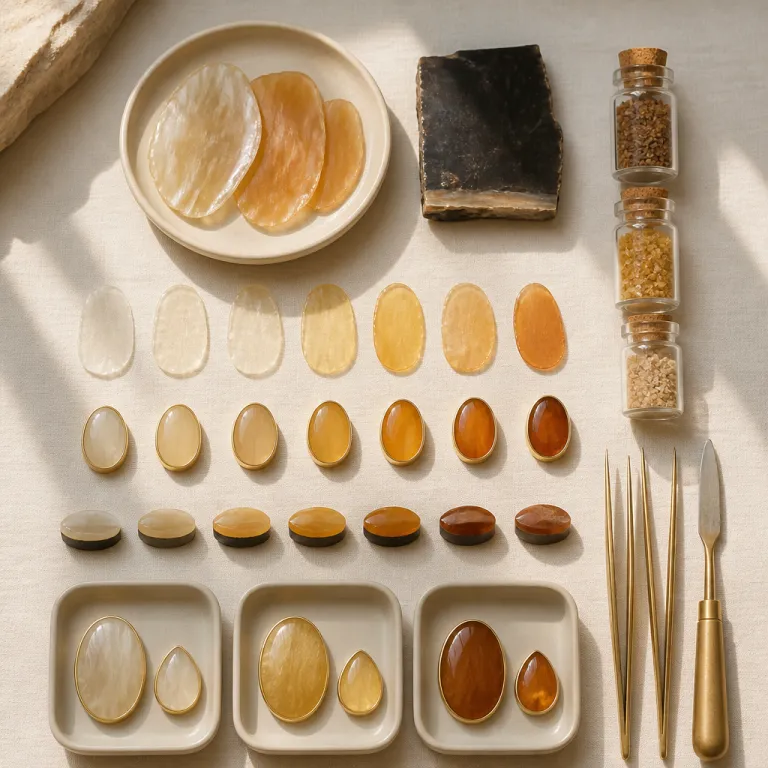
In Diorissima haute pieces, the Dior doublet technique is not a novelty effect. It is a structural design decision that treats opal layered over chrysoprase, or other layered chrysoprase combinations, as a chromatic gradient rather than a gemological curiosity. The doublet technique fuses two stones so that colour and light interact through both, creating a controlled play of opacity and transparency impossible in a single crystal and central to this high jewelry language.
On the wrist, a Diorissima bracelet may read first as a vibrant wash of lagoon green and electric lilac. Look closer and you see how the high jewelry workshop has calibrated each slice so that the opal surface carries flashes of celestial blues while the chrysoprase beneath anchors the tone like a painter’s ground. This is Dior Joaillerie using techniques that echo Matisse’s cut‑outs and Picasso’s collages, where fragments of paper or fabric become a new whole rather than decorative trim in a summer‑ready colour story.
Such design decisions matter for valuation. When a jewel is designed by Victoire de Castellane and her équipe as a collage of stones, lacquer, and gold, the craftsmanship hours, failed experiments, and rejected doublets become the true scarcity. For a collector, that means Dior’s doublet work should be assessed like a unique printmaking process in fine art, where the method and the hand of the atelier carry as much weight as the raw materials themselves.
Venice, laura, and the triptych of worlds
Unveiling the Diorissima collection in Venice was not a theatrical whim. The city’s history of glass, colour, and reflection mirrors the way Dior high jewellery plays with waterlike opacity and transparency in its doublets and lacquer. In this context, even a seemingly simple pair of ear cuffs becomes a study in aquatic light, with opal‑topped stones echoing the lagoon at different hours and seasons.
Collectors who follow Dior news closely will have noticed how Dior Joaillerie uses narrative structures to frame its joaillerie collection each summer. Diorissima is organised as a triptych of terrestrial, aquatic, and celestial realms that unfolds dreamlike across necklaces, rings, ear cuffs, and transformable brooches. The celestial chapter in particular shows the doublet technique at its most daring, with layered chrysoprase and opal cabochons suggesting nebulas rather than literal stars.
Within this narrative, names like Laura or Victoire are not marketing flourishes. They signal the human authorship behind each design, from the studio sketches to the final high jewellery mounting. For a discerning owner, tracking which pieces were designed Victoire herself and which were developed by her close collaborators becomes as relevant as knowing which canvas in a series was painted by the artist’s own hand rather than a studio assistant.
Cutting, shaping, and layering: how Dior’s doublets rewrite the bench jeweler’s playbook
Traditional high jewelry cutting privileges clarity and size, then works backwards into design. Dior’s Diorissima haute joaillerie reverses that order, starting with a design intention about colour and movement, then cutting stones specifically to serve the maison’s doublet constructions. This is not about squeezing maximum carat weight from rough but about sculpting material to behave like pigment in a carefully plotted composition.
In practice, that means chrysoprase, opal, and other gems are sliced, calibrated, and matched in pairs so that their refractive indices and hues align for the doublet technique. The intricate process requires lapidaries to grind each layer to fractions of a millimetre, because any mismatch will create dead zones where light stalls instead of flowing through the opal layer into the chrysoprase base. Workshop interviews published in Dior Joaillerie press materials for the 2024 haute joaillerie season describe vacuum lamination and ultra‑thin adhesive films used to secure the join, a reminder that what looks effortless on the skin is the result of painstaking engineering.
Ear cuffs and necklaces, rings in the Diorissima collection show how far this cutting philosophy can go. Some high jewelry pieces use clover wisteria motifs, where petals of chrysoprase and opal are cut as if they were paper in a collage, then assembled into a three‑dimensional bloom. Others rely on lacquer bands of colour between doublets, creating a rhythm of hard and soft surfaces that only works because the underlying cutting is so precise.
Opacity, transparency, and lacquer as structural elements
Most jewellery owners think of lacquer as surface decoration. In Dior Joaillerie’s Diorissima haute pieces, lacquer adds not just colour but also a structural pause between stones, controlling how the eye reads opacity and transparency across the jewel. It is a technique closer to Japanese maki‑e than to simple enamel filling, and it demands the same patience as stone cutting in the Dior high jewellery workshop.
On a Diorissima high jewellery cuff, you might see alternating bands of opal‑chrysoprase doublets and glossy lacquer in saturated colour. The lacquer adds a matte or mirrorlike plane that makes the doublet technique appear even more luminous, because the human eye reads contrast before it reads hue. This is where Dior’s approach intersects with colour theory, using value and saturation shifts to make relatively modest stones feel visually expansive.
For collectors who also study other global traditions, this approach to layering and surface echoes the way regional goldsmiths build narrative depth through texture. A useful comparison is the treatment of surface and volume in historic Indian kundan or West African repoussé work, where artisans use thin sheets of metal and stone to create an almost architectural presence. Dior’s Diorissima collection is not imitating those techniques, yet it shares the same respect for how cutting, shaping, and layering can turn relatively thin material into a visually dense, almost architectural jewel.
Bench realities behind the dreamlike narrative
When a Diorissima jewel unfolds dreamlike in a campaign image, it conceals a very concrete workshop reality. Each doublet must survive setting pressures, thermal shocks from polishing, and the daily knocks of wear, which means the Dior high standards for tolerances are unforgiving. A fraction too much pressure on a claw, and the opal surface can craze or separate from its chrysoprase base.
Bench jewelers working on Dior Joaillerie pieces have to adapt classic haute joaillerie techniques to these new materials. Prongs are often undercut to hold the doublet from below, bezels are tapered to avoid compressing the join, and metal is relieved in strategic places to let the doublet breathe. This is doublet‑based high jewelry craftsmanship as an engineering challenge, not just an aesthetic flourish, and it is where the value of a piece quietly accumulates beyond what any grading report can capture.
For you as an owner, understanding these constraints helps you judge whether a jewel’s design respects the nature of its materials. A Diorissima ear cuff that feels featherlight yet secure, with doublets sitting flush and unstrained, tells you more about the maison’s haute joaillerie expertise than any marketing line about inspiration from celestial gardens or summer skies.
For a contrasting perspective on how weight, volume, and surface are balanced in more linear silhouettes, consider the structural logic behind a classic Cuban link bracelet, where interlocking mass and repetition create presence. Where Cuban links rely on solid volume, Dior’s Diorissima relies on layered light.
Evaluating Diorissima as a collector: when craft, not carat, drives value
Seasoned collectors are used to asking about carat weight, origin, and clarity before anything else. Diorissima quietly insists that you start instead with questions about Dior Joaillerie’s doublet work, about how the piece is built and how its colour story is engineered. That is a different kind of due diligence, closer to how one evaluates a painting or a sculpture than a conventional high jewellery purchase.
When you handle a Dior Joaillerie piece from the Diorissima haute joaillerie collection, begin by mapping its layers. Identify where doublet‑technique stones sit, where lacquer adds transitions, and how metal volumes support or frame the opal cabochons and chrysoprase plaques. This exercise reveals whether the design is merely decorative or whether it has the internal logic of a well‑composed canvas, where every brushstroke or cut‑out serves the whole.
Next, look for coherence between motif and method. A clover wisteria necklace that uses high jewellery doublets to suggest dew on petals should show subtle shifts in opacity and transparency from one stone to the next, not random alternations. Ear cuffs in the celestial chapter should use Dior’s layered constructions to evoke nebulas or star fields, not just to add more colour for its own sake.
Provenance, authorship, and the Victoire de Castellane factor
In the Dior universe, the phrase designed Victoire carries real weight. Victoire de Castellane has shaped Dior Joaillerie since the late nineties, and her authorship on a Diorissima piece functions almost like an artist’s signature on a limited series. For a collector, tracking which jewels in the joaillerie collection were personally overseen by Victoire Castellane can inform long‑term value expectations and future Dior news narratives.
Pieces where the doublet technique is most experimental, such as those with extreme colour juxtapositions or unusual stone pairings, are likely to be the ones future connoisseurs seek out. These are the jewels where Dior high jewellery pushes beyond safe brand codes into something closer to fine art, echoing the collage logic of Matisse and Picasso rather than repeating archival Christian Dior motifs. In that sense, Diorissima is less a seasonal collection and more a thesis about what haute joaillerie can become when it stops deferring to the diamond as unquestioned monarch.
Authorship also extends to the invisible side of the jewel. Flip a Diorissima necklace or bracelet and study the back, where openwork, engraving, and stone culets reveal how seriously Dior takes the relationship between front‑facing spectacle and structural integrity. A back that is as carefully finished as the front is a hallmark of true high jewelry craftsmanship, and Dior’s ateliers understand that this is where the most informed clients, from Laura in New York to a collector in Tokyo, quietly make their judgments.
Styling layered colour in a serious collection
Many owners hesitate to integrate such vibrant, collage‑like pieces into a wardrobe built on classic diamonds and sapphires. The key is to treat Diorissima not as an outlier but as a new axis in your collection, one that brings Dior’s doublet innovations into dialogue with more traditional cuts and settings. Think of it as adding a Fauvist painting to a wall of Old Masters, not replacing them.
A Diorissima ring with opal layered over chrysoprase can sit beautifully next to a restrained bow‑motif diamond ring, where the graphic bow and the unfolds dreamlike colour field of the doublet highlight the strengths of both. Similarly, pairing Dior high jewellery ear cuffs from the celestial chapter with a more classical rivière necklace lets the doublets act as punctuation rather than as a competing headline.
Over time, you may find that these layered, painterly pieces become the ones you reach for most often. They are less about broadcasting status and more about articulating taste, which is where serious collections ultimately find their centre of gravity. In the end, it is not the carat count, but the fire in the stone.
Context within the haute joaillerie season: spectacle, scarcity, and what comes next
Diorissima did not appear in a vacuum. The same haute joaillerie season saw Boucheron, Chaumet, Graff, De Beers, and Chopard unveil major high jewelry and high jewellery collections, each vying to redefine what spectacle means at the top of the market. Yet Dior’s focus on the Dior doublet and layered colour fields stands apart because it shifts the conversation from stone acquisition to stone transformation.
Where some maisons still anchor their narratives in exceptional single stones, Dior Joaillerie uses the Diorissima collection to argue that the real rarity now lies in techniques. Doublet‑technique work of this calibre requires not just access to fine opal and chrysoprase but also a stable équipe of lapidaries and setters willing to spend months on a single suite. In an era when skilled bench talent is increasingly scarce, that human capital becomes a form of scarcity that collectors should factor into their assessments.
The celestial chapter of Diorissima, with its unfolds dreamlike constellations of opal‑topped stones and lacquer halos, illustrates this shift clearly. No single gem dominates, yet the overall effect feels more immersive than many traditional diamond parures. This is Dior high jewellery betting that future connoisseurs will prize intellectual and technical ambition as much as they prize geological miracles.
How to compare Diorissima to other maisons’ offerings
When you place a Diorissima piece next to a contemporary Boucheron or Chaumet jewel, you are really comparing philosophies. Boucheron’s recent high jewelry often explores volume and negative space, while Chaumet leans into narrative symbolism and historic motifs. Dior’s Diorissima haute designs, by contrast, are about colour as structure, about building jewels the way a painter builds a canvas.
Graff and De Beers remain masters of the stone‑forward approach, presenting high jewelry where the primary story is still the diamond’s size, origin, and cutting. Chopard often balances between gemstone spectacle and ethical sourcing narratives, adding another layer to the value equation. Against this backdrop, Dior Joaillerie’s Diorissima haute joaillerie collection feels almost contrarian, insisting that a carefully calibrated field of layered chrysoprase and opal doublets can be as significant as a single D‑flawless stone.
For a collector, the practical question is where to allocate capital. If your collection is already rich in classic solitaires and rivière necklaces, adding Diorissima pieces that showcase Dior’s doublet techniques can diversify both aesthetics and risk. You are effectively investing in a different thesis about what will matter to future buyers and curators, one where craftsmanship and design innovation carry as much weight as gemological superlatives.
What this means for the next act of high jewelry
Looking ahead, Diorissima suggests that the most interesting high jewellery in the coming years will come from maisons willing to treat their ateliers as creative laboratories. Dior’s use of doublet technique, lacquer, and collage‑like design is one path. Others may explore new alloys, unconventional stone pairings, or cross‑cultural references that echo the layered histories seen in regional traditions from Jaipur to Venice.
For owners, this means that staying informed about workshop capabilities and technical news will be as important as tracking auction results. Ask how a piece is built, how many artisans touched it, and what specific techniques were required, whether you are considering Dior high jewellery, a one‑of‑a‑kind Boucheron, or a bespoke studio jewel. The more you understand the invisible labour behind the visible sparkle, the more precisely you can curate a collection that reflects both your eye and your values.
In this landscape, Dior’s Diorissima collection stands as a case study in how a storied couture house can use doublet‑based high jewelry craftsmanship to write a new chapter for haute joaillerie. It is a reminder that in the highest tier of jewellery, the most enduring luxury is not just rare material, but rare skill applied with conviction.
Key figures shaping the future of high jewelry craft
- According to industry analyses from Bain & Company’s 2023 luxury report, the global high jewelry and high jewellery segment represents a small but fast‑growing share of the overall luxury jewelry market, with high single‑digit annual growth over recent years, underscoring why maisons like Dior, Boucheron, and Graff are investing heavily in artisanal collections such as Diorissima.
- Reports from the Responsible Jewellery Council and member case studies indicate that a single high jewelry piece at a major maison can involve more than 20 specialised artisans and over 1,000 combined hours of labour, which aligns with the intensive doublet‑based craftsmanship required for Dior Joaillerie’s layered opal and chrysoprase designs.
- Data from auction houses such as Christie’s and Sotheby’s show that signed high jewelry pieces with distinctive, recognisable techniques or design signatures can command premiums of 20 to 50 percent over comparable unsigned jewels, suggesting that Dior’s investment in a clearly identifiable doublet‑technique language may have long‑term implications for Diorissima’s secondary‑market performance.