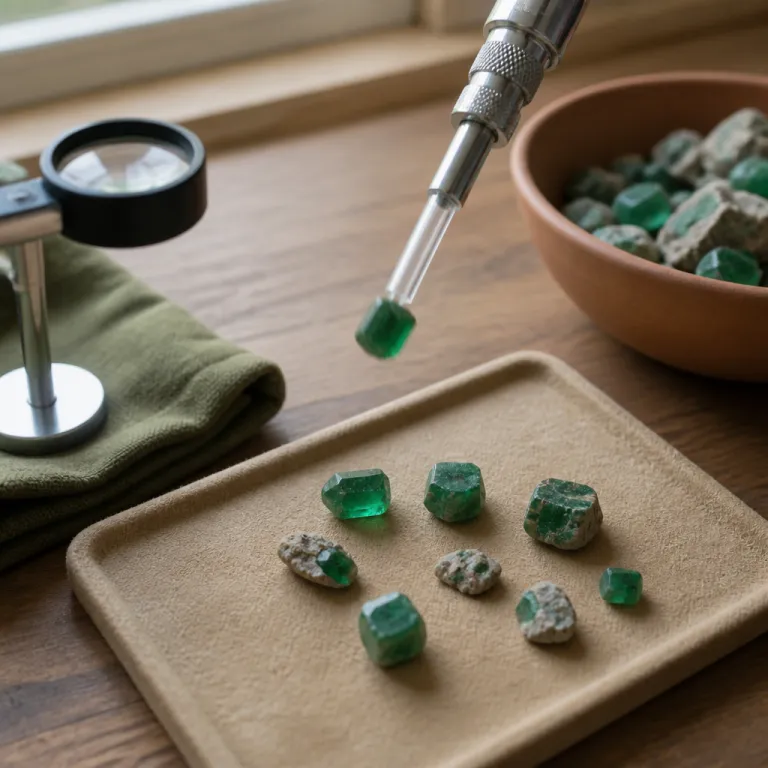
From treated green to pure crystal: what “no oil” really means
A no oil emerald untreated gemstone value premium begins with understanding how most emeralds reach the market. In fine jewelry, the majority of green stones have been exposed to some form of oil or resin to soften visible inclusions and improve apparent clarity, which means the natural emerald crystal you see has been cosmetically adjusted. When a laboratory certifies an emerald as “no indications of clarity enhancement”, it is confirming that the gem’s green color, clarity and internal structure are presented exactly as they emerged from the earth.
Historically, colombian emeralds from Colombia’s Muzo mine and neighboring districts were routinely immersed in colorless cedar oil, a practice considered almost standard rather than deceptive. The oil seeps into surface reaching inclusions and fissures in the emerald crystal, reducing their visibility and making the green hue appear more even, which in turn supports a higher price per carat for stones that might otherwise look too fractured. When you hold a natural emerald that has never seen oil, you are looking at a geological survivor whose inclusions, color clarity balance and vivid green saturation were strong enough to stand alone.
For a collector, that is the essence of no oil emerald untreated gemstone value premium thinking. You are not paying for a cosmetic filter over the gemstone but for the intrinsic quality of the gem itself, including its carat weight, cut and unaltered green color. In a market where synthetic emeralds, created emeralds and heavily treated gemstones blur the lines, a no oil colombian emerald with a respected lab report becomes a rare item of record, not just another green stone in a display case.
How labs describe oil and why the wording matters
On a report from GIA, Gübelin or SSEF, treatment disclosure is not a footnote ; it is the key to the no oil emerald untreated gemstone value premium. For emeralds, you will typically see a scale that runs from “None” through “Insignificant”, “Minor”, “Moderate” and “Significant”, describing the presence of oil or resin in surface reaching inclusions. Only the “None” category supports the full premium for a natural emerald, while “Insignificant” or “Minor” oil colombian stones may still be beautiful but sit in a different price carat bracket.
Many owners underestimate how a single word on that line can move the price. A colombian emerald with vivid green color, strong clarity and a fine emerald cut may trade at one level if the report states “None”, and at a sharply lower level if the same gemstone is graded as having “Minor” enhancement. When you evaluate emeralds or other green gemstones for jewelry, you should read that treatment line as carefully as you read carat weight or color grade.
The same logic applies when you compare natural emeralds with synthetic emeralds or created emeralds. A synthetic gem can be grown with near perfect clarity and a saturated bluish green hue, but it carries no scarcity premium because its inclusions and color are engineered. By contrast, a natural emerald crystal from Colombia or Zambia that earns a “None” treatment comment has passed a far more demanding test of geological quality, which is exactly what the no oil emerald untreated gemstone value premium is paying for.
Why collectors now prize purity over size in emerald jewelry
Among serious collectors, the conversation around emeralds has shifted from “how big” to “how pure”. A decade ago, a 5 carat green colombian stone with moderate oil might have been the star of an engagement ring or cocktail ring, while today many connoisseurs would rather own a 2 carat natural emerald with no oil and superior color clarity. The no oil emerald untreated gemstone value premium reflects this change in taste, where transparency of treatment and origin now rivals sheer carat weight.
This mirrors the way wine collectors moved from chasing power to seeking terroir. In emeralds, terroir means colombia, Zambia or Afghanistan, but for many investors colombian emeralds from the Muzo mine still define the benchmark for vivid green color and nuanced green hue. When such a colombian emerald combines a saturated bluish green tone, harmonious cut and minimal inclusions with a “None” treatment comment, it becomes a reference gemstone whose price per carat can feel detached from more commercial stones.
Owners who already hold treated emeralds in their jewelry boxes often ask whether the no oil trend devalues their pieces. The answer is more nuanced ; a well cut emerald with attractive green color and only minor oil can still be a beautiful and liquid asset, especially in classic settings like an emerald cut engagement ring or an emerald eternity band. However, as more auction catalogues highlight no oil emerald untreated gemstone value premium lots, the market is quietly building a two tier structure where untreated gemstones sit in a separate, thinner and more aggressively contested segment.
Design choices that respect untreated emerald character
Mounting style can either showcase or suffocate the qualities that justify a no oil emerald untreated gemstone value premium. A cut emerald with a clean step emerald cut and strong green color benefits from open gallery settings that allow light to travel through the gemstone, revealing both its clarity and its inclusions honestly. Heavy bezels or closed backs may protect the item, but they can also mute the green hue and obscure the very natural features that make untreated stones compelling.
For collectors building suites of emerald jewelry, consistency of treatment status matters as much as consistency of color. Pairing a no oil colombian emerald pendant with earrings that contain heavily oiled stones can create a subtle visual mismatch, because the treated gemstones often show a slightly different green color and surface luster. When you commission custom pieces, ask your jeweler to source natural emeralds with comparable treatment grades, so the entire set reflects the same philosophy of purity.
Those considering more contemporary formats, such as emerald eternity bands or mixed gemstone stacks, should think about wear and long term maintenance. An untreated natural emerald with visible inclusions may be more sensitive to knocks than a diamond, so full eternity designs that expose stones all around the finger demand careful daily habits. A detailed discussion with a bench jeweler about setting height, protective prongs and how the cut interacts with the gemstones’ clarity will help you preserve both aesthetics and value.
For a deeper dive into how emeralds behave in continuous settings, the analysis of emerald eternity bands in high jewelry offers useful context on durability, color matching and long term comfort. Reading such focused perspectives trains your eye to see beyond carat weight and into the structural realities that underpin the no oil emerald untreated gemstone value premium. Over time, this kind of connoisseurship becomes as instinctive as swirling a glass of wine and recognizing its origin before you read the label.
Pricing the quiet premium: how much more for no oil emeralds
When you strip away marketing language, the no oil emerald untreated gemstone value premium is a pricing question. In practice, a fine natural emerald with no oil can command close to double the price per carat of a visually similar stone with minor oil, while unheated sapphires often trade at a 30 to 50 percent premium over heated equivalents. These differentials are not theoretical ; they show up consistently in auction results and in private dealer price lists for top quality gemstones.
To understand why, consider two colombian emeralds of the same carat weight, both with vivid green color and comparable clarity. If one gem carries a Gübelin report stating “Colombia, no indications of clarity enhancement” and the other reads “Colombia, minor clarity enhancement (oil)”, the first will usually attract more aggressive bidding from collectors who prioritize purity. The market is effectively paying for the improbability that such a green colombian stone could emerge from the ground with so few inclusions that it needed no oil colombian treatment at all.
Retail environments can blur these distinctions, especially when sales staff focus on the romance of the green color rather than the technicalities of treatment. As an owner, you should always ask for the full laboratory report and read the treatment line before accepting any narrative about no oil emerald untreated gemstone value premium. If a piece of jewelry is presented as featuring a no oil natural emerald but the documentation is missing or vague, you should assume the price carat should align with treated stones until proven otherwise.
Comparing untreated emeralds with other alternative assets
For investors who already allocate capital to art, wine or rare watches, untreated gemstones sit comfortably in the same alternative asset conversation. A no oil colombian emerald with strong color clarity and a respected origin can function as a portable store of value, especially when accompanied by detailed lab reports and purchase provenance. However, unlike financial instruments, each gemstone is unique, so your due diligence must focus on the individual item rather than a broad index.
When you weigh emeralds against other gemstone categories, the treatment question remains central. Unheated rubies from Burma and unheated sapphires from Kashmir or Sri Lanka show similar premium dynamics, while untreated Paraíba tourmalines with neon green blue color also command steep price carat multiples over heated or clarity enhanced stones. The common thread is that the market is rewarding gemstones whose color and clarity are demonstrably natural, not the product of heat, oil or resin.
Investors who are also exploring the divergence between natural and lab grown diamonds will recognize the same logic at work. A detailed comparison of lab grown versus natural diamonds as value stores shows how scarcity, treatment and consumer perception interact over time. In emeralds, synthetic emeralds and created emeralds may offer attractive green hue and high clarity at a low entry price, but they do not participate in the no oil emerald untreated gemstone value premium because they lack geological rarity.
For design focused collectors, it is also worth comparing how untreated emeralds behave alongside other colored gemstones in multi stone pieces. A crisp emerald cut aquamarine, for example, can provide a cool foil to the warm green color of a colombian emerald in a toi et moi ring or bracelet. The discussion of emerald cut aquamarine gemstones in fine jewelry highlights how cut, clarity and color interplay across species, reinforcing why untreated emeralds occupy such a distinct niche.
Risk, verification and the future of untreated gemstone connoisseurship
The greatest risk in the no oil emerald untreated gemstone value premium space is not price volatility but misrepresentation. Some dealers casually blur the line between “no oil” and “minor oil”, presenting both as effectively equivalent when the market clearly does not agree. As a fine jewelry owner, your defense is precise language, independent laboratory reports and a willingness to walk away from any gemstone whose documentation does not match the sales pitch.
Understanding the terminology on reports is non negotiable. “None” means the lab found no evidence of clarity enhancement, while “Insignificant” and “Minor” indicate that small amounts of oil or resin are present in surface reaching inclusions, even if they do not dramatically alter the gemstone’s appearance. “Moderate” and “Significant” suggest more extensive filling, which can affect both the perceived quality and the long term stability of the item, especially if the emerald is exposed to heat during jewelry repairs.
As connoisseurship deepens, collectors are also paying closer attention to the internal world of their emeralds. Under magnification, natural emeralds from Colombia often show three phase inclusions, jagged growth tubes and subtle color zoning that tell a geological story, while synthetic emeralds tend to reveal curved growth patterns or flux inclusions that betray their origin. Learning to read these features does not replace a lab report, but it helps you understand why a particular green hue, bluish green tone or vivid green saturation feels more alive than the flat, uniform color of many created emeralds.
How this trend extends beyond emeralds
The quiet rise of untreated gemstone connoisseurship is not confined to green stones. Unheated sapphires from Sri Lanka and Madagascar, unheated rubies from Burma and untreated Paraíba tourmalines from Brazil are all experiencing similar premiums for documented natural color and clarity. In each case, the market is rewarding gemstones whose beauty is rooted in geology rather than in post mining intervention.
For owners, this shift has practical implications for how you curate and insure your collections. Pieces featuring no oil colombian emeralds, unheated sapphires or other untreated gemstones should be documented with high resolution photographs, full laboratory reports and detailed invoices that specify treatment status, carat weight, cut and origin. When you update insurance valuations, make sure the appraiser understands the no oil emerald untreated gemstone value premium and reflects it in the replacement price, rather than defaulting to generic emerald price guides.
Looking ahead, the most resilient collections will be those built on clarity of information as much as clarity of stones. Whether you favor a single museum grade colombian emerald crystal in a minimalist ring or a suite of smaller natural emeralds in everyday jewelry, the same principle applies ; it is not the carat count, but the fire in the stone. As the market continues to separate untreated gemstones from their treated counterparts, connoisseurs who insist on transparent documentation will find that their quiet discipline is rewarded in both pleasure and price.
Key figures behind the no oil emerald premium
- Across major auction houses, fine no oil colombian emeralds have been observed to command up to 80 to 100 percent higher price per carat than visually similar emeralds with minor oil, reflecting the scarcity of untreated stones in larger carat weights (reported by leading auction catalogues over multiple seasons).
- Market analyses of unheated sapphires indicate that documented untreated stones often trade at a 30 to 50 percent premium over heated equivalents of comparable color and clarity, underscoring a broader untreated gemstone value trend that parallels the no oil emerald untreated gemstone value premium (based on aggregated dealer and auction data).
- Industry surveys suggest that more than 90 percent of emeralds in the global jewelry trade show some degree of clarity enhancement with oil or resin, which means that truly untreated natural emeralds represent a small single digit share of available stones, especially above 2 carats (as reported by major gemological laboratories).
- Insurance appraisals that explicitly note “no indications of clarity enhancement” for colombian emeralds have been documented to carry replacement values 40 to 70 percent higher than similar items without treatment disclosure, highlighting how paperwork and lab language directly influence perceived quality and long term value (based on data shared by specialist jewelry appraisers).