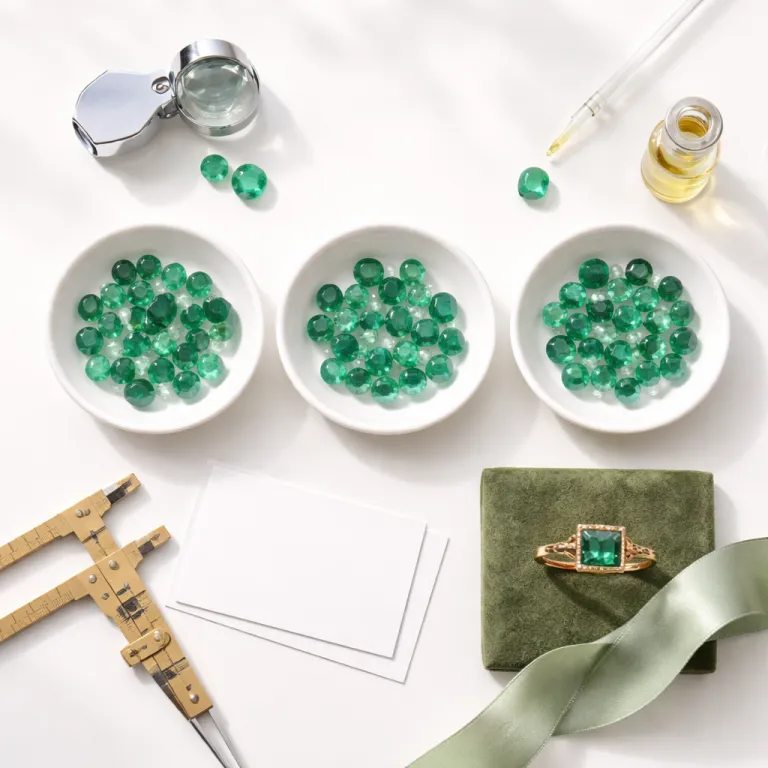
Why emerald buyers get burned more than any other collectors
Emerald buyers are ambushed more often than any other colored gemstone collectors. The combination of seductive green color, complex inclusions and opaque treatment language makes this gemstone uniquely vulnerable to mispricing, especially when emeralds expensive pieces are sold without transparent reports. In this emerald buying guide, you will see why the same carat weight and similar hue tone can hide wildly different qualities and prices depending on how much oil sits inside the stone.
Unlike most gemstones, emeralds form with a dense network of fissures that break the surface of the gem. Those fissures scatter light, lower apparent color clarity and make the stone look cloudy, so dealers routinely fill them with oil or resin to improve the look of the emerald color. When you compare emeralds side by side, a heavily treated gemstone can mimic a high quality cut emerald for a moment, yet its long term value and durability are not remotely comparable.
For a fine jewelry owner who already understands diamond grading, emeralds require a mental reset. You are not just judging color, cut and carat weight but also the type and degree of treatment, the origin and how visible inclusions behave under light. A serious emerald buying guide must therefore treat oil and resin as central pricing variables, not footnotes, because treatment level can shift price by more than any small difference in emerald weight.
What oil and resin really do to an emerald stone
Oil and resin treatments are not cosmetic extras; they fundamentally change how an emerald stone interacts with light. Colorless cedarwood oil or synthetic resins seep into surface reaching inclusions, reducing their visibility and making the gemstone appear more transparent and evenly green. In a ring or pendant, this can transform a slightly hazy gem into a seemingly high quality emerald jewelry centerpiece, at least under flattering showroom lighting.
From a gemological perspective, the treatment does not increase intrinsic quality; it only masks visible inclusions and fractures. The underlying emeralds remain just as fissured, which matters for durability in emerald rings and engagement rings that see daily wear and occasional knocks. Resin filled fissures can also age differently from the host stone, so a cut emerald with heavy filling may show uneven luster or altered tone saturation years after the initial buying moment.
Oil is considered more traditional and reversible, while polymer resins are more permanent but also more invasive. Both can shift the perceived emerald color by softening contrast between green areas and pale zones, which complicates any direct comparison of price between treated gemstones. When you evaluate an emerald cut ring, you must therefore ask not only about carat weight and origin but also whether the clarity you see is natural or largely the result of treatment.
For context, auction houses like Christie’s and Sotheby’s routinely specify whether an emerald ring carries oil, resin or no enhancement at all. Their catalog notes often highlight when a green emerald shows only minor oil, because that combination of strong color, acceptable inclusions and light treatment commands a premium. Retail jewelers are catching up, yet disclosure language still varies widely, which is why this emerald buying guide insists on lab reports as your primary safeguard.
When you study other colored gemstones such as aquamarine, you will notice that treatment narratives are usually simpler and less value critical. A useful comparison is the way an aqua gem in fine jewelry is typically heated or left untreated, with relatively straightforward disclosure, which shows how different blue and green gemstones respond to enhancement. Emeralds sit at the extreme end of that spectrum, where oil and resin are almost expected but the degree of use separates connoisseur stones from commercial material.
For collectors who already own diamond eternity bands, the contrast is stark. A diamond eternity ring with baguette cut stones lives in a world of standardized grading, where clarity and carat weight are measured with tight tolerances and minimal post mining intervention. Emerald jewelry, by contrast, demands that you interrogate every filled fissure, because the same ring emerald can be either a resilient heirloom or a fragile, over oiled gem depending on what lies beneath the surface.
Decoding treatment language and the new GIA colored stone reports
Oil treatment language has long been the foggiest part of any emerald buying guide. Historically, phrases like “lightly oiled” or “traditional enhancement” floated through appraisals without clear, standardized meaning, leaving buyers unsure how much filling sat inside their gemstones. That changed meaningfully when laboratories such as GIA and AGL formalized disclosure categories into None, Minor, Moderate and Significant, which now appear on modern reports for emeralds.
On a GIA Colored Stone Report issued after the redesign of January, the treatment section for an emerald stone is structured to be more narrative and explicit. You will see a line stating whether clarity enhancement is present, followed by the degree, for example “Clarity Enhancement: Filler present (Minor)” or “Clarity Enhancement: Filler present (Moderate)”, along with a note on the type of filler when determinable. This language matters because the jump from Minor to Moderate often corresponds to a substantial price drop for the same emerald weight, color and carat weight.
Color description on the new reports is also more nuanced, which helps you compare emerald color across stones. GIA now articulates hue tone and saturation with phrases such as “bluish green, medium tone, strong saturation”, which allows you to match the report to what your eye sees in the gem. When you read that an emerald cut stone is “green, medium dark tone, vivid saturation” with only Minor enhancement, you know you are looking at a high quality candidate for an emerald ring or important engagement piece.
Origin is another critical line on the report, especially as Zambian emeralds have appreciated in recent years while Colombian stones still command the highest prices at auction. A GIA report may state “Origin: Colombia” or “Origin: Zambia”, and that single word can shift the price of two gemstones with similar color clarity and carat weight. For a collector, the combination of Colombian origin, bluish green hue and Minor enhancement is the sweet spot where emeralds expensive at retail often still look rational when compared with auction results.
AGL (American Gemological Laboratories) offers a different but complementary reporting style, often with more detailed color grading and comments on visible inclusions. Many connoisseurs appreciate AGL’s Colored Stone Quality Document for its nuanced breakdown of tone saturation and its explicit treatment scale, which mirrors the None, Minor, Moderate, Significant framework. Whether you choose GIA or AGL, the key is to insist that every important emerald jewelry purchase, especially an emerald ring intended for engagement, is backed by a recent, reputable report.
For pieces like an emerald band ring in gold, where the design emphasizes a continuous line of green gemstones, treatment consistency matters as much as individual stone quality. A well curated band will use matching green emerald stones with similar hue tone, carat weight and treatment levels, ideally all Minor or better. When a retailer offers such a band without any lab documentation, your buying guide instincts should prompt you to ask for at least a sample report on one representative stone before accepting the stated price.
Price, origin and why untreated emeralds command a different league
In the upper tier of the emerald market, price is a three dimensional equation balancing color, origin and treatment. A medium sized Colombian emerald with rich bluish green color, medium dark tone and strong saturation but Moderate enhancement can trade below a slightly lighter Zambian stone with only Minor oil. When you compare emerald rings in this range, the report’s treatment line often explains why one ring emerald is quietly cheaper despite similar carat weight and apparent quality.
Untreated emeralds, meaning stones with “None” listed under clarity enhancement on a GIA or AGL report, occupy a separate category altogether. These gemstones are rare because most emeralds emerge from the ground with enough surface reaching inclusions to benefit from at least Minor oil, so a clean, untreated gem with attractive emerald color is genuinely scarce. At auction, such stones regularly outperform price estimates, especially when paired with Colombian origin and classic emerald cut proportions that show off the green without exaggerating windowing or extinction.
For a fine jewelry owner, the question is not whether untreated emeralds are better in some abstract sense, but whether the premium aligns with your collecting goals. If you are building a reference level collection, a single untreated emerald ring with impeccable origin and high quality color clarity can anchor the group, much as a top Kashmir sapphire might in a blue gemstone suite. If your focus is wearable emerald jewelry for daily engagement rings or cocktail rings, a beautifully cut emerald with Minor oil may offer a more balanced mix of beauty, durability and price.
Origin stories also shape how you experience the gem on your hand. Colombian emeralds from Muzo or Chivor often show a slightly warmer, pure green emerald hue with velvety inclusions, while Zambian stones tend toward a cooler bluish green with higher clarity and stronger tone saturation. Both can be exceptional; the key is to understand how origin, treatment and visible inclusions interact so that you do not overpay for a stone whose romance is mostly marketing rather than geology.
When you evaluate price per carat, compare only emeralds with similar treatment levels and lab documentation. A 3 carat weight emerald cut stone with Moderate enhancement should never be priced like a comparable gem with Minor or None, regardless of how persuasive the sales narrative feels. In this emerald buying guide, the rule is simple: first match treatment and origin, then judge color and cut, and only then let price guide your final buying decision.
To see how this plays out in practice, imagine two 3 carat emerald cut stones with similar hue tone and saturation, both accompanied by modern reports. One is Colombian with Minor oil; the other is Zambian with Moderate enhancement. On paper they look close, yet the Colombian stone will typically command a markedly higher price per carat, reflecting both its lighter treatment level and its origin premium.
Three step checklist for buying an emerald ring you will actually wear
When you are ready to buy, structure your emerald buying guide into three deliberate steps. First, pre select on beauty alone by lining up several gemstones or emerald rings and choosing the ones whose green color, cut and overall presence speak to you. Only after your eye has chosen should you turn to the lab reports to examine origin, carat weight, treatment level and the pattern of visible inclusions.
Second, interrogate the report details with the same rigor you would apply to a major diamond purchase. Confirm that the emerald cut or other shape is correctly described, that the carat weight matches what is stated on the mounting and that the treatment line clearly states None, Minor, Moderate or Significant. If the report uses vague language or omits clarity enhancement entirely, ask the seller to obtain a modern GIA or AGL document, because a serious buying guide never accepts “traditional treatment” as sufficient disclosure.
Third, test how the stone behaves in real life conditions before committing to the price. View the emerald ring under daylight, warm indoor lighting and low evening light, watching how tone saturation and hue tone shift across environments. Pay attention to whether any fractures or inclusions become more visible at certain angles, because those visible inclusions will be part of your daily relationship with the gem long after the buying excitement fades.
Durability deserves special attention, especially for engagement rings that will be worn constantly. Emeralds are hard but not tough; their network of fissures makes them more vulnerable to sharp blows than sapphires or rubies, so a protective setting such as a bezel or halo can be wise for an emerald engagement ring. Avoid very thin girdles and overly shallow cuts, because these structural weaknesses can concentrate stress and increase the risk of chipping if the ring emerald is knocked against a hard surface.
Care cleaning routines must also adapt to the nature of the stone. Never use ultrasonic cleaners or steam on oiled emeralds, because the combination of heat and vibration can disturb the filler and alter both color clarity and apparent quality. Instead, clean emerald jewelry gently with lukewarm water, a mild soap and a soft brush, then dry it carefully before storing it away from harder gemstones that could scratch the surface.
For multi stone designs, such as three stone engagement rings or cocktail rings with accent gemstones, ensure that all emeralds share similar treatment levels and color. A single heavily treated stone among lightly treated companions can age differently, leading to uneven appearance over time. The most satisfying emerald buying guide is the one that leaves you with a ring you reach for instinctively, not a piece you baby in the safe because you worry about every tiny fissure.
Red flags, auction versus retail and how to protect yourself
Several warning signs should immediately sharpen your attention when you evaluate any emerald gemstone. The first is the absence of a reputable lab report for a stone above roughly 0.50 carat weight, especially when the price is positioned as high quality or investment grade. A second red flag is vague language such as “standard enhancement” or “traditional oiling” without a clear statement of degree, because those phrases often mask Moderate or Significant treatment.
Implausibly low price is another signal that your emerald buying guide instincts should not ignore. If a large, vividly green emerald ring is offered at a fraction of comparable pieces with GIA or AGL reports, assume there is a reason, whether heavy resin filling, unstable color or undisclosed origin. The same caution applies to online listings that show only heavily filtered photos, where inclusions and surface reaching fractures are suspiciously absent from every angle.
Auction houses generally provide stronger oil treatment disclosures than many retail environments, because their clientele demands transparent data. Catalog entries for important emeralds typically specify origin, carat weight, cut, treatment level and whether any visible inclusions are characteristic of a particular mine, which helps bidders calibrate price. Retail can still be an excellent place to buy, but you must be the one to insist on documentation, clear language and time to compare gemstones under varied lighting.
When you compare emeralds to other gemstones in your collection, remember that each material has its own care cleaning profile and risk factors. Diamonds shrug off daily wear that might chip a heavily fissured emerald, while softer colored gemstones may scratch more easily but lack the same internal fracture network. Building a coherent collection means understanding these differences so that you assign the right roles to each ring, pendant or bracelet in your wardrobe.
For serious acquisitions, consider working with an independent appraiser or gemologist who is not tied to the sale. They can help you interpret lab reports, assess whether the emerald color and clarity align with the stated grade and confirm that the price reflects current market realities for that origin and treatment level. A second set of trained eyes is particularly valuable when you are weighing whether emeralds expensive at the top end justify their premium over more modest but still beautiful stones.
Ultimately, the safest path is to treat every major emerald purchase as you would a significant art acquisition. Demand provenance in the form of lab reports, ask direct questions about oil and resin, and compare multiple options before committing to a single gem. In the world of emeralds, value resides not only in the carat count but in the integrity of the green fire that has survived both geology and human intervention.
Key figures every emerald collector should know
- Search interest for the term emerald buying guide is consistently strong in keyword research tools, indicating ongoing demand for practical, purchase focused information rather than purely historical content.
- Market analyses from trade platforms and dealer reports indicate that Zambian emerald prices have appreciated in recent years, narrowing but not erasing the traditional premium held by Colombian stones of comparable color and quality.
- In auction catalogs from major houses, the difference between Minor and Moderate oil treatment on a GIA or AGL report is often reflected in meaningful price gaps for emeralds with similar carat weight, cut and hue tone.
- Industry surveys and trade commentary show that a significant share of retail emerald jewelry above 1 carat weight is sold without a modern lab report, which increases the risk that buyers overpay for heavily treated stones relative to their true market value.
- Durability studies highlight that emeralds, while ranking 7.5 to 8 on the Mohs hardness scale, often exhibit lower toughness than sapphires and rubies due to their characteristic network of inclusions and fissures, reinforcing the need for protective settings and careful cleaning routines.
FAQ about buying and caring for emerald jewelry
How much does oil treatment really affect emerald price ?
Oil treatment affects emerald price because it changes how the stone looks without changing its intrinsic structure. A gem with Minor oil and strong green color can command a premium over a similar carat weight stone with Moderate enhancement, especially when supported by a GIA or AGL report. Collectors should therefore compare only emeralds with similar treatment levels when judging whether a price is fair.
Is an untreated emerald always a better choice for an engagement ring ?
An untreated emerald is rarer and often more valuable, but it is not automatically the best choice for every engagement ring. Many untreated stones still have prominent visible inclusions, and some lightly treated gems with Minor oil can offer a more pleasing balance of color, clarity and durability for daily wear. The decision should reflect your budget, your tolerance for inclusions and how intensively the ring will be worn.
Which origin is better, Colombian or Zambian emeralds ?
Colombian emeralds traditionally command higher prices, especially from classic mines like Muzo and Chivor, because of their saturated yet luminous green color and strong auction track record. Zambian emeralds, however, often show excellent bluish green hues with higher clarity and have appreciated significantly in price, making them compelling for collectors seeking value. The better choice is the individual stone whose color, treatment level and overall quality align with your collecting goals.
How should I clean and store my emerald jewelry safely ?
Clean emerald jewelry with lukewarm water, a mild soap and a soft brush, avoiding ultrasonic or steam cleaners that can disturb oil or resin fillings. After rinsing, dry the piece gently and store it separately from harder gemstones like diamonds to prevent scratching. Regular, gentle care cleaning preserves both the appearance of the emerald color and the stability of any clarity enhancement.
Do I really need a lab report for smaller emeralds in my collection ?
For very small accent stones, a lab report is often impractical, but for any emerald above roughly 0.50 carat weight, a modern report from GIA or AGL is strongly advisable. The report confirms origin, carat weight, treatment level and key aspects of color clarity, which together determine long term value. Without that documentation, it is difficult to compare price across different sellers or to resell the piece confidently in the future.
