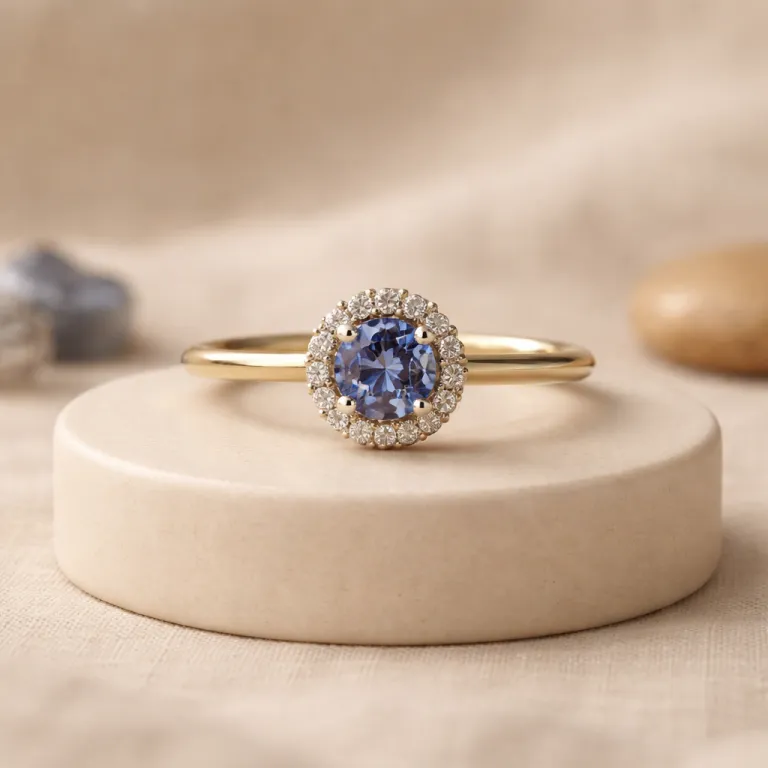
Why a sapphire engagement ring plays by different rules than diamond
A sapphire engagement ring guide must start with one truth. Buying a sapphire engagement ring is not a simplified version of buying a diamond engagement ring, because colored stones obey different value drivers and visual rules. If you approach blue sapphire engagement rings with only a diamond engagement mindset, you will miss the most beautiful stones and overpay for mediocre ones.
With diamonds, the 4Cs and lab reports dominate the conversation. With a sapphire or any colored stone, the hierarchy shifts to color first, then origin, then treatment, then cut, and only then clarity and carat weight, so your buying guide must rewire your priorities. The same carat weight and similar inclusions can have wildly different prices when the color and origin change, which is why a connoisseur style sapphire engagement ring guide focuses on nuance rather than slogans.
Colored gemstone engagement rings have surged in demand. Trade publications such as National Jeweler have reported double digit growth in colored gemstone jewelry over recent years, while colored diamonds rose at a slower pace, and sapphires lead that surge because they bridge heritage, durability, and expressive color. A sapphire engagement ring therefore sits at the crossroads of fine jewelry tradition and modern individuality, offering a ring stone that feels both classic and personal.
For owners used to white diamond engagement rings, the first surprise is how subjective a blue stone can feel. Two blue sapphires with identical lab data can look utterly different on the hand, because human eyes read color zoning, saturation, and cut interactions in ways grading tables cannot fully capture. This is why you should always evaluate a sapphire diamond pairing or a solitaire sapphire engagement ring in varied lighting, not just under a jewelry counter spotlight.
Another shift from diamond to sapphire is how you think about settings. A sapphire engagement ring guide must weigh daily wear, metal color, and the way white gold or yellow gold interacts with the stone’s body color, not just the style of the ring. The same oval sapphire in a warm gold bezel can look softer and more romantic than in a sharp white gold cathedral setting, even though the underlying stones are identical.
Reading sapphire color like a connoisseur: blue, padparadscha, and beyond
Color is the soul of any sapphire engagement ring, and it deserves disciplined attention. When you read a sapphire engagement ring guide, you should learn to separate marketing adjectives from real color behavior in the stone. The most valuable blue sapphire tones sit between cornflower blue and royal blue, with enough saturation to glow yet enough transparency to keep the stone lively.
Cornflower blue sapphires, often associated with Kashmir and some Ceylon material, show a soft yet vivid blue color that seems to hold light like velvet. Royal blue sapphires lean deeper and more dramatic, especially in larger stones, and can pair beautifully with white gold or platinum settings that cool the overall effect. If the blue becomes inky or overly dark, the stone may look smaller on the hand, so a smart buying guide will tell you to prioritize brightness over sheer depth.
Padparadscha sapphires, with their delicate mix of pink and orange, sit in a different aesthetic universe. They are rarer, often command a higher price per carat than many blue sapphires, and require especially careful assessment of color zoning because uneven patches can be obvious to the naked eye. A padparadscha engagement ring can look ethereal in a minimal ring custom design, but only if the stone’s color is even and the cut does not window.
Green sapphire and teal sapphire have become favorites for collectors who want something off the traditional path. These green sapphires can show complex mixes of blue and yellow, and the right cut can emphasize either direction, creating stones that feel quietly unconventional yet still timeless in fine jewelry. When pairing green sapphire stones with metal, yellow gold can emphasize warmth while white metals emphasize the cooler blue undertones.
Color zoning, where different hues appear in distinct bands or patches within the stone, is a crucial concept in any sapphire engagement ring guide. Mild color zoning can be cleverly hidden by an expert cut or by strategic prong settings, but strong zoning that is visible to the naked eye usually lowers both beauty and price. This is why working with a jeweler who truly understands colored stones, not only diamonds, will protect you from paying a premium for compromised color.
For deeper context on how blue gemstones behave in fine jewelry, connoisseurs often study specialist commentary on the allure and complexity of blue gemstone jewelry for discerning collectors, which helps frame sapphire color alongside spinel, tanzanite, and other blue stones. Seeing how different blue stones handle light and saturation will sharpen your eye when you next evaluate blue sapphires for engagement rings. In the end, color is not a number on a report but a feeling on the hand.
Origin, heat, and the real drivers of sapphire price
Once you understand color, origin becomes the next pillar in any serious sapphire engagement ring guide. Auction records make the hierarchy clear, with Kashmir sapphires at the top, followed by Burma (Myanmar), then Ceylon (Sri Lanka), Madagascar, and Montana, each origin carrying its own typical blue and inclusion patterns. Publicly reported sales show fine Kashmir sapphires achieving six and seven figure prices, while visually similar stones from newer sources can trade for a fraction, illustrating how origin can outweigh size in determining price.
Kashmir sapphires are prized for their velvety cornflower blue and soft, misty inclusions that scatter light in a distinctive way. Burma sapphires often show rich royal blue tones with strong saturation, while Ceylon stones can range from bright medium blue to lighter pastel hues that look especially beautiful in larger engagement rings. Madagascar and Montana sapphires offer excellent value, with some blue sapphires from these regions rivaling traditional origins in color at more approachable price levels.
Heat treatment is another non negotiable topic in any buying guide for sapphire engagement rings. Most sapphires on the market are heated to improve color and clarity, which is stable and widely accepted in fine jewelry, but unheated stones with excellent color can command premiums of roughly a third to half over comparable heated stones according to major auction house and dealer pricing data. A lab report stating “no indications of heating” for a blue sapphire or green sapphire therefore has direct implications for both price and long term value.
Untreated sapphires from top origins, especially Kashmir and Burma, sit in a different collecting category. These stones often appear at Christie’s, Sotheby’s, and other international auction houses, where a single cushion cut or emerald cut sapphire can set per carat records that dwarf many diamond engagement stones. For most engagement ring buyers, a well chosen heated stone sapphire from Sri Lanka or Madagascar offers a more balanced equation of beauty, durability, and budget.
Clarity and inclusions matter, but not in the same way they do for a cut diamond. Sapphires are type II stones, meaning some inclusions are expected, and a few fine silk inclusions can even enhance the stone’s velvety appearance without being visible to the naked eye. What you want to avoid are large, eye visible inclusions that break the surface or sit under the table, because these can weaken the ring stone structurally and distract from the color.
Origin and treatment also influence how you should insure and care for your sapphire engagement ring. A rare unheated Kashmir or Burma sapphire in a ring custom design may warrant a separate appraisal and more conservative wear than a heated Madagascar oval sapphire in a robust bezel setting. For collectors comparing sapphire to other blue stones, thoughtful commentary on why a blue spinel ring stands out in fine jewelry collections can help clarify how origin and treatment shape long term desirability across the spectrum.
Cut, shape, and settings that make sapphires work for daily wear
Cut is where art and engineering meet in any sapphire engagement ring guide. Unlike diamonds, where standardized cut grades dominate, sapphires are cut to balance color, weight retention, and brilliance, so you must judge each stone individually. A well executed oval sapphire or cushion cut sapphire can elongate the finger and concentrate color, while a poorly proportioned stone may window or appear dull.
Classic shapes for sapphire engagement rings include oval, cushion cut, emerald cut, and round, each interacting with color differently. Oval sapphire stones often show color beautifully along their length, making them ideal for three stone settings with tapered baguette diamonds, while cushion cut stones can give a vintage softness that pairs well with milgrain details in gold. Emerald cut sapphires, with their long step facets, are unforgiving of poor color or obvious inclusions, but when the stone is strong they create a sophisticated, architectural engagement ring.
Cut also affects how visible inclusions and color zoning appear. A deep pavilion can hide minor inclusions from the naked eye, while a shallow cut may exaggerate them and create a pale window in the center of the stone. When you evaluate a sapphire diamond combination, tilt the ring under different angles to see whether the ring stone maintains consistent color or breaks into uneven patches.
Settings deserve as much attention as the stone itself. For daily wear engagement rings, bezel and semi bezel settings, as well as low profile burnish settings, offer more protection than tall cathedral prongs that can snag or expose the sapphire’s girdle. A sapphire engagement ring guide that ignores lifestyle is incomplete, because a beautiful stone in a fragile setting will not remain beautiful for long.
Metal color changes how your eye reads the sapphire. White gold or platinum settings tend to cool and intensify blue tones, making a medium blue sapphire appear slightly deeper, while yellow or rose gold can warm the stone and soften a very saturated color. If you are pairing a sapphire with side stones, a cut diamond halo in white gold around a blue sapphire center can create a crisp contrast, whereas a sapphire diamond three stone ring in yellow gold feels more classical.
For those commissioning a ring custom design, consider how the setting will age. Sharp micro pavé around the ring stone looks delicate but can be vulnerable over decades, while solid shoulders with channel set stones or a clean solitaire profile offer more structural integrity. The best setting is not the most ornate one, but the one that lets the sapphire’s color breathe and protects the stone from the knocks of everyday life.
Budget frameworks and what to expect at different price levels
A practical sapphire engagement ring guide must translate connoisseurship into numbers. While every stone is unique, there are realistic price bands where certain qualities tend to cluster, and understanding them helps you set expectations before you fall in love with a particular ring. Think in terms of ranges rather than absolutes, because origin, treatment, and cut can move the needle significantly.
At more modest budgets, you can often find heated blue sapphires from Sri Lanka or Madagascar in the 0.80 to 1.20 carat range, set in simple white gold or yellow gold solitaire rings. These stones may show minor inclusions under magnification and slightly lighter color, but they can still look beautiful on the hand, especially when the cut is lively and the settings are thoughtfully designed. In this bracket, prioritize a clean, well made ring over chasing rare origins or unheated status.
Moving into mid tier budgets, you start to see stronger color and more interesting designs. Heated blue sapphires between roughly 1.20 and 2.00 carats with good saturation, minimal visible inclusions, and attractive cuts become accessible, often in three stone or halo engagement rings that pair the sapphire with small diamonds. Here, a sapphire diamond combination in white gold can offer a refined look without the exponential jump in price associated with larger carat weights.
At higher budgets, collectors can consider unheated stones, rarer origins, and more substantial sizes. An unheated oval sapphire or cushion cut sapphire from Sri Lanka in the 2.00 to 3.00 carat range, with strong blue color and a reputable lab report, can anchor a serious fine jewelry collection while still being wearable as an engagement ring. In this space, the premium for no heat and desirable origin becomes more pronounced, so a detailed buying guide and expert counsel are invaluable.
At the very top end, the conversation shifts toward investment grade stones. Large unheated blue sapphires from Kashmir or Burma, especially those with documented provenance, can command prices that rival or exceed important diamond engagement stones, and they often appear at major auctions rather than standard retail. These pieces are less about maximizing carat for budget and more about acquiring singular stones whose color, origin, and rarity justify their price.
Whatever your budget, remember that the ring’s long term satisfaction comes from proportion and personality, not just numbers. A smaller but well cut stone sapphire with luminous color will outshine a larger, duller stone every time. In the end, it is not the carat count, but the fire in the stone that you will live with every day.
Working with the right jeweler: colored stone expertise versus diamond habits
The most overlooked chapter in any sapphire engagement ring guide is how to choose the professional who will source and set your stone. Many retailers are optimized for diamond engagement sales, with strong systems for grading cut diamonds but limited experience in evaluating sapphires and other colored stones. For a sapphire engagement, you want a jeweler who lives with color daily, not one who treats it as an occasional side line.
A colored stone specialist will talk first about color, origin, and treatment, then about carat weight and lab reports. They will show you multiple sapphires side by side, explaining why one blue sapphire appears more open and bright while another, with similar measurements, feels heavy or overly dark. They will also be transparent about whether a stone is natural or one of the many synthetic sapphires on the market, which can look convincing to the naked eye but have very different value.
Ask direct questions about heat treatment, origin evidence, and how inclusions might affect durability. A trustworthy jeweler will welcome these questions, explain what the lab report can and cannot state, and point out any inclusions that reach the surface or sit under the table of the ring stone. They should also discuss how color zoning might appear in different lighting, and whether the proposed settings will help minimize or emphasize those features.
It is also wise to understand how diamond grading frameworks differ from colored stone evaluation. Resources that offer a connoisseur’s refresher on the 4Cs beyond the marketing can help you recalibrate your expectations when moving from diamonds to sapphires, because the same rigid metrics do not apply. Where a diamond’s value is tightly linked to clarity and cut precision, a sapphire’s magic often lies in subtle color behavior that defies simple grading.
When commissioning a ring custom design, insist on seeing the loose stone before it is set. Evaluate the sapphire in natural daylight, office light, and under warm indoor lighting to ensure you love the color in all conditions, not just under a jewelry counter spotlight. A jeweler confident in their stones will encourage this process, because they know a sapphire that performs well across environments will remain a joy to wear.
Finally, align on aftercare and long term maintenance. Sapphires are hard, but they are not indestructible, and certain settings expose the girdle more than others, especially tall prong or cathedral designs. A jeweler who offers regular inspections, prong tightening, and honest advice about when to remove your engagement ring for certain activities will help your sapphire remain as beautiful in decades as it is on the proposal day.
Styling, metal choices, and how sapphire plays with other stones
Once the gemological work is done, a refined sapphire engagement ring guide turns to style. The way your sapphire interacts with metal color, side stones, and everyday wardrobe will determine how often you reach for the ring. A piece that feels harmonious with your existing jewelry will see more wear than a showpiece that never quite matches anything.
Blue sapphires are famously versatile, pairing effortlessly with both white metals and yellow gold. In white gold or platinum, a medium to deep blue sapphire reads crisp and modern, especially when framed by a halo of small cut diamonds or tapered baguette side stones. In yellow or rose gold, the same stone softens, creating a more romantic mood that can be especially flattering on warmer skin tones.
Green sapphire offers a subtler, more enigmatic palette. These stones can shift between blue and green depending on lighting, and they pair beautifully with yellow gold for a quietly luxurious look that feels less expected than classic blue. When set in white gold with diamond accents, a green sapphire engagement ring can look almost Art Deco, especially in emerald cut or step cut shapes.
How you combine sapphires with diamonds also shapes the ring’s character. A sapphire diamond three stone ring, with a central oval sapphire flanked by two smaller cut diamonds, balances color and brilliance in a way that feels timeless yet personal. For those who prefer minimalism, a single stone sapphire in a clean bezel setting, perhaps with a knife edge band, can be as striking as any elaborate design.
Think about how your engagement ring will stack with wedding bands and other rings. Low profile settings and bezels sit closer to the finger, making it easier to pair the engagement ring with straight bands, while high cathedral settings may require contoured bands or leave small gaps. If you plan to wear multiple rings, consider a ring custom consultation to ensure the profiles and proportions work together gracefully.
For collectors who already own other blue stones, such as spinel or tanzanite, comparing how each gem handles light and saturation can refine your taste. Thoughtful essays on why certain blue gemstone rings stand out in fine jewelry collections can help you see where sapphire excels and where other stones might offer complementary flavors. In the end, the most successful sapphire engagement rings feel integrated into your life and your collection, not isolated trophies.
Key figures shaping the sapphire engagement ring market
- Industry reports from sources such as National Jeweler and trade research groups have documented strong double digit growth in colored gemstone jewelry over recent multi year periods, while colored diamond sales increased at a slower rate, indicating a sustained shift toward color in engagement rings. These summaries are based on aggregated trade surveys and annual market reviews.
- Major auction houses regularly report six and seven figure prices for fine Kashmir sapphires, with per carat records in excess of two hundred thousand dollars, demonstrating that origin and quality can outweigh sheer carat size in determining sapphire price. These headline results are drawn from publicly available Christie’s and Sotheby’s sale catalogs.
- High profile sales, including notable Kashmir sapphires of around 30 to 40 carats offered at Christie’s Hong Kong and other venues, have achieved per carat prices above a quarter of a million dollars, underscoring the extreme premiums paid for top origin, unheated blue sapphires with exceptional color. These figures are reported in post sale press releases and specialist auction commentary.
- Market data from leading dealers and auction catalogs show that unheated sapphires with strong color can command premiums of roughly 30 to 50 percent over comparable heated stones, especially when accompanied by reports from major laboratories such as GIA, SSEF, or AGL. This range reflects observed asking prices and realized results rather than a fixed formula.
- Surveys of engagement ring buyers published in jewelry trade media indicate that a substantial share of younger couples now consider non diamond center stones, with sapphire consistently ranking as the most requested colored stone for engagement rings due to its durability and symbolic associations. These findings come from periodic consumer preference studies and retailer questionnaires.
FAQ about sapphire engagement rings
How does sapphire durability compare with diamond for engagement rings ?
Sapphires rank 9 on the Mohs hardness scale, just below diamonds at 10, which makes them highly suitable for daily wear in engagement rings. While they resist scratching very well, sapphires can still chip if struck sharply on exposed edges, so protective settings like bezels or low prongs are wise. With sensible care and periodic checks of the settings, a sapphire engagement ring can remain structurally sound for generations.
Should I prioritize origin or color when choosing a sapphire engagement ring ?
For most buyers, color should come first, because you will see the hue every day while origin lives on the certificate. A beautifully saturated blue sapphire from Madagascar or Sri Lanka can be more satisfying than a poorly colored stone from a prestigious origin. Collectors with larger budgets may then layer in origin preferences, seeking Kashmir, Burma, or Montana stones once they have secured the color they love.
Are synthetic sapphires acceptable for engagement rings in fine jewelry collections ?
Synthetic sapphires share the same chemical composition as natural sapphires but are grown in laboratories, which makes them far less expensive and generally less collectible. They can be a practical choice for fashion jewelry or for clients who prioritize size and color over rarity, but they do not hold value like natural stones. If you choose a synthetic sapphire for an engagement ring, ensure it is clearly disclosed and priced accordingly.
What metal works best with blue sapphire engagement rings ?
White gold and platinum emphasize the cool tones of blue sapphires, creating a crisp, modern look that many clients associate with classic engagement rings. Yellow and rose gold, by contrast, warm the overall palette and can soften very intense blues or complement green sapphire hues. The best choice depends on your skin tone, existing jewelry wardrobe, and whether you prefer contrast or harmony between stone and metal.
How important is a lab report for a sapphire engagement ring ?
A reputable lab report from institutions such as GIA, SSEF, or AGL is crucial when you are paying a significant price for a sapphire, because it documents whether the stone is natural, whether it has been heated, and sometimes its likely origin. For smaller or more modestly priced stones, a full report may not be essential, but clear disclosure from the jeweler about treatment and origin remains non negotiable. A report does not replace your own visual judgment, but it anchors the sapphire’s identity for insurance, resale, and long term confidence.