The three tier summer travel jewelry strategy
Your summer travel jewelry kit should start with a clear hierarchy. Think in three tiers for every piece you wear, every item you pack, and every jewel you keep at home. The wrong rings in the wrong place during summer travel can cost far more than any sale price you ever saved.
Tier one is your travel safe category, the pieces that can handle airport security trays, sunscreen residue, and the casual chaos of summer fun. Here, prioritize solid gold or platinum metals with minimal pavé, robust bezels, and low profile settings that keep jewelry close to the body. These are the fine jewelry staples you actually wear on the plane, not the items you only admire in a jewelry case at home.
Tier two is your occasional travel jewelry, the set pieces that come out for dinners, gallery openings, or a resort cocktail bar. Think diamond huggies, a channel set eternity band, or a single statement pendant that travels in a dedicated travel case. You pack jewelry from this tier in structured jewelry cases, then store jewelry in the hotel’s main vault when you are not wearing it.
Tier three is the stay home category, the heirloom fine jewelry whose price is emotional as much as financial. Grandmother’s Art Deco emerald ring, a signed Van Cleef & Arpels sautoir, or a Burmese ruby cluster brooch belong in a jewelry safe, not in a beach tote. If the regular price to replace it is irrelevant because the piece is irreplaceable, it should never join your traveling jewelry wardrobe.
This three tier travel jewelry guide summer insurance tips framework also clarifies your insurance conversations. You can assign different coverage expectations to each tier, matching policy limits to realistic summer jewelry risks. The result is a jewelry travel plan that respects both sentimental value and market price regular realities.
Gemstones, sunscreen, and summer environments
Summer environments are unforgiving, and not all gemstones are equal partners for jewelry summer adventures. Chlorinated pools, saltwater, and stubborn sunscreen films can etch, dull, or even loosen stones from their cases. A sophisticated travel jewelry guide summer insurance tips approach starts with understanding which pieces can physically survive the season.
Diamonds, sapphires, and rubies are the workhorses of summer jewelry because their hardness and stability tolerate most pool chemicals. They still need proper jewelry care and cleaning, but they will not cloud as quickly as softer stones when you wear them through repeated sunscreen applications. These are the stones you can keep jewelry on for a quick swim, provided the settings are tight and the metals are corrosion resistant.
Pearls, opals, and many emeralds sit at the opposite end of the spectrum, especially in summer travel conditions. Pearls are organic and porous, so sunscreen, perfume, and even sweat can stain or dehydrate them, while opals and fracture filled emeralds can craze or cloud in heat. Any travel jewelry guide summer insurance tips worth reading will tell you that these pieces belong in the stay home tier or at least in a cool jewelry case far from the pool bar.
When you do wear more delicate items on holiday, treat them like couture, not T shirts. Put on sunscreen first, wash your hands, then wear your jewelry last, and reverse the order at night so cleaning is gentle and deliberate. Those small care tips dramatically extend the life of both everyday rings and more precious pieces, especially when you are traveling and tempted to be careless.
For collectors building a travel focused capsule, consider how metals behave in heat and humidity. High karat yellow gold feels luxurious but can scratch more easily than 14 karat alloys, while white gold may need rhodium replating sooner after abrasive sand exposure. Matching metal choice to destination is as much a part of jewelry care as any insurance policy or sale price negotiation.
Before departure, review whether your coverage reflects current replacement values for stones and metals. Gold prices have climbed sharply, which means many policies now understate the real price to replace a bracelet or necklace by twenty to forty percent. A detailed appraisal refresh is the quiet backbone of any serious summer jewelry travel plan, especially for pieces you routinely pack jewelry for resort trips.
For a deeper look at underinsurance risks specific to fine jewelry, study this analysis of hidden gaps in jewelry coverage. Aligning your policy language with how you actually use and store jewelry during summer travel is more important than chasing any temporary sale. Insurance is not glamorous, but it is what lets you enjoy summer fun without mentally calculating the regular price of every ring on your hand.
Insurance, valuation, and what really belongs in your suitcase
Insurance for fine jewelry is not a formality when you are traveling, it is a strategy. A thoughtful travel jewelry guide summer insurance tips approach separates what you insure for full replacement price from what you are comfortable self insuring. That distinction decides which items earn a place in your summer travel case and which remain in the jewelry safe at home.
Start by comparing your existing appraisals with current market data for metals and stones. If your policy still reflects a regular price from several gold cycles ago, your coverage limit may sit far below the true sale price of an equivalent piece today. Underinsurance turns a lost bracelet from an inconvenience into a capital loss, especially when the item is signed or features rare colored stones.
Specialist jewelry insurance policies often provide broader coverage than generic home contents riders. Look for language that protects against mysterious disappearance, covers items while traveling internationally, and respects the nuances of how you wear and store jewelry in real life. A policy that only covers pieces locked in a home safe is useless for summer travel, no matter how attractive the price regular premium appears.
When deciding what to pack jewelry wise, think in terms of liquidity and replaceability. A classic diamond line bracelet in a standard length and carat weight is relatively easy to replace at a known price, while a one of a kind Colombian emerald ring with old mine cut side stones is not. The former can join your traveling jewelry rotation with appropriate coverage, the latter should probably stay in the safe even if you are tempted to wear it for one perfect sunset.
There is also a growing case for a dedicated travel jewelry collection, separate from your core heirlooms. These are still fine jewelry pieces, often in solid gold with diamonds or sapphires, but chosen for durability, secure settings, and predictable resale value. In a world where sustainable luxury resale is thriving, the sale price you might achieve later becomes part of the calculus when you select travel pieces.
For those investing in colored stones specifically, it is worth reading about the way ultra wealthy collectors are reallocating capital toward rare gems in this analysis of investment grade colored gemstones. If your own collection includes unheated Burmese rubies or Kashmir sapphires, they belong firmly in the stay home tier during summer travel. No travel case, however well padded, can offset the risk profile of those stones on a crowded beach or in a resort bar.
To structure your policy choices, consult a comprehensive resource such as this guide to fine jewelry insurance options. Aligning your coverage with your three tier system means you can enjoy jewelry summer moments without mentally auditing every item. In the end, the best insurance is the discipline to leave the wrong piece in the right safe.
Airport security, hotel safes, and practical travel handling
How you physically move with jewelry during summer travel matters as much as what you insure. Airport security, hotel rooms, and beach clubs all introduce different risks that a serious travel jewelry guide summer insurance tips plan must address. Elegant handling habits turn your pieces from liabilities into quiet companions.
At airport security, never send loose rings or small items directly onto the conveyor belt. Either wear your fine jewelry through the scanner when permitted, or place pieces inside a zipped travel case that stays in your line of sight. Many seasoned collectors keep jewelry in a slim jewelry case within their personal bag, removing it only once seated on the plane.
Hotel room safes offer convenience but not always robust security, especially in busy resort properties. For higher value items, ask discreetly about the front desk or back of house vault, which often provides better protection for the same coverage terms. Store jewelry you are not wearing there, and only keep travel jewelry for the day in your room safe or on your person.
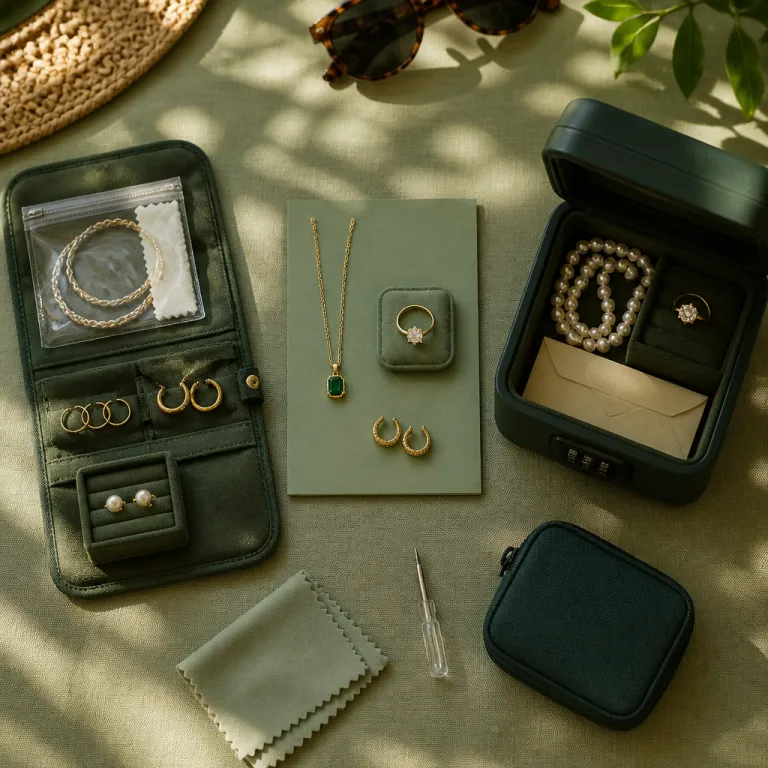
When you pack jewelry, treat it as hand luggage, never checked baggage. Use structured travel cases with separate compartments so metals do not scratch each other and delicate pieces do not tangle, and avoid overstuffing cases just because you found a tempting sale. A small, curated selection travels better than a full jewelry box, and it forces you to edit for versatility.
Daily routines on holiday should also reflect jewelry care discipline. Remove pieces before vigorous swimming, water sports, or spa treatments, and keep jewelry in a consistent place so you do not leave items on a restaurant table or in a beach bag. Quick cleaning with a soft brush and mild soap at night removes sunscreen and sand, preserving both shine and structural integrity.
For styling, build a summer travel capsule that shifts easily from poolside to dinner. A pair of diamond huggies, a slim gold cuff, and one statement ring can handle most itineraries, especially when metals are chosen to complement sun kissed skin. The goal is not maximal sparkle but maximum ease, because the most successful traveling jewelry is the kind you forget you are wearing until someone stops you to ask about it.
As you refine your habits, remember that every piece has its own ideal environment. Some items thrive in the boardroom, others on a terrace at dusk, and a few only in the quiet of a home safe. In the end, it is not the carat count, but the fire in the stone.
FAQ: summer travel and fine jewelry insurance
Should I wear my engagement ring during summer travel or leave it in the safe ?
The answer depends on the ring’s design, insurance coverage, and your itinerary. A classic solitaire with a secure setting and up to date insurance can usually travel safely if you are disciplined about removing it for swimming, sports, and spa treatments. Very high value or fragile designs, especially with pavé halos or thin micro set bands, are often better left in a jewelry safe at home.
How do I protect jewelry from sunscreen, sand, and pool chemicals ?
Apply sunscreen first, wash your hands, then put on jewelry as the final step before leaving your room. Remove pieces before swimming or using hot tubs, and rinse them gently with lukewarm water and mild soap at night to remove residue. Diamonds, sapphires, and rubies tolerate these conditions better than pearls, opals, or treated emeralds, which should avoid direct contact with chemicals and heat.
Is my home insurance enough for traveling with fine jewelry items ?
Standard home policies often have low sub limits for jewelry and may not cover mysterious disappearance or losses outside the home. A dedicated jewelry insurance policy usually offers broader coverage, including international travel and higher limits per item. Review your policy wording carefully and update appraisals so coverage reflects current replacement price before any major trip.
What is the safest way to carry jewelry through airport security ?
Whenever possible, wear your jewelry through the scanner rather than placing loose pieces in trays. If you must remove items, place them in a zipped travel case inside your personal bag, and keep that bag in your line of sight at all times. Never pack valuable jewelry in checked luggage, where loss and theft risks are significantly higher.
How many pieces should I pack for a one week summer holiday ?
A focused capsule of five to eight pieces usually covers a week comfortably. For example, two pairs of earrings, two rings, one bracelet, and one or two necklaces can create multiple looks without overloading your travel case. Editing tightly also reduces decision fatigue and makes it easier to keep track of every item throughout your trip.