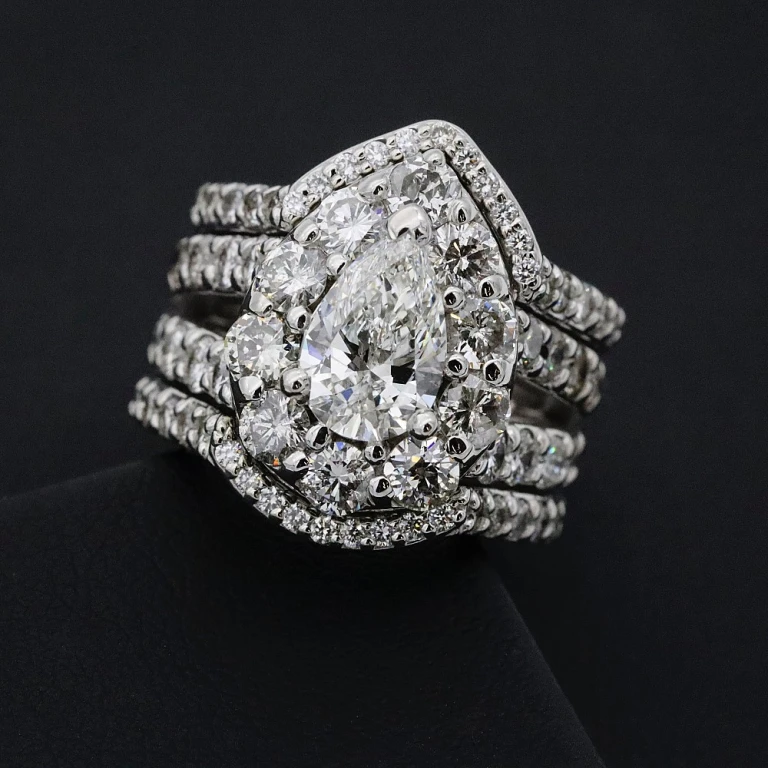
The evolving artistry of halo ring jewelry for private collections
For a seasoned fine jewelry owner, halo ring jewelry represents both continuity and reinvention. A single halo ring can bridge antique inspiration and modern engagement expectations, while still respecting the individuality of your existing rings and wedding bands. When you curate halo engagement pieces, you are not simply buying another ring ; you are shaping a coherent language of gold, diamonds, and design across your collection.
At its core, a halo ring frames the center stone with diamonds surrounding it in a luminous circle or soft square. This halo setting amplifies the perceived size of the center stone and enhances the cut diamond, whether you favor emerald cut, cushion cut, or a classic round brilliant. For collectors who already own important solitaire engagement rings, a diamond halo can add drama without eclipsing the original stone’s personality.
Owners often underestimate how strongly metal color influences halo design and long term wear. White gold emphasizes the icy brilliance of diamonds surrounding the halo center, while yellow gold or mixed gold diamond combinations create a warmer, more vintage inflection. Choosing between white, yellow, or even two tone settings is not only an aesthetic decision ; it also affects how your halo rings integrate with existing bands and future wedding bands.
Prestige designers such as Tacori and Gabriel have refined the halo engagement vocabulary for connoisseurs. A Tacori petite crescent profile, for example, adds sculptural detail beneath the halo ring, while Gabriel engagement ring silhouettes often favor clean lines and a modern hidden halo. Understanding these distinct design languages allows you to select halo ring jewelry that complements, rather than competes with, the rest of your fine jewelry.
Metal, color, and proportion in halo ring jewelry
For an established collector, the most critical decisions about halo ring jewelry often concern proportion. The relationship between the center stone, the halo setting, and the bands determines whether the ring reads as refined or overpowering. When the halo engagement profile is balanced, the eye moves gracefully from the center stone to the diamonds surrounding it, then to the shank and any accompanying wedding bands.
Metal color remains central to this balance, especially when you already own multiple engagement rings and eternity bands. White gold halo rings tend to emphasize precision and brilliance, making a cushion cut or emerald cut diamond appear crisp and architectural. Yellow gold, by contrast, softens the outline of the halo design and can flatter warmer skin tones, particularly when paired with a gold diamond pavé band or vintage inspired jewelry.
Collectors who favor mixed metals can use a white halo around the center stone with a yellow gold shank to echo older rings in their vaults. This two tone approach allows a new halo engagement ring to sit harmoniously between white gold and yellow gold bands already in rotation. It also offers a subtle way to differentiate a primary engagement ring from a right hand halo ring worn as a statement piece.
Attention to under gallery architecture is equally important for long term comfort and stability. A petite crescent motif or sculpted bridge, as seen in many Tacori and Gabriel designs, can distribute weight more evenly and protect the diamond halo from impact. When evaluating new halo ring jewelry, examine the interior curves, the thickness of the setting, and how the rings stack with existing jewelry such as signet rings or symbolic pendants like a Virgin Mary pendant.
Center stones, cuts, and the quiet power of the hidden halo
For many fine jewelry owners, the choice of center stone defines the emotional character of halo ring jewelry. A round cut diamond halo engagement ring projects timeless symmetry, while an emerald cut center stone within a slender halo setting suggests restraint and architectural clarity. Cushion cut halo rings, with their softened corners, often appeal to collectors who appreciate antique aesthetics but want modern craftsmanship.
The rise of the hidden halo has added a new layer of subtlety to engagement ring design. Instead of diamonds surrounding the center stone from a top view, the hidden halo wraps around the base of the center, visible mainly from the side. This approach allows a collector to maintain the purity of a solitaire like appearance while still enjoying the light play and volume of halo ring jewelry.
Brands such as Tacori and Gabriel have embraced both visible and hidden halo concepts, often combining them with signature details. A Tacori halo center may sit above a petite crescent gallery, while a Gabriel engagement ring might integrate a slim diamond halo that hugs the cut diamond closely. When you already own important solitaire engagement rings, these nuanced halo designs can serve as complementary pieces rather than replacements.
As your collection grows, consider how new halo rings will converse with heirloom jewelry and heritage pieces. A refined halo engagement ring can sit alongside a heraldic signet on the opposite hand, especially when both share similar metal tones or engraving styles, as explored in depth in this analysis of heraldic signet rings. By curating center stones, cuts, and halo designs thoughtfully, you ensure that each ring, band, and stone contributes to a coherent narrative of taste.
Integrating halo rings into an existing fine jewelry wardrobe
Experienced collectors often face a subtle challenge when adding halo ring jewelry to an already significant wardrobe. The goal is to introduce new halo engagement pieces without visually overwhelming existing engagement rings, bands, and statement rings. This requires a deliberate strategy that considers scale, metal color, and how diamonds surrounding the halo center interact with other stones.
Start by mapping your current rotation of rings and wedding bands, noting which hand and finger each usually occupies. If your primary engagement ring is a solitaire in white gold, a secondary halo ring in yellow gold can serve as a right hand jewel that complements rather than competes. Conversely, if your main engagement ring already features a diamond halo, a more minimal hidden halo ring may offer variety while maintaining continuity.
Stacking strategy is equally important for maintaining elegance and comfort. Slim bands with small cut diamonds can frame a bolder halo setting without adding excessive height or weight, especially when worn daily. Many collectors pair a halo engagement ring with one plain gold band and one delicate diamond band, allowing the halo design and center stone to remain the focal point.
Beyond rings, consider how halo ring jewelry interacts with bracelets, necklaces, and earrings in your collection. The current interest in permanent or “forever” bracelets, explored in this perspective on modern fine jewelry, mirrors the desire for pieces that feel both effortless and enduring. A well chosen halo engagement ring, whether in white gold or yellow gold, should achieve the same balance, integrating seamlessly into your daily ensembles while retaining the gravitas expected of high level jewelry.
Technical quality, maintenance, and long term value of halo ring jewelry
For a fine jewelry owner, the technical execution of halo ring jewelry is as important as its aesthetics. The precision with which diamonds surrounding the halo center are set directly affects brilliance, durability, and long term comfort. Poorly aligned stones or an uneven halo setting can snag on fabrics, loosen over time, and ultimately compromise the engagement ring’s structural integrity.
When evaluating a halo engagement ring, examine the symmetry of the halo design relative to the center stone. The cut diamond should sit perfectly level, with consistent spacing between the center and the surrounding diamonds, whether the ring is in white gold, yellow gold, or a mixed gold diamond configuration. Pay close attention to prong work, especially around emerald cut and cushion cut centers, where corner protection is essential.
Maintenance routines must be adapted to the density of stones in halo rings. Because halo ring jewelry features many small diamonds surrounding the halo center, regular professional inspections are crucial to identify loose stones before loss occurs. Ultrasonic cleaning can be effective, but it should be performed by trusted professionals familiar with delicate halo settings, petite crescent details, and hidden halo structures.
From a value perspective, collectors should consider both intrinsic and emotional returns. High quality halo engagement rings from respected houses such as Tacori and Gabriel tend to retain desirability, especially when crafted in platinum or high karat white gold and yellow gold. However, the true long term value often lies in how harmoniously each halo ring integrates into your personal narrative of engagement, anniversaries, and milestones, reinforcing the authority and coherence of your overall jewelry collection.
Ethical sourcing, customization, and strategic curation for halo ring connoisseurs
As a sophisticated collector, you are increasingly expected to align halo ring jewelry acquisitions with ethical and environmental considerations. Transparency around diamond sourcing, metal recycling, and workshop practices now forms part of the perceived value of any engagement ring or statement halo ring. This scrutiny applies equally to white gold and yellow gold settings, as well as to the diamonds surrounding the halo center stone.
Customization offers a powerful way to reconcile ethics, aesthetics, and legacy. Many connoisseurs repurpose an heirloom cut diamond or emerald cut stone as the center of a new halo engagement ring, surrounding it with responsibly sourced diamonds in a refined halo setting. This approach preserves emotional continuity while updating the design language, whether you choose a visible halo design or a discreet hidden halo beneath the center.
Strategic curation also involves deciding how many halo rings your collection truly needs. Rather than accumulating multiple similar engagement rings, some owners commission a single, highly personalized halo ring in white gold or yellow gold, paired with versatile wedding bands and stacking rings. By focusing on one or two exemplary halo center designs, you avoid redundancy and maintain clarity in your jewelry narrative.
Finally, consider documenting the specifications of each halo ring, including metal type, carat weights, cut grades, and any distinctive features such as petite crescent motifs or custom engraving. This record supports insurance, estate planning, and future redesigns, ensuring that every ring, band, and stone in your collection can be appreciated and managed with the same level of expertise and care that went into its selection.
Key statistics on fine jewelry ownership and halo ring preferences
- Global surveys of fine jewelry owners indicate that halo engagement rings consistently rank among the top three preferred styles for new engagement ring purchases.
- Industry data shows that white gold and yellow gold together account for the vast majority of halo ring settings, with platinum and rose gold representing a smaller but growing share.
- Market analyses reveal that center stones between 1,00 and 2,00 carats are the most common choice for halo ring jewelry, balancing visual impact with wearability.
- Consumer research highlights that a significant proportion of collectors now request some form of customization, such as a hidden halo or mixed metal design, when commissioning halo rings.
Expert questions on halo ring jewelry for fine jewelry owners
How should a collector choose between a visible halo and a hidden halo ?
The choice depends on how prominently you want the halo to feature in your overall aesthetic. A visible halo emphasizes sparkle and presence, making the engagement ring read larger on the hand, while a hidden halo offers subtle volume and detail mainly appreciated at close range. Collectors who already own bold solitaire rings often favor hidden halo designs as a quieter complement.
What metal is most versatile for halo ring jewelry in an established collection ?
White gold tends to integrate easily with contemporary diamond jewelry and existing engagement rings, especially when many of your pieces already feature white metals. Yellow gold, however, can be more forgiving on skin tone and pairs beautifully with vintage bands and colored stones. Many connoisseurs ultimately choose mixed metal halo settings to bridge older and newer pieces seamlessly.
How can I ensure my halo engagement ring remains secure for daily wear ?
Schedule regular inspections with a trusted jeweler to check prongs, pavé, and the integrity of the halo setting. Request that the jeweler examine both the center stone and the diamonds surrounding the halo center, as small stones can loosen with daily wear. Proper sizing, careful cleaning, and avoiding harsh impacts will significantly extend the life of your halo ring jewelry.
Is it advisable to redesign an heirloom solitaire into a halo ring ?
Redesigning an heirloom solitaire into a halo engagement ring can be an excellent way to refresh a piece while preserving its emotional core. The key is to work with a workshop experienced in handling older cut diamonds and in building a halo setting that respects the original stone’s proportions. Many collectors choose a discreet hidden halo for heirlooms to maintain a sense of continuity with the original design.
How many halo rings should a serious fine jewelry collector own ?
There is no fixed number, but most curated collections benefit from one or two exemplary halo rings rather than many similar pieces. One primary halo engagement ring and one secondary statement halo ring, perhaps with a different cut diamond or metal color, usually provide sufficient versatility. Beyond that, it is often more strategic to diversify into other ring styles, bands, and stones to maintain a balanced and interesting collection.
References : Gemological Institute of America (GIA) ; American Gem Society (AGS) ; Responsible Jewellery Council (RJC).
